Showing posts with label television review. Show all posts

Saturday, December 21, 2024

The Penguin


Following the death of his boss Carmine Falcone, Ozwald “Oz” Cobb (Colin Farrell) aims to take control of Gotham City’s criminal underworld. However, the surviving members of the Falcone family stand in his way, including Carmine’s daughter Sofia (Crisin Milioti). Released from Arkham State Hospital where she was committed following a series of infamous Hangman murders, Sofia seeks revenge on those who wronged and ignored her. Oz senses a chance to form an alliance, but also hedges his bets by reaching out to the incarcerated Sal Maroni (Clancy Brown), the Falcones’ sworn enemy all while giving his young apprentice Victor (Rhenzy Feliz) an education on what it takes to survive.


Superheroless superhero spinoffs remain a dumb idea, and Sony’s abysmal Spider-Man Universe (sans Spider-Man) should kill any ambitions in that direction for years to come. Despite this, The Penguin – an HBO Batman spinoff series without Batman – somehow largely works. Its mature, grounded, character-driven approach, coupled with powerful acting, allow it to rise above the constraints of its premise.


Farrell, unrecognizable under heavy makeup and sporting a New York accent, made his debut in Matt Reeves’ The Batman, conjuring Al Capone-on-the-rise in his limited screentime. The Capone vibes remain, but in an expanded role, Oz shows several other influences ranging from Tony Soprano to the James Cagney gangsters of yore. Rather than the refined (or, at least, faux-refined) gentleman of the source material, this Penguin is a lower-class power-hungry lout with a massive chip on his shoulder. He’s affable and capable of commiserating with others, but he will also do whatever it takes to rise to the top.


While Farrell turns in a strong performance, Milioti matches it in complexity and impact. This version of Sofia is given a far more sympathetic backstory and a far more adversarial relationship with her family than exists in the source material. Milioti conveys both an icy calm and a righteous fury as she works her way through processing years of trauma. The supporting cast, from Feliz (overwhelmed wide-eyed newcomer meets resourceful quick thinker) to Brown (reliably intimidating) to Deirdre O’Connell (as Oz’s dementia-afflicted mother) are good as well though Theo Rossi is a bit distracting in an underwritten role as a crooked psychologist.


Credit also goes to showrunner Lauren LeFranc who succeeded in sustaining tension and maintaining a bleak and gritty tone. From its violence to the deep losses many of its characters face, The Penguin is a starkly brutal show, lacking the both the zaniness as well as the fun of earlier small-screen Bat fare such as Gotham. That might suggest a joyless slog, but thanks to high production values, an eclectic soundtrack, and glimmers of humanity amid the muck, it usually doesn’t play that way.


In a vacuum, The Penguin is worth a look as a character study that pits damaged souls against each other with increasingly high stakes. As part of a larger mythology, it sets up the next Batman film and then some.


Sunday, November 17, 2024

Like a Dragon: Yakuza


Growing up in an orphanage under the protection of ex-yakuza Shintaro Kazama (Toshiaki Karasawa), Kazuma Kiryu, siblings Akira “Nishiki” and Miho Nishikiyama, and sisters Yumi and Aiko Sawamura form close bonds. When Kiryu decides to make a name for himself by joining the Yakuza, he drags his adoptive family into the criminal underworld with him. Years later, Kiryu (Ryoma Takeuchi) has been excommunicated for killing his boss. He is released from prison to find Nishiki (Kento Kaku) occupying that boss’s position, a masked assailant picking off yakuza left and right, Aiko (Misato Morita) missing along with a large amount of illicit money, Yumi (Yuumi Kawai) desperately searching for her, and the Tokyo-based Tojo Clan on the brink of war with the Omi Alliance of Kansai over the missing money. As Kiryu, the clan’s former enforcer turned persona non grata, reluctantly reenters his old life, everything threatens to fall apart around him.


SEGA’s long-running Yakuza/Like a Dragon video game franchise spans more than a half-dozen games released over nearly two decades that encompass everything from political scandals to intense family drama to too-wacky-to-describe slapstick, all of which renders a faithful television adaptation an impossibility. Amazon Studios took a broad strokes approach to adapting the first game’s plot, covering many of the key events albeit with significant alterations, some for the better, and several for the worse. While fidelity is not and should not be a byword for quality, one couldn’t help but wonder if hewing closer to the source material in this case would have yielded a better result.


Positives first: Kaku does an excellent job as Nishiki, embodying his desperation to keep the terminally ill Miho alive, his regard for and later resentment toward Kiryu, and his iciness as his ambition grows. While Kiryu is a challenging character to play – he can come across as a flat “stoic warrior” stereotype in clumsy hands – Takeuchi acquits himself reasonably well. That he isn’t the sole protagonist here reduces the amount of heavy lifting required.


The series’ production values are solid if unspectacular: the Tokyo nightlife isn’t as impressively rendered as it is in Tokyo Vice, and the fight scenes don’t match the adrenaline or emotion of the games. That said, while it may not pop, it doesn't feel cheap or languid, either.


Among the changes made from the source material, not all are negative. Yumi, for all the personal significance she holds for Kiryu, was a fairly flat character in the first Yakuza game. Here, with her game actions split between Yumi and Aiko (an original character – Yumi invented a sister as a cover identity in the game), she’s given more room to grow and comes across as more competent and more tortured. However, this arguably comes at the expense of developing Haruka (her daughter in the game and Aiko’s in the series) and Kiryu’s protectiveness of her.


In other cases, the departures range from defensible to baffling. Series favorite Goro “Mad Dog” Majima (Munetaka Aoki) isn’t given much screen time, but then again, he wasn’t a major character in the first game, either. Masaya Kato looks nothing like the short, lecherous, toadlike Dojima (the murdered boss), but he retains the character’s greed and manipulativeness, and his added height actually makes him more imposing. However, other characters are practically unrecognizable in appearance, personality, or both. Tojo Clan chairman Masaru Sera, an unflappable dead ringer for Ken Watanabe in the games, is as played by Koichi Sato, a good deal older-looking and a good deal less composed when faced with danger.


Beyond that, Like a Dragon’s pacing is decidedly uneven. The series often seems to buckle under the weight of its multiple narrative threads. Rather than past and present or Kiryu’s, Nishiki’s, and Yumi/Aiko’s stories playing effectively off of one another to create tension, they sometimes feel as if they are competing for screen time.


All told, Like a Dragon is not a terrible show, just a disappointing one. The acting offers enough bright spots to suggest what might have been if the creators had a better feel for the source material and its audience.

Sunday, November 3, 2024

Homicide: Life on the Street


In Baltimore, a homicide unit under the command of Al “Gee” Giardello (Yaphet Kotto) works to close cases and get justice for victims while fending off political pressure from police brass. The detectives include the mercurial Frank Pembleton (Andre Braugher), idealistic newcomer Tim Bayliss (Kyle Secor), wisecracking Meldrick Lewis (Clark Johnson), former student radical turned cynic John Munch (Richard Belzer), and others.


Given that I hold The Wire in such high regard, it may seem puzzling that I took so long to watch the show that was in many ways its forebearer. After all, Wire co-creator David Simon supplied the source material (a nonfiction book of the same name), and several future Wire cast members did Homicide first (plus, showrunner Tom Fontana of later Oz fame is no slouch in the creative department himself). So why the wait? Part of this was stubbornness: Homicide was not available to stream, and I kept waiting for that to change (Ironically, within a month of me caving and buying the DVD set, it finally did stream albeit on a service I don’t subscribe to without the original music intact). A bigger part, however, was fear of disappointment. For all the strength of its pedigree, Homicide was still 90s network television. Would I be able to appreciate it for what it was even if what it was pales in comparison to the prestige TV that followed?


The short answer is yes. The writing (courtesy of Simon, Fontana, Paul Attanasio, and James Yoshimura) is often very strong. Whereas its contemporary Law & Order (which shared a few crossover episodes with Homicide) gave its characters a few quirks, it was in many ways a textbook police procedural. Homicide, on the other hand, used that genre to tackle everything from racial politics to crises of faith and more. Its characters are fully formed, subject to bad decisions, and deeply affected by what they do. Rather than treating continuity as an afterthought, Bayliss, for instance, is still haunted by his first case at the series’ end. This isn’t to say that there aren’t missteps, however. Established characters are sometimes diminished to make room for new ones, and one modeled on Simon himself (videographer J.H. Brodie, played by Max Perlich) is unnecessary comic relief. NBC’s lack of confidence in the show early on also led to the first two seasons being short and made wonky pacing all but inevitable.


While their talents weren’t always utilized to the fullest extent, Homicide also boasted a hell of a cast. It was Braugher’s breakout series, and its easy to see why. Pembleton is a master interrogator and a dedicated detective, but he’s also contemptuous of just about everyone. Braugher can go from bored and indifferent to scarily intense in the blink of an eye. As his most frequent partner, Secor’s Bayliss doesn’t impress early on – he seemed like he was overacting – but that’s more a reflection of the character’s eager new guy status. He does a commendable job of adapting as Bayliss takes on more layers in later seasons. While they aren’t given nearly enough to do at times, Kotto and future Oscar winner Melissa Leo (as unflappable Sgt. Kay Howard) definitely have their moments as do less-loved latter season additions John Seda (Paul Falzone) and Giancarlo Esposito (FBI agent Mike Giardello, Gee’s son).


If nothing else, Homicide made excellent use of its guest stars. It boasted a poignant dramatic turn from Robin Williams (before he was known for such things) as a grieving widower and a tense father-son showdown between James Earl Jones and Jeffrey Wright. Some parts – such as Vincent D’Onofrio as an abrasive dying man and Moses Gunn (in his last role) as an accused child murderer – dared you to love and hate the characters all at once. On a more amusing note, Homicide also (SPOILER ALERT) had a penchant for former casting actors like Elijah Wood, Neal Patrick Harris, Jena Malone, and Steve from Blues Clues as manipulators and murderers.


Last but not least, the production values were, for network television, surprisingly good. The show made use of an eclectic assortment of 90s music to set the mood. The cinematography often favored documentary-like realism with occasional departures for better (the claustrophobic, stage play presentation inside the interrogation room during Gunn’s episode) or worse (the “stutter effect” repetition of the same shot in quick succession).


All told, Homicide is a victim of time and circumstance. When it aired in the 1990s, the very things that made it unique (racially diverse cast, character-driven approach, idiosyncratic choices, etc.) made it hard-pressed to get ratings. Were it to start anew today at an HBO or a Hulu, it would likely be better understood by the viewers it was trying to reach, but it would be far less revolutionary. 

Saturday, September 16, 2023

Justified: City Primeval


Years after leaving Kentucky for Florida, Deputy U.S. Marshal Raylan Givens (Timothy Olyphant) is taking his daughter Willa (Vivian Olyphant, Timothy’s actual daughter) on a road trip when an encounter with a pair of dumb criminals prompts a detour to Detroit. There, Raylan butts heads with corrupt judge Alvin Guy (Keith David) and tough defense attorney Carolyn Wilder (Aunjanue Ellis). When Guy is murdered, Raylan joins Detroit police to catch the killer, who turns out to be Wilder’s client Clement Mansell (Boyd Holbrook), the Oklahoma Wildman. Things get even more complicated when Clement enlists his drug-addled girlfriend/accomplice Sandy (Adelaide Clemens) to dispose of the murder weapon, their friend Sweety (Vondie Curtis-Hall) sees an opportunity, and a group of Albanian gangsters comes seeking revenge.


City Primeval: High Noon in Detroit was the first Elmore Leonard novel I ever read and remains one of my favorites. It draws parallels between both criminal and cop who are ill-suited for a changing world and would be much more at home settling things with a duel in the streets. The cop of that book was Raymond Cruz (played in a cameo here by Paul Calderon, reprising his Out of Sight role), but substituting Raylan, he of the cowboy hat and shoot-first attitude, makes sense on paper. In practice, it’s an odd fit. The series as a whole definitely has its moments, but the inevitable comparisons to its inspirations (the aforementioned novel and Justified’s original, Kentucky-based run) do it no favors.


For starters, most of the original series’ non-Raylan cast is absent (sans a few final episode cameos), and Raylan himself often feels sidelined. This is justifiable (pun unintended) to an extent (he’s in unfamiliar territory and thus must tamp down his bravado), but the elder Olyphant’s talents feel wasted for how often he is asked to look bewildered. Whereas the original show could get quite dark, it also had uproariously funny dialogue and plenty of dumb criminals to mock. Here, we’re entreated to a fairly grim world, and while there are still pockets of humor to be found, there’s nary a Dewey Crowe in sight.


Even though the Justified elements feel decidedly off, the creative team (including original series director Michael Dinner) did a commendable job of contemporizing the novel. As with the book-to-show transformation of Boyd Crowder, Mansell here is a less boorish and more charismatic figure. He’s still a violent, impetuous killer, extortionist, and thief, but he’s also an aspiring musician, and Holbrook plays him with aplomb. Wilder’s character is also greatly expanded, and while the book version came across as a self-assured street-dumb lawyer playing with fire, Ellis’s take is smarter, hardier, and more sympathetic. Perhaps the biggest beneficiary of the show’s writing is Marcus “Sweety” Sweeton. In both book and show, he’s a bar owner with criminal connections affiliated with Mansell and reluctantly caught between him and the police. Here, however, he’s also a veteran musician, a father figure to Carolyn, and a man who sees all the angles. Curtis-Hall gives him both a palpable sense of regret and a quiet dignity. For as strong as these performances are, however, Vivian Olyphant and Joseph Anthony Bird (as Sweety’s partner), struggle at times to keep up with the more experienced cast around them.


If The Many Saints of Newark is the nadir of beloved series continuations (though that was a prequel), then Justified: City Primeval benefits from not leaving nearly as bad a taste in series fans’ mouths. It’s solidly made, but it does more to remind us of what we’ve missed rather than filling the void.

Thursday, December 22, 2022

Andor


Searching for his long-lost sister, thief Cassian Andor (Diego Luna) ends up on the run from corporate security investigator Syril Karn (Kyler Soller). Andor’s friend Bix (Adria Arjona) puts him in contact with a black-market buyer, Luthen Rael (Stellan Skarsgard), who is actually a well-connected Rebel operative posing as an antiquities dealer. He hired Cassian for an audacious heist to strike at the heart of the Empire, an act that attracts the attention of intelligence officer Dedra Meero (Denise Gough) and makes Senator Mon Mothma (Genevieve O’Reilly), who is secretly funding the Rebellion, nervous. As different factions plot to outmaneuver one another, Cassian could be the one piece that ties everything together.


A spinoff of a Star Wars prequel inevitably raises the question “Who asked for this?,” but Andor’s relative disconnect from the greater mythology is one of its biggest assets. Freed from the need to fill in dozens of film-induced plotholes or pander to fans with familiar character cameos, this Tony Gilroy-created Disney Plus series is a refreshingly mature take on a Star Wars series.


Part political drama and part police procedural, Andor is a show that demands patience. There is no shortage of action (Cassian and Luthen’s introduction, the aforementioned heist, and a supremely tense finale being a few standout examples), but Andor takes its time to build up characters and their motivations before sending them into the fray. Given the various competing factions and ideologies, this is beneficial in the long run.


With neither Jedi nor Sith among the cast, Andor is able to offer a more grounded and nuanced depiction of the Star Wars universe. Luna is good in the title role, playing Andor as a mercenary cynic who eventually finds a cause worth believing in. The always dependable Skarsgard adds a layered performance as Luthen, who is somewhere between Nick Fury and Amanda Waller among ruthless but well-intentioned spymasters. Soller’s buttoned-down, perpetually humiliated Karn plays as a youthful and overmatched Javert to Andor’s Valjean, and Fiona Shaw, as Andor’s adaptive mother Maarva, provides pluck and hearty moral fortitude.


Paradoxically, fully appreciating Andor requires both some interest in wider Star Wars canon as well as some distance from it. For those who can strike this balance, there will be a planned second season to look forward to.

Thursday, June 9, 2022

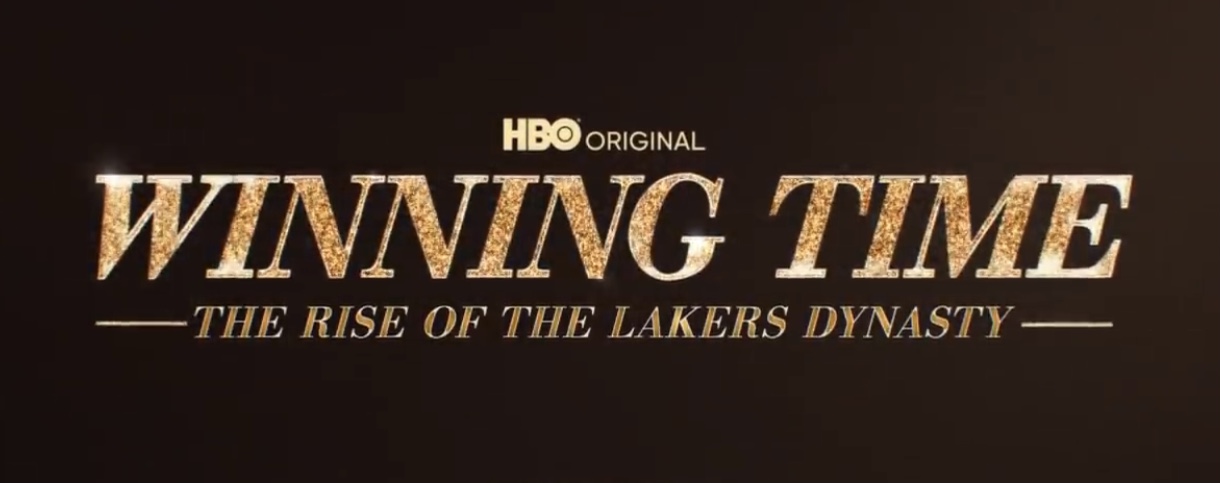
Winning Time: The Rise of the Lakers


In 1979, the National Basketball Association’s revenue and attendance are dwindling. Dr. Jerry Buss (John C. Reilly), a chemist turned real estate tycoon, overextends himself to buy the once-proud Los Angeles Lakers with an eye on returning the team to its former glory. To do so, he plans on drafting Earvin “Magic” Johnson (Quincy Isaiah), a flashy 6’9” point guard coming off a college championship season, despite the presence of incumbent guard Norm Nixon (played by Nixon’s son Devaughn) and the reservations of the team’s coach, franchise legend Jerry West (Jason Clarke). Buss, never one to accept limits, has his bookkeeper mother Jessie (Sally Field) use a few accounting tricks to stay ahead of creditors and taps overlooked and underappreciated Claire Rothman (Gabby Hoffman) to increase stadium revenue. But will Buss’s pluck and Johnson’s talent be enough to overcome trouble on and off the court?


Adapted by Max Borenstein and Adam McKay from Jeff Pearlman’s nonfiction book Showtime, Winning Time (named such since it aired on HBO) is both wildly entertaining and wildly inaccurate. Take its abuse of dramatic license and occasionally uneven pacing out of the equation, and it’s a stylishly watchable production full of both humor and heart.


Admittedly, that style isn’t for everyone. McKay, who directed the pilot episode, took the fourth wall breaks and asides to the audience that he used in the Big Short and made them a staple of Dr. Buss’s character. However, this bit of comedic gimmickry does not wipe out the show’s dramatic stakes, which often extend far beyond a mere game. Characters battle addictions, self-doubt, and even death itself. It helps that the show’s production values are high, offering a period music/fashion/palette combination that seems Scorsesian at times.


Winning Time was made without the participation of the actual Lakers, several of whom were miffed at their portrayals. In some cases, it isn’t hard to see why. Several characters are exaggerated to cartoonish proportions. Those that are written as three-dimensional, on the other hand, are generally well-acted. Reilly is magnetic as Buss, playing him as half visionary, half sleazy hustler. Field adds a touch of vulnerability to a sharp-tongued granny role. Hadley Robinson as young Jeanie Buss (currently, the Lakers owner) functions as the family’s moral center. Isaiah captures both Johnson’s almost-perpetual smile as well as the drive and the doubts that lay beyond it. Solomon Hughes, a college basketball player turned academic in his first acting role, faced an unenviable task in portraying Lakers captain Kareem Abdul-Jabbar. He comes across as one-dimensionally aloof in the early episodes, but Hughes is adept at capturing his leadership, intelligence, and competitive fire later on. Perhaps the best supporting turn, however, belongs to Wood Harris as bruising veteran forward Spencer Haywood. Harris, who was pushing thirty when he played a high schooler in Remember the Titans, is again far too old for the part, but he does such a good job of capturing the addiction-addled Haywood’s inner demons that you hardly notice.


That said, there are plenty of things in Winning Time that you do notice that you wish you hadn’t. West is introduced as drunk, angry, profane, and full of self-loathing over his championship losses. While he eventually mellows out as he transitions from the bench to the front office, it’s still a far cry from the more cordial mentor figure that many of his real-life colleagues describe. The Nixon-Johnson rivalry is transparently inflated only for them to have an equally transparent “come together and win” moment later on. The same cheap dramatization goes for the team’s coaching carousel. In short, West recruited unheralded Portland Trailblazers assistant Jack McKinney (Tracy Letts) as his replacement, and McKinney in turn recruits his friend, Shakespeare-quoting Paul Westhead (Jason Segel) from the college ranks. McKinney installs an up-tempo offense, the team takes off, McKinney gets hurt, a panicked Westhead tabs floundering color commentator/former Laker Pat Riley (Adrien Brody) as his assistant, McKinney recovers, and suddenly, there’s a bitter rivalry for the coaching job. The contention may make for a good television conflict, but they also serve to make McKinney look spiteful and Westhead weak. At least Brody captures Riley’s famous intensity.


Winning Time is primed for a second season, which makes sense as there are plenty more stories left to tell. What follows has the potential to be as entertaining as what has aired so far, but a little bit of nuance and grounding can go a long way toward winning over skeptics.

Wednesday, June 1, 2022

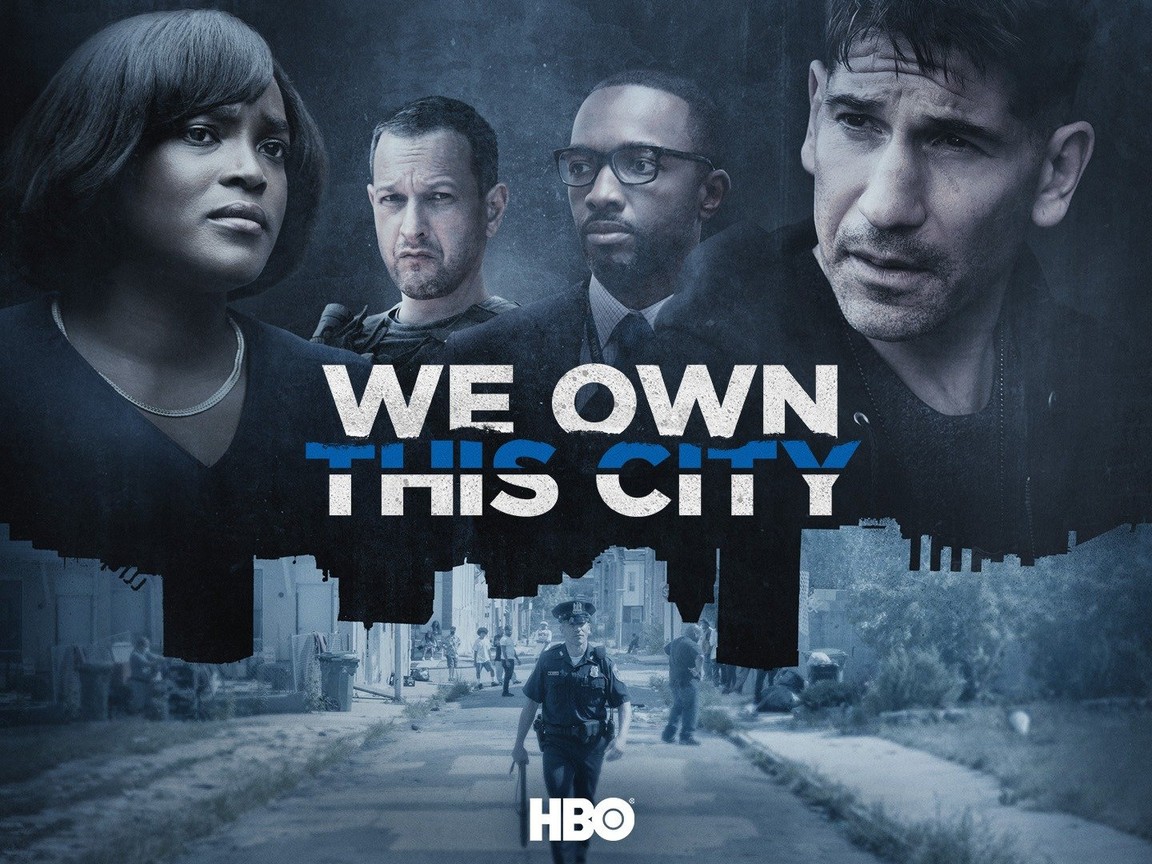
We Own This City


 The Baltimore Police Gun Trace Task Force, a plainclothes squad led by hard-charging Sgt. Wayne Jenkins (Jon Bernthal) is given broad powers to get guns and drugs off the city streets. However, the task force becomes a haven for corrupt and brutal cops as Daniel Hersl (Josh Charles) batters civilians, Momodu “G Money” Gondo (McKinley Belcher III) covers for a drug dealer, and the entire squad illegally lines their pockets with confiscated money (and, in Jenkins’ case, drugs). Justice Department civil rights attorney Nicole Steele (Wunmi Mosaku) attempts to investigate the department but is stonewalled while police commissioner Kevin Davis (Delaney Williams) lacks the clout to implement the changes he knows are necessary. Told as a series of flashbacks through the recollections of indicted GTTF officers in custody, We Own This City explores how things went so wrong for so long.


A spiritual successor to The Wire, this miniseries adaptation of Justin Fenton’s nonfiction book brings back some of the same talent behind (writer-producers David Simon and George Pelecanos created the show) and in front (Williams and Jamie Hector play significant roles while Tray Chaney, Domenick Lombardozzi, Jermaine Crawford, and Chris Clanton appear in smaller parts) of the camera. But whereas The Wire was already a fairly cynical show, We Own This City manages to paint an even bleaker picture of institutional rot.  


From the ominous drums (interspersed with sirens and gunfire) of the theme song to the update text that displays during the final episode, We Own This City pulls no punches and offers no quarter. The corrupt cops end up in jail after turning on each other, but that comes far too late to help anyone they’ve hurt. Davis is made the scandal’s scapegoat and ousted, only to be followed out the door later by his replacement and the mayor who fired him (both on tax evasion/corruption charges). Steele is pushed to the point of resignation when she suspects that the incoming Trump administration will sideline her investigative efforts. Sean Suiter, a former GTTF member turned homicide detective, dies under mysterious circumstances (officially, suicide made to resemble being killed in the line of duty) before he can testify. Don’t expect a “Bubbles comes up from the basement” moment here.


While this overwhelming sense of futility can make the show hard to invest in, We Own This City is undoubtedly well-crafted. Bernthal, the erstwhile Punisher, as a violent hothead does not strain the imagination, but he does an excellent job of giving Jenkins layers. From the Baltimore accent to the faux-affability to the pettiness, insecurity, and delusional narcissism, it’s a fully fleshed out portrayal of a deplorable human being. No less impressive is Hector’s work as Suiter. His guilt-ridden performance is a night-and-day contrast to his earlier turn as The Wire’s lead antagonist (icy druglord Marlo Stanfield).


The unrelenting bleakness and nonlinear structure can make We Own This City a challenge, but its sobering look at wide-ranging systemic failure (from Black political leadership to white supervising officers on down) makes it vital.


Sunday, May 8, 2022

Moon Knight


Awkward British museum gift shop worker Steven Grant (Oscar Isaac) and hardnosed American former mercenary Marc Spector (Isaac again) have a dilemma: they are two personalities vying for control over one body. Spector has been working off a debt to the Egyptian moon god Khonshu (voiced by F. Murray Abraham), donning his ceremonial armor and serving as his vengeful, evil-punishing avatar Moon Knight. He’s fled to England to keep his archaeologist wife Layla El-Faouly (May Calamawy) out of harm’s way, but she won’t be deterred that easily. Meanwhile, it is Steven who seems to have gotten the pair in the most trouble, stumbling across a plot by charismatic cult leader Arthur Harrow (Ethan Hawke) to release the goddess Ammit and exact terrible judgment upon humanity.


Though he has graced comic books pages for decades, insofar as Moon Knight is known at all, it is as an Internet meme or Marvel’s Batman equivalent with multiple personalities and a mystical flair. The character’s obscurity actually played to writer Jeremy Slater and director Mohamed Diab’s advantage as it gave them considerable latitude in developing a short-run Disney Plus adaptation. Their vision is an eclectic one, and though the resulting show’s tonal whiplash may disorient some viewers, it makes for a refreshingly fun ride.


A broad-strokes distillation, Moon Knight makes a number of changes to the source material that are ultimately for the best. Comic book Steven was a suave, rich Bruce Wayne/Lamont Cranston type, but show Steven is a working-class blunderer. This quality, in the face of pending doom, gives the show a good bit of humor, especially when contrasted with Mark’s cool competence. It’s to Isaac’s credit that he handles both personas – and accents – with conviction. Layla is also a stronger and better-developed character than her comic equivalent, Marlene. While her status as an Egyptian heroine is obnoxiously trumpeted as Representation with a capital R (ironic given the casting of a non-Jewish actor as the definitely Jewish Marc), Calamawy nevertheless shows both toughness and heart. Hawke’s Harrow is an amalgamation of several different villains, and he exudes a creepy soft-spoken empathy despite his fanaticism.


From the streets of London to the streets of Cairo and from an Egyptian tomb to a mental hospital to the afterlife, the show’s settings change quickly. While these episode-to-episode shifts can be disorienting (albeit not to the extent of Legion), Diab’s direction is surefooted and energetic, and Slater, whose Fantastic Four (2015) script was largely butchered by Josh Trank, gains a measure of redemption here. Between Diab’s inclusion of modern Cairo and Hesham Nazi’s score, Moon Knight serves as an aesthetic corrective to a popular conception of Egypt rooted thousands of years in the past.


Moon Knight is, like previous Disney Plus Marvel series WandaVision, a show whose quirkiness masks powerful acting and an exploration of the extremes that grief and loss can push us toward. The pull of individual episodes may vary, but the series as a whole is more often than not compelling.

Thursday, May 5, 2022

Tokyo Vice


In the late 1990s, Jake Adelstein (Ansel Elgort), a young American, arrives in Tokyo and begins working as a crime reporter for a major newspaper. He chafes at the paper’s conservative deference to authority and rude editor (Kosuke Toyohara) but finds cautious support among his colleagues, including his direct supervisor Maruyama (Rinko Kikuchi). When an indebted man’s very public suicide catches his attention, Jake makes it his mission to expose the yakuza scheme that led to the debtor’s demise. To do so, Jake forges alliances with police – the vice squad detective Miyamoto (Hideaki Ito) and the organized crime investigator Kitagiri (Ken Watanabe), the local yakuza – young enforcer Sato (Show Kasamatsu) and his boss Ishida (Shun Sugata), and nightclub hostesses/fellow foreigners Samantha (Rachel Keller) and Polina (Ella Rumpf). While Jake works his way to the truth, Sato is forced to step up, Sam must avoid a threat from her past, Katagiri navigates underworld tensions, and Tozawa (Ayumi Tanida) – a ruthless out-of-town yakuza – threatens them all.


An adaptation of Adelstein’s engaging-but-disputed memoir had been rumored for years before making its HBO Max debut last month. While its creator J.T. Rogers is better known as a playwright, his television debut has plenty of polish: it helps that Michael Mann directed the first episode. What it lacks in consistency and, in the early episodes, pacing, it makes up for in the breadth of its narrative, its deft use of setting, and its later-episode tension.


Despite playing the nominal lead, Elgort is the weak link among the cast. He remains a talented actor, but he’s a poor Jake, matching neither the perception created by the real Adelstein’s authorial voice nor the interest generated by the other characters. Fortunately, Tokyo Vice’s Wire-like crosscut means that Jake-san is rarely relied on to carry an episode. Watanabe delivers low-key brilliance as Katagiri, a warm and jovial father one moment and an unflappable, incorruptible, cagey cop the next. Sato, who sings American pop songs and seems to have genuine feelings for Sam (herself torn between empathy and self-interest), is increasingly unnerved by the violence he is forced to commit, hanging onto his humanity despite his unsavory business. In somewhat predictable fashion, Rogers sways our sympathies toward the Ishida-gumi by making Tozawa (based on real-life yakuza head/Adelstein nemesis Tadamasa Goto) that much worse.


Though the cacophony of the club scenes wears thin after a while (this following a dizzyingly impressive depiction in the Mann-helmed debut episode), Tokyo Vice otherwise makes excellent use of its setting. Just as the glitz and allure of Tokyo’s nightlife contrast with the small offices and small apartments shown in the cold light of day, so too do we get a sense of the contradictions and complexities that Jake, despite his strong linguistic fluency, often misreads or struggles to grasp.


Some of its narrative beats may be familiar, and its lead is more liability than lure, but all in all, Tokyo Vice’s visual panache and multilayered storytelling can pull you in if you let it. Here’s hoping that a second season follows as there are plenty of stories left to tell.

Thursday, December 30, 2021

Mare of Easttown


In a small town in eastern Pennsylvania, Mare Sheehan (Kate Winslet) is a former high school basketball star turned police detective. Following her son’s suicide, she is locked in a custody battle over her grandson with the baby’s ex-addict mother, and she is plagued by being unable to find a friend’s daughter after a mysterious disappearance. When another teen girl turns up dead, Mare is reluctantly partnered with a county detective, Colin Zabel (Evan Peters). With a list of suspects that includes the girl’s former boyfriend, his jealous new girlfriend, and a priest with a dark past, the two detectives will need to learn to work together in a hurry.


Created by Pennsylvania native Brad Ingelsby and directed by Craig Zobel, Mare of Easttown (HBO) plays like a Keystone State miniseries version of Mystic River, and that’s hardly a bad thing. Deftly written and powerfully acted with a strong sense of place and character, Mare of Easttown uses the mystery at its center to pull viewers into an exploration of addiction, loss, and the difficulty of forgiveness.


A disheveled, downtrodden, oft-vaping Winslet is excellent in the title role. Mare is a tenacious and skilled investigator, but she also displays a detestable side as she struggles to keep her family close and piece her life back together. In Winslet’s hands, she’s believable and magnetic, and the actress also nails a Philadelphia-area accent (evident in “phone” and “home”). Jean Smart gives a humorous supporting turn as Mare’s acerbic mom while Angourie Rice is solid as her troubled daughter. Peters, often cast in weirdo or comic relief roles, is more down to earth here, but he’s far from dull. The same cannot be said for Guy Pearce, however. He’s also given a break from his usual sinister/creepy casting, but his underwritten nice-guy literature professor makes for a bland, one-note romantic interest for Mare.


The hard-bitten Easttown of the screen is a considerably bleaker place than the actual township that shares its name, and the show’s litany of tragedies can feel exhausting at times, but Mare of Easttown is a well-crafted slice of small-town anguish.

Wednesday, November 24, 2021

Dopesick


In the 1990s, Purdue Pharma executive Richard Sackler (Michael Stuhlbarg) aggressively pushes OxyContin as a miracle pain management cure, seeking to downplay or bury reports of its addictive properties. Salesman Billy Cutler (Will Poulter) is at first enthusiastic about marketing Purdue to doctors, but he has second thoughts when higher and higher doses are recommended. One of Billy’s clients, rural Virginia doctor Samuel Finnix (Michael Keaton) experiences a similar disillusionment, especially after he begins taking OxyContin himself. Meanwhile, deputy U.S. Attorneys Rick Mountcastle (Peter Sarsgaard) and Randy Ramseyer (John Hoogenakker) begin investigating Purdue Pharma as does DEA official Bridget Meyer (Rosario Dawson).


Beth Macy’s comprehensive exploration of America’s opioid crisis would have made for a fine docuseries. Instead, Danny Strong adapted it as a dramatic miniseries. It’s a dumbed-down distillation with an overly narrow focus even if it does touch on relevant themes and offer potent performances.


One of the more salient features of Macy’s book is showing how addiction cuts across race, class, and geographic lines. While the miniseries acknowledges the opioid crisis’s national scope, the characters shown affected by it are largely Appalachian whites. Similarly, the book pointed to plenty of bad actors, unscrupulous Purdue Pharma among them. Here, the “get Purdue” focus obscures the involvement of others.


This simplification of a complex issue may make for more manageable storytelling, but it also leads to predictability and one-note characterization. Stuhlbarg plays Richard Sackler as a black hole of amoral greed, and both Poulter (wide-eyed go-getter who develops a conscience) and Dawson (dogged agent whose devotion affects her personal life) play composite characters who function less as people and more as types. Keaton’s Finnix (another composite) acquits himself better. Rather that simply playing the doc as a naïve-but-well-intentioned man led astray, he’s shown as angry and desperate before committing himself to helping others as best he can. The best performance, however, belongs to Kaitlyn Dever as Betsy Mallum, one of Finnix’s Oxy-prescribed patients. The queer daughter of conservative churchgoers who works a dangerous mining job while battling chronic pain, she inspires empathy even at her worst.


While Dopesick’s narrative choices are frustrating, it still brings gravity and attention to a worthwhile issue, and if it inspires viewers to read Macy’s more informative telling, all the better.

Wednesday, July 28, 2021

The Underground Railroad


Enslaved on a Georgia cotton plantation owned by the cruel Terrance Randall (Benjamin Walker), Cora (Thusa Mbedu) and Caesar (Aaron Pierre) escape to freedom. The pair are separated, and Cora, now a wanted fugitive, must rely on the underground railroad to ferry her from place to place. All the while, she is pursued by the slavecatcher Ridgeway (Joel Edgerton) and his young black apprentice Homer (Chase Dillon).


Barry Jenkins’s Prime Video miniseries adaptation of Colson Whitehead’s acclaimed novel may not hit all the highs of its source material, but it still does the book justice. Whitehead’s central conceit was to meld history and magical realism: the titular railroad here is a literal train, and different states have adopted policies that allegorize America’s fraught approaches to race. North Carolina, for instance, has abolished slavery but also slaves (executing any runaways found therein) while South Carolina has adopted a paternalistic social welfare program that serves as a front for what amounts to the Tuskegee Experiment. Jenkins preserves these elements and renders them in sharp visual detail. The presentation is harrowing without being gratuitous, a procession of brutal images accompanied by Nicholas Britell’s equally haunting score.


In front of the camera, Mbedu convincingly embodies Cora’s determination and will to survive. Edgerton’s performance is showier, and Ridgeway’s grandiosity either adds to the character’s mystique (as was the case in the book) or comes across as a ridiculous, overcompensatory put-on (more the case here as the series shows a younger Ridgeway taking up his vocation to spite his father). William Jackson Harper puts in a good turn as Royal, a railroad conductor who befriends Cora, but the series isn’t with him long enough to get to know him well, something true of much of the supporting cast. Even in Homer’s case – he gets far more screen time – we are kept at arm’s length, which feels like a missed opportunity.


While the stakes are high, the series’ episodic pacing and questionable narrative digressions do it no favors. The Underground Railroad is at its best when it stays engaged with the story’s present. Even when it isn’t on the move, it can keep the audience’s attention, as is the case with Cora’s sojourn to a Black-owned Indiana winery. However, the series is just as likely to dedicate whole episodes (rather than mere flashbacks during the journey) to past events, which undercuts the momentum.


Rarely an easy watch and not always a rewarding one, The Underground Railroad is nevertheless, at its best (i.e. the ninth episode), powerfully acted and aesthetically dazzling.

Thursday, July 1, 2021

Bosch


Adapted by Eric Overmyer as an Amazon Prime Video series (seven seasons) from Michael Connelly’s long-running crime novel series, Bosch follows veteran LAPD detective Hieronymus “Harry” Bosch (Titus Welliver). Working alongside Det. Jerry Edgar (Jamie Hector) under the command of Lt. Grace Billets (Amy Aquino) out of the Hollywood division, Bosch investigates homicides while raising a teen daughter, Maddie (Madison Lintz). His dedication to the belief that “Everybody counts or nobody counts” and his stubborn refusal to back down put him not only in danger but also at odds with police brass such as the politically ambitious Irvin Irving (Lance Reddick).


In the wake of morally ambiguous The Shield and sociological magnum opus that is The Wire, a more straightforward police procedural such as Bosch can seem like an anachronism, a throwback to the days of 1990s Law & Order. While it is true that Bosch lacks the audacity of police officers murdering their own team members to cover up their corruption or fabricating a serial killer to clock overtime hours, its lower-key approach is far from staid and sanitized. What it lacks in ingenuity, it makes up for in earnestness, atmosphere, and craftsmanship.


It helps that there is so much source material from which to draw. Connnelly, a former Los Angeles Times crime reporter, has written more than twenty Bosch novels during the past three decades, and a typical season of the show stitches together plotlines from two or three of them. This is a pragmatic move on Overmyer’s part that makes the show accessible to those who haven’t read the books while capturing enough of their essence (even when changing details) to avoid aggravating those who have. It ensures that there is plenty going on each season though it may not always seem that way due to the show’s slow, deliberate pacing.


For those with the requisite patience, however, character development pays off handsomely. Welliver is an excellent character actor, and this role is no exception, but his take on Harry doesn’t have quite enough gravitas to carry the series. Fortunately, it doesn’t have to. Edgar’s law-bending pursuit of a protected Haitian war criminal, Grace’s battle against sexism in the department (as well as a homophobic witch hunt initiated by a rival), and Maddie’s journey toward finding her place in the world are all compelling, and they help establish the ensemble as more than a collective of suits spouting one-liners. Even Irving, mostly antagonistic in the books, is given more humanity here, his political maneuvering juxtaposed against his parental anguish.


Beyond that, the series makes good use of Los Angeles locations, and, especially, music. Harry’s love of jazz is retained from the novels, and the show’s opening theme (“Can’t Let Go” by Caught a Ghost) is extremely catchy. You won’t find Rian Johnson levels of camera wizardry here, but Bosch is atmospherically engrossing in its own right.


Those who tie a work’s worth to its willingness to disrupt the status quo will likely roll their eyes at Bosch’s conventionality, but writing it off as just another cop show overlooks the complexities in the lives that it tracks.


Thursday, May 6, 2021

The Falcon and the Winter Soldier


Months have passed since Steve Rogers retired as Captain America and passed his shield on to Sam “The Falcon” Wilson (Anthony Mackie), who declined to take up the mantle. A tip from Air Force officer Joaquin Torres (Danny Ramirez) puts the wingsuit-wearing hero on the trail of the Flag Smashers, a group of serum-enhanced terrorists opposed to restoring the pre-Blip status quo. Sam teams up with the recently pardoned Bucky Barnes (Sebastian Stan), who is attempting to make amends for the murders he committed as the brainwashed assassin the Winter Soldier. Their pursuit of the Flag Smashers is crashed by John Walker (Wyatt Russell), a decorated soldier tapped by the government as the new Captain America whose brash style conflicts with Sam and Bucky’s approach. Desperate to thwart one terrorist, Sam and Bucky reluctantly turn to another: the imprisoned Helmut Zemo (Daniel Bruhl), whose prior vendetta nearly tore The Avengers apart.


Following on the heels of WandaVision, The Falcon and the Winter Soldier swaps magic and metanarrative for a much more grounded milieu that sees Bucky deny the existence of wizards and Sam fight lending discrimination to secure a bank loan to help his sister (Adepero Oduye) fix up their family’s fishing boat. For those seeking escapism, this may seem a discomfiting letdown, but for many more, the show’s exploration of relatable themes – confronting legacies and coping with traumas – is one of its strongest points.


In its own way, writer/creator Malcolm Spellman’s work here is as bold as anything in the Marvel Cinematic Universe. He discards the colorblind fantasy of Sam simply being able to pick up the shield and put on the costume in favor of exploring the trials and travails of being a Black man tasked with embodying American ideals, an issue further complicated by Sam’s discovery of Isaiah Bradley (Carl Lumbly), a would-be Cap replacement who was secretly imprisoned and experimented on years ago. Spellman’s eye for complexity extends to the antagonists as well, allowing the Flag Smashers and their young leader Karli (Erin Kellyman) to tap into the “voice of the dispossessed” zeitgeist. Zemo isn’t exactly redeemed – if anything, revealing his closer-to-the-comics aristocratic roots would seem to make him a candidate for further villainy – but he too gets the “ruthlessness in service of a benevolent cause” treatment, questing to rid the world of super soldiers before they cause further damage. As worthwhile as these ideas are, a six-episode series seems at times too small a venue for them. While there is no shortage of powerful moments, the series can feel overstuffed and underdeveloped, with its pacing the most frequent victim of its ambition. The final episode in particular has an odd rhythm, compounded by Sam’s overly long and stagey rebuke to a senator whose life he just saved.


Unevenness aside, director Kari Skogland deserves credit for putting together a polished production amid the challenges of a global pandemic. The COVID outbreak during filming led to location changes and wreaked havoc with the schedule, yet the on-screen product doesn’t look like something put together on the fly. From immersive aerial sequences to tense, fluid fights, the action is cinema-smooth. The show also makes good use of local color whether it’s highlighting a Louisiana fishing community or the shimmering nightlife of the Southeastern Asian enclave Madripoor (astonishingly, shot in a well-disguised Atlanta neighborhood).


Beyond The Falcon and the Winter Soldier’s technical merits, it’s also a much-deserved spotlight for Mackie’s talents. From The Hurt Locker to Night Catches Us to Pain and Gain, Mackie has proven adept at providing everything from panic to panache to pathos. His MCU debut, Captain America: The Winter Soldier, gave him a chance to do some character exploration, but the sheer size of the cast in recent Avengers outings has left him largely sidelined. Not anymore. Here, he gets to do everything from trade banter with Bucky to convincingly project having the weight of the world on his shoulders. Speaking of burdens, Russell too deserves plaudits for humanizing a walking jingoistic stereotype. Walker’s blunt embrace of violence, mirroring that of the Flag Smashers, is meant to be contemptible, but in both cases, we’re allowed to understand where the characters are coming from.


By its conclusion, The Falcon and the Winter Soldier has left a number of threads for future movies to tackle, but it is more than a mere placeholder. Tense and timely if sometimes also rushed, it offers fun without frivolity.


Monday, March 8, 2021

WandaVision


Following the events of Avengers: Endgame, powerful magic user Wanda Maximoff (Elizabeth Olsen) and her synthetic human partner Vision (Paul Bettany) have retired to Westview, New Jersey to raise a family. He works an office job, and she tries to keep nosy neighbor Agnes (Kathryn Hahn) from learning their secrets. But their suburban sitcom antics mask many darker truths: a town trapped, the dead brought back to life, and an intelligence director (Josh Stamberg) threatening to escalate the situation. Meanwhile, S.W.O.R.D. captain Monica Rambeau (Teyonah Parris) teams up with FBI agent Jimmy Woo (Randall Park) and scientist Darcy Lewis (Kat Dennings) to get to the bottom of what is going on in Westview.


While Marvel’s cinematic offerings are more or less bulletproof, the first Marvel streaming series for Disney Plus represented a huge gamble. WandaVision includes a few requisite flashbacks for the uninitiated, yes, but the series has more resonance for those who have been keeping up with the Avengers film franchise (which last saw the Vision killed off twice in the same movie). Add to that the show’s copious allusions to sitcom tropes, and the amount of prerequisite viewing involved should have made for an audience-shrinking premise. And yet WandaVision proved to be anything but, shooting to the top of many most-watched lists. Unlike last year’s infatuation with Tiger King, however, WandaVision got there largely on merit.


Credit series creator Jac Schaeffer for keeping viewers on their toes. While a good chunk of episodes have Agents of S.H.I.E.LD. overtones – plucky team of nerds races to confront growing threat – more than half are odes to sitcoms past, each done in a different style (black and white I Love Lucy/Dick Van Dyke Show homages in the first episode to a mock-Malcolm in the Middle in episode six). These feel like faithful recreations rich in period detail rather than cheap parodies, not surprising given that Olsen’s sisters starred on Full House, director Matt Shakman was a child actor on Just the Ten of Us, and Van Dyke himself gave behind-the-scenes advice. And yet within these sitcom setups, there are moments of intense discomfort, poignance, terror, and tension.


These tonal shifts are made plausible by Olsen’s commanding lead performance. She is equally adept at screwball comedy as she is as a woman completely beset by loss and grief. Bettany spends much of his screen time beleaguered and perplexed as he tries to unpack not only what is happening in Westview but his own nature as well. Hahn is one of those performers who elevates everything she appears in, and this is no exception. It helps that there is far more to her character than her first appearance suggests. Only Stamberg as S.W.O.R.D. director Hayward is a letdown as a one-note antagonist.


Weird, insular, and occasionally confounding, WandaVision is a creatively bold work of meta-TV bolstered by a cast uniquely suited to the challenge.


Wednesday, June 17, 2020

Hunters


When Auschwitz survivor Ruth Heidelbaum (Jeannie Berlin) is murdered in 1977 New York City, her grandson Jonah (Logan Lerman) tries to find out who killed her. In doing so, he joins Ruth’s friend Meyer Offerman (Al Pacino), a philanthropist who leads a group of clandestine Nazi hunters. The Hunters’ activities catch the attention of the Nazi remnant Fourth Reich, whose leader The Colonel (Lena Olin) dispatches American operative Travis (Greg Austin) to deal with them. Meanwhile, FBI agent Millie Morris (Jerrika Hinton) encounters bureaucratic resistance as she attempts to investigate deaths connected to both groups.

There is an unspoken edict that any fictionalization of the Holocaust should still retain an air of somber gravitas, and, true to form, many Holocaust-themed works do. However, there is also a less visible tradition of Holocaust alt-history, which has resulted in works both absurd (The Boys from Brazil and its South American-bred child Hitler clones) and audacious if also morally clouded (Inglourious Basterds). Hunters, an Amazon Prime series devised by the grandson of Holocaust survivors (David Weil) belongs to the latter tradition. Upon release, Shoah Foundation director Stephen Smith denounced it as “deceptive, voyeuristic, trivializing pulp nonsense.” While it is tempting to dismiss this as hypersensitive kvetching, Hunters really is chock full of bad history, embarrassing moments and uneven pacing, tempered somewhat by strong performances, and, during its best episodes, plenty of tension and excitement.

First, the good: freed from the need to ham it up and shout in every scene, Pacino delivers one of his better late-career performances, imbuing Meyer with equal parts sagaciousness, righteousness, and ruthlessness. The overacting void is filled here by Dylan Baker as Biff, a Carter administration official with a hidden Nazi past who goes from sounding like Lindsey Graham one moment to Preacher’s Herr Starr the next. His escapades are only tangentially related to the main plot, but it’s at least an amusing distraction, and he’s a more layered character than Olin’s frosty one-note Colonel. As an audience surrogate weighing the desire for revenge against the brutal necessity of carrying it out, Lerman is merely OK. Hinton’s tenacious agent is a better stand-in for an outsider’s perspective while Austin is terrifyingly good as a murderous all-American psychopath given to random singing. Among the other Hunters, Saul Rubinek and Carl Kane are solid as husband-wife camp survivors seeking to avenge their murdered son, and Kate Mulvaney is captivating as Sister Harriet, an acerbic, take-no-prisoners, raised-Catholic German-Jewish refugee turned nun turned MI6 agent (!). The team also consists of a pompous actor (Josh Radnor), a black power activist (Tiffany Boone), and a Vietnam War vet (Louis Ozawa), the latter two of whom are given little development and are condescendingly reduced to symbols of token diversity despite the performers making the most of their minimal screen time.

In between pondering moral dilemmas and delivering exhilarating fight scenes and shootouts, Hunters often stumbles badly. As mentioned, it’s a poor representation of history, treating as shocking the American recruitment of former Nazi scientists even though this was revealed in 1946 and replacing depictions of actual wartime atrocities with over-the-top human chess games. It also takes a few tonal detours into parody game show segments (Why Do We Hate the Jews?) and mock-travel advertisements that frame Huntsville, Alabama as an ideal Nazi retirement community. These cringeworthy asides undercut the show’s weightier moments and make them hard to take seriously.

Hunters’ premise shows enough promise to justify its existence, but if the first season is anything to go by, it also shows enough missteps to see it fall short of its potential.

Friday, April 10, 2020

Tiger King: Murder, Mayhem, and Madness

Joe Exotic is a mullet-wearing, gun-toting, openly gay Oklahoma zoo owner and would-be country singer and political candidate. He comes into conflict not only with his financial backer, Jeff Lowe, who claims that Joe misappropriated funds, but also with Carole Baskin, the owner of Big Cat Rescue, who claims that Joe is exploiting and mistreating his zoo’s tigers. Joe, in turn, accuses Carole of hypocrisy and having a hand in her husband’s disappearance, and the two engage in a long and acrimonious legal and media battle that culminates in Joe’s conviction for trying to solicit his zoo’s handyman to murder Carole.

In recent years, true crime docuseries have tried to reconcile lofty claims of truth-seeking (see Making a Murderer) with presentations that invite criticisms of bias, sensationalism, or both. In Tiger King, filmmakers Eric Goode and Rebecca Chaiklin have stripped away any pretense of nobility. Given its larger-than-life subjects, the show leans into its sensationalism rather than attempting to downplay it. The results are compellingly entertaining if also ethically disconcerting.

Joe is the star of the show here, and both his charisma and his capacity for self-delusion and antagonism radiate in nearly every episode. This lack of sanitization is not confined to him alone. His role model, longtime animal trainer and wildlife preserve owner “Doc” Antle, is shown as a self-congratulatory quasi-cult leader, Jeff Lowe is portrayed as something of a con man, and would-be hitman Allen Glover freely admits to spending the murder-for-hire fee on “partying.” These are all, at best, deeply flawed people, yet Tiger King’s refusal to sanctify or justify them is refreshing.

At the same time, some of Goode’s narrative decisions are also quite dubious. He spends the bulk of one episode prying into unsubstantiated rumors that Carole fed her wealthy then-husband (missing and since declared dead) to a tiger, yet he pays far less attention to meth use among Joe and his crew. Meanwhile, the tigers themselves function as little more than living props.


Tiger King, like Werner Herzog’s Grizzly Man before it, casts animals in the unfortunate role of targets of obsessive personalities. And as fascinating as those obsessions may be to watch, we should not lose sight of the damage that they ultimately cause.

Friday, March 20, 2020

The Outsider


When evidence suggests that Oklahoma Little League coach Terry Maitland is guilty of a gruesome child murder, his friend, police detective Ralph Anderson, arrests him. Maitland swears his innocence, and alibi witnesses suggest that he might be telling the truth. Anderson then teams up with private investigator Holly Gibney to unearth the actual culprit before he claims more victims.

Though still synonymous with horror, Stephen King has penned a growing number of mystery/crime/detective novels with his Mr. Mercedes trilogy perhaps the best-known examples. As Holly was an important character in those books as well, The Outsider functions as a quasi-sequel of sorts, and as with the last of the Mercedes books (End of Watch), the investigation takes on supernatural overtones. This isn’t exactly laziness on the author's part: King still does due diligence in developing characters and settings before throwing monsters in the heroes’ path. While the title character – a skin-changer based on Mexican folklore – packs plenty of menace, his victims and pursuers are more compelling, whether it is the devastating ripple effect that besets the murdered boy’s family or the tenacity and resourcefulness of the team of cops, lawyers, and investigators that coalesces around putting an end to the killing spree. That being said, The Outsider tries, perhaps too hard and too obviously, to forge a connection to the Mercedes books, and Holly’s overt comparison of Ralph to her previous investigative partner Bill Hodges makes Ralph seem like a second-rate imitator. Holly herself is still a problematic character. Though King’s gotten better at writing her since her debut in Mr. Mercedes, she still has a tendency to evoke Magically Capable Mentally Ill, to cringeworthy effect.

Earlier this year, Richard Price took a swing at adapting The Outsider as an HBO miniseries, bringing with him a considerable amount of talent (Ben Mendelsohn, Cynthia Erivo, Jason Bateman, and Paddy Considine in the cast with Price himself and Dennis Lehane writing episodes and Bateman directing a few). A broadly faithful adaptation that tinkers with some of the details, the series avoids a few of the book’s pitfalls (there are zero Mercedes references) while creating others. The casting is half-inspired, half-head-scratching. Bateman plays Terry Maitland sympathetically and helps sell the charges against him as shocking. But Mendelsohn, best known for playing sleazy, overmatched corporate villains, is a questionable choice for a heroic lead. He’s OK here: the performance is a bit stiff and his American accent has a scratchy, nasal affectation yet he captures Ralph’s dogged sincerity just the same. Erivo’s take on Holly is markedly different from the source material, and it’s definitely an improvement. This version is troubled-yet-crafty/capable without inviting a slew of stereotypes and unwanted implications. The series also makes good use of a sinister score to add tension, but even still, the middle episodes feel terribly slow. While the explosive final two do, to some extent, make up for it, this was a ten-part series that could – and should – have been done in no more than eight.


Whether in book or screen form, The Outsider will likely please King fans as well as those who like their police procedurals with a dash of mythical menace. It is no one’s best work, but it is far from a wasted effort.

Wednesday, January 1, 2020

The Mandalorian


After the fall of the Galactic Empire, a Mandalorian (Pedro Pascal)– a member of a perpetually-armored warrior tribe – is contracted by bounty hunting guild member Greef Karga (Carl Weathers) to retrieve a valuable asset for a mysterious Empire-affiliated client (Werner Herzog). The Mandalorian locates the asset, which proves to be a child from the same race as Yoda, but upon witnessing its Force powers, refuses to turn it over thereby becoming a wanted man.

Set in the Star Wars universe, The Mandalorian is less a Star Wars TV series and more of a Star Wars-adjacent tale, and for that we should be thankful. Writer/director Jon Favreau previously struck gold with another lesser-known (at the time) armored antihero with 2008’s Iron Man, and The Mandalorian’s first season offers similarly well-crafted action.

By sidestepping established characters, Favreau frees himself from burdensome expectations while still providing enough recognizable elements – the Force, stormtroopers, and, tangentially, The Mandalorian himself (the films’ revered bounty hunter Boba Fett, though a different character, was implied to be part of the tribe) to appeal to Star Wars fans. Similarly, because the title character is anonymous for most of the first season, Pascal is free to leave his own mark. That mark ends up being a fairly convincing Clint Eastwood Man With No Name homage as Mando (which, coincidentally, sounds a lot like Manco) is a supremely capable gunfighter with a dubious moral compass, a checkered past, and an unexpected conscience. This parallel helps cement The Mandalorian as, portions of Westworld aside, televisions best space western since Firefly.

It helps that nothing about the show feels cheap or half-hearted. The settings look universe-appropriate, Ludwig Gornasson’s score (including a killer opening theme) fits the show’s mood, and the action sequences are exhilarating and competently choreographed. There is also a considerable amount of talent both behind (Rick Famuyima, Bryce Dallas Howard, and Taika Waititi have all directed episodes) and in front of (Ming-Na Wen as an infamous assassin, Nick Nolte as a helpful moisture farmer, Giancarlo Esposito as a menacing villain, Favreau as a fellow Mandalorian, and, memorably Waititi voicing a Terminator-like droid) the camera. However, the puppeteers responsible for the asset and lesser-known Emily Swallow as the Mandalorian’s Armorer/keeper of tribal lore nearly upstage them all.

If there is one grievance to be found here, it is that the pacing and stakes are inconsistent. The beginning and end of the season are brimming with urgency as The Mandalorian first locates the asset and later attempts to confront his pursuers. In between, however, the show takes on a more self-contained, episodic quality. Even still, these outings are not filler as they allow for character development and hints of backstory to emerge.

In light of the divisiveness of Disney-era Star Wars films, it is easy to become cynical about any attempt to further milk the franchise, but The Mandalorian is polished and compelling enough to stand on its own two armored feet.

Wednesday, May 22, 2019

Catch-22


During World War II, American bombardier John Yossarian (Christopher Abbott) resorts to unconventional and desperate measures to avoid flying increasingly dangerous missions while his sadistic superior, Colonel Cathcart (Kyle Chandler) repeatedly raises the mission cap. Yossarian learns that he can be grounded if found insane, but his desire to be grounded proves his sanity: the inane “catch” of the title. Meanwhile, his well-bred friend Nately (Austin Stowell) falls for an indifferent Italian prostitute, his much-loathed training officer Scheisskopf (George Clooney) keeps climbing the ranks, and mess officer Milo Minderbinder (Daniel David Stewart) enmeshes the entire base in a shameless profiteering syndicate.

Directed and produced by Clooney and scripted by David Michod (Animal Kingdom), this Hulu miniseries adaptation of Joseph Heller’s brilliantly satirical novel is to its source material what a Farberware knife is to a Henckel’s blade: occasionally sharp but not nearly as reliably cutting.

Admittedly, with its wealth of characters and nonlinear treatment of time, Catch-22 makes for a difficult adaptation, and Mike Nichols’ 1970 film version is little-loved as a result. But even with a more expansive format (a six-episode miniseries), this more recent offering simply leaves too much out. Some key characters – the hapless chaplain Tappman and the gruff Gen. Dreedle – are greatly diminished in importance while others (such as ex-PFC Wintergreen, the irreverent, frequently demoted, improbably powerful mailroom clerk) are cut entirely.

While these omissions could perhaps be pardoned in the name of streamlining, more than just a few character roles are missing here. Quite simply, the miniseries lacks a lot of the novel’s bite. The book was a treasure trove of contradictions and bureaucratic inanities played for tragicomic effect, a quality that is downplayed here. Abbott’s Yossarian is more a rationally self-interested shirker and less a repeated thumb to the eye of a broken system.

This isn’t to say the miniseries doesn’t have its strengths. It retains the humor of some of the novel’s funnier scenes, such as the promotion of the unfortunately named Major Major (Lewis Pullman) to major while lending gravitas to its darker moments (for those who read the book, Snowden and Aarfy are exactly as tragic and as loathsome, respectively, as they need to be). The aerial combat scenes are well-shot if somewhat repetitive, and the juxtaposition of lots of daylight and pleasantly nostalgic music with so much senseless suffering fits the story’s tone.

At the same time, given the talents involved, Catch-22 often feels like it is punching below its weight. While Clooney’s penchant for bafoonish bluster is utilized to good effect here, the parade-obsessed Scheisskopf of the book was sillier, more obtuse, and more memorable for that reason. Hugh Laurie can command a scene, but his take on Major ___ de Coverley (sans eyepatch), lacks the requisite visual menace. And while the source material didn’t offer many prominent roles for women, one of the exceptions – Nately’s lover becomes a relentless avatar of misplaced vengeance – is diminished here.

Were there no predecessor in print to (fail to) live up to, Catch-22 would be an amusing if uneven look at the insidious and cruel stupidity of war. As an adaptation, however, it, like Yossarian’s first pass over the bridge, simply does not hit the mark.