Showing posts with label Action Films. Show all posts

Tuesday, May 28, 2024

Furiosa: A Mad Max Saga


After most of Australia has been reduced to a desert wasteland, the Vuvallini of the Green Place maintain a patch of civilization. One of their daughters, Furiosa (Alyla Browne), falls into the clutches of the biker warlord Dementus (Chris Hemsworth), who raises her as a daughter before trading her to rival warlord Immortan Joe (Lachy Hulme). Over the years, Furiosa (Anya Taylor-Joy) rises through the ranks of Joe’s forces alongside veteran driver Praetorian Jack (Tom Burke). As tensions build between Dementus and Joe, Furiosa never loses sight of seeking revenge against those who wronged her and finding her way home.


A prequel to 2015’s Mad Max: Fury Road, Furiosa bears many of writer/director/franchise creator George Miller’s stylistic flourishes: riveting action sequences, minimal dialogue, and a glimmer of hope amid brutality and despair. Though longer and gorier than previous Mad Max films, Furiosa avoids sinking under the weight of excess. There’s an urgency to the title character’s plight that sustains the film throughout its two-and-a-half hours of desert highway chases, sieges, ambushes, torments, and occasional moments of quiet contemplation. Composer Junkie XL (credited under his real name Tom Holkenborg this time) once again provides a suitably intense and ominous score.


The cast is a combination of returning performers and newcomers. Taylor-Joy steps in for the older Charlize Theron and matches her steely nerve and unflappable competence. Hulme, replacing the late Hugh Keays-Byrne, is every bit as sinister and imposing (albeit more rational this time around). Joe’s son Rictus (Nathan Jones), doctor the Organic Mechanic (Angus Sampson), and ally the People Eater (John Howard) are all played by returning actors, but the fact that they don’t look any younger is confusing given the film’s timeline (a good fifteen years before Fury Road). As Dementus, Hemsworth is a mixed bag. The character is bombastic with an overt goofiness (i.e. riding around in a motorcycle chariot like a would-be Roman emperor) that belies his cruelty. On the one hand, Hemsworth seems to be having fun hamming it up, and it’s refreshing to see the Aussie actor play an Australian character for a change. On the other hand, we’re meant (via the teddy bear he carries around) to see Dementus as broken by the loss of his family, but this construction of him as a cautionary tale for letting vengeance consume seems a bit ham-handed.


Perhaps because the two films are so closely intertwined, Furiosa inevitably invites comparisons to Fury Road. While its action sequences are on-par, it lacks the earlier film’s impact and power to surprise. As franchise prequels/spinoffs/origin stories go, however, Furiosa is still far better than those designations alone suggest.

Friday, July 7, 2023

Indiana Jones and the Dial of Destiny


In 1944, Indiana Jones (Harrison Ford) and fellow archeologist Basil Shaw (Toby Jones) retrieve half of Archimedes’ Dial, a device believed to reveal fissures in time, from Nazi scientist Jurgen Voller (Mads Mikkelsen). In 1969, a newly retired Jones receives a visit from Shaw’s daughter Helena (Phoebe Waller-Bridge), who is seeking the dial despite the fact that it drove her father mad. Voller is also in pursuit, and thanks to his contributions to the American space program, he has CIA protection. Soon, Indy finds himself thrust into adventures he thought were behind him.


The fifth and presumably final Indiana Jones film boasts new faces in the director’s chair (James Mangold, who also co-wrote the script – George Lucas and Steven Spielberg served as consultants) and among the cast but is otherwise as throwback as throwback gets. The Dial of Destiny walks a thin line between satisfying nostalgia and shameless call-back obsession, but despite its flaws, it’s an entertaining film more times than not.


From Nazi villains to an overmatched archeology colleague to a Short Roundesque kid sidekick to a hulking villainous henchman, The Dial of Destiny tries to cram as many of the series staples into one film as it can get away with. Even Helena – a much younger woman – is suspiciously similar (quick-thinking, adventurous, and morally questionable at times) to the Indy of earlier films (albeit with a welcome dose of British snark). Mercifully, in its thirst to ape the past, the film doesn’t neglect Ford’s age. He’s (convincingly) digitally de-aged for the opening World War II sequence, but for the bulk of the film, he’s old, grumpy, complaining about various maladies, and (rather poignantly) saddened by losses. He still dons the hat and cracks the whip, but when Voller (a cold, bitter antagonist role that Mikkelsen plays with ease) suggests that the world has passed men like them by, he isn’t exactly wrong.


The lack of novelty extends beyond characterization and plotting though when it comes to the film’s production and aesthetics, this is hardly a grievance. The globe-hopping settings (France to New York to the Mediterranean) are eye-catching, and Mangold’s polished, fluid direction helps the film feel shorter than its two-and-a-half-hour runtime. A nonagenarian John Williams provides the score, and he hasn’t lost his touch. On the other hand, the film’s chase sequences feel a bit rote and the one true bit of innovation – a climactic battle scene toward the end made possible via time travel shenanigans – is ridiculous even by this franchise’s standards.


If it truly is the last film in the series (Waller-Bridge’s Helena could easy take up the mantle), Indiana Jones and the Dial of Destiny isn’t exactly a grand finale. It’s a step up from the much-maligned Kingdom of the Crystal Skull but lags squarely behind the first and third films. However, it gives Ford a chance to reprise an iconic role without looking silly doing so, and there is enough of a classic feel here to give series fans a satisfying note of closure. 

Friday, April 2, 2021

Tenet


The unnamed Protagonist (John David Washington), a CIA agent, is recruited by an organization called Tenet to track the sale of “inverted” weapons that fire backward through time. Working alongside Neil (Robert Pattinson), the Protagonist traces inverted bullets to arms dealer Priya (Dimple Kapadia), who reveals that her weapons were sold to Russian oligarch Andrei Sator (Kenneth Branagh). To get close to Sator, the Protagonist approaches his estranged wife Kat (Elizabeth Debicki), a crooked art appraiser blackmailed and controlled by Sator. Though distrustful of one another, the CIA agent and the oligarch form an uneasy partnership to steal a shipment of plutonium, but threats from the future loom over everything.


Tenet is an apt showcase for the best and the worst of Christopher Nolan’s capabilities. Its action set pieces – an opera house extraction mission, a literal highway robbery and subsequent high-speed chase, and an airport fight, among others – are masterfully shot, tense and exhilarating. They pair perfectly with Ludwig Gonarsson’s score. Yet Tenet took one of the most audience-alienating aspects of Interstellar – time travel backed by theoretical physics – and made it integral to the film. What could have been time-hopping James Bond far too often feels like a confusing and self-indulgent attempt to contextualize the on-screen action.


If the audience seems bogged down by the film’s complexities and demands, the cast does not. Washington, the son of Denzel, may lack his father’s range, but he brings an unflappable presence and an ex-NFL player’s athleticism to the leading role. The ever-versatile Pattinson takes a break from playing tortured loners in a largely sympathetic turn. That same quality extends to Debicki’s Kat, impressive given that the character is also a bitter schemer. In lesser hands, Sator would be simply another hammy Russian megalomaniac, but Branagh’s fatalistic nihilism and utter ruthlessness elevate him into something more terrifying.


Refreshingly cerebral at the start and hopelessly convoluted by the end, what Tenet lacks in coherence it makes up for in solid performances and visual spectacle.


Sunday, December 22, 2019

Star Wars: The Rise of Skywalker


After assuming command of the First Order, Kylo Ren (Adam Driver) faces a threat to his power in the form of the still-alive Emperor Palpatine (Ian McDiarmid), who pledges him an empire to command if he eliminates Rey (Daisy Ridley), the Jedi-in-training with whom he shares a psychic bond. Though encouraged by Resistance leader General Leia Organa (Carrie Fisher), Rey continues to experience self-doubt. Meanwhile, her friends Poe Dameron (Oscar Isaac) and Finn (John Boyega) learn of a mole in the First Order. Together, they seek to ferret out Palpatine while trying to stay one step ahead of Ren’s forces.

As the much-anticipated final film in the 42-year-old Skywalker Saga, Star Wars Episode IX had the unenviable task of appealing to fans while still finding enough novelty to justify its existence. Its predecessor, The Last Jedi, did plenty of the latter arguably at the expense of the former. The Rise of Skywalker, in contrast, appears an overcorrection: a give-them-what-they-want retreat into familiarity that still manages to entertain even if it doesn’t inspire.

First, the good: the film does many of the “Star Wars things” fairly well. Lightsaber duels, starfighter assaults, and planets with extreme climates are all accounted for. J.J. Abrams may lack the aesthetic flair of Rian Johnson or the imagination of George Lucas, but he is still a competent action director. Fast-paced and fluid, The Rise of Skywalker feels shorter than its 142-minute run-time.

While the film’s writing is, once again, a mixed bag, there are some compelling performances to be found here. Ridley shows impressive range as Rey discovers the full extent of her origins and seizes control of her fate. Driver, who spent most of the previous two films alternating between creepy monotones and rage tantrums, finally has the room to do more with Kylo’s characterization. Poe and Finn do a great job of amusingly trolling and chiding each other (though the former’s inspirational speeches continue to sound wooden and forced). Since Fisher died in 2016, Leia’s appearance is achieved through unused footage from The Force Awakens. Those fearing an awkward Livia Soprano-like hack job needn’t worry: it’s tastefully done, all things considered.

Unfortunately, not all of the old guard – or the new – receive such respectful treatment. McDiarmid’s Palpatine is full of the same wonderfully hammy menace fans have come to expect, but a returning Billy Dee Williams is given very little to work with. He’s less roguish Lando and more generic elder statesman. Resistance mechanic Rose Tico (Kelly Marie Tran) and First Order General Hux (Domhnall Gleeson) both see their screen time reduced and their presences diminished from previous outings. Meanwhile, new characters are introduced and shoehorned into their former roles without much development of their own. First Order General Pryde (Richard Grant) is clearly meant to evoke Grand Moff Tarkin and is implied to be a loyalist holdover from the Empire, but he’s forgettably one-note, and neither Poe’s former criminal associate Zorii (Keri Russell) nor Resistance ally Jannah (Naomi Ackie), an ex-Stormtrooper just like Finn, fare much better.

A greater letdown, however, is the extent to which The Rise of Skywalker relies on contrivance. Several characters presumed dead turn up alive under the flimsiest of pretexts. Locations and visual elements from the original trilogy suddenly take on new significance to justify their reappearance. Because the film risks so little and hews so closely to what has been done before, it never is able to deliver the level of pathos that a grand finale demands.

Though it plays it safe to an annoying degree, The Rise of Skywalker will probably see its reputation improve with age. After all, Return of the Jedi was similarly scorned at one point, and there are hardly any Ewoks this time. Original and daring it is not, The Rise of Skywalker nevertheless provides brisk, breezily satisfying entertainment and uplift.

Monday, December 24, 2018

Aquaman

The son of Atlanna, Queen of Atlantis (Nicole Kidman) and Tom Curry, a Maine lighthouse keeper (Temuera Morrison), Arthur Curry (Jason Momoa) patrols the oceans as Aquaman but wants nothing to do with the underwater kingdom that he blames for taking his mother from him. Tired of both polluted seas, Arthur’s half-brother Orm (Patrick Wilson), the current king of Atlantis, tries to capture the support of the other underwater kingdoms to declare war on the surface world. One of those kingdoms is Xebel, whose war-weary princess, Mera (Amber Heard) tries to recruit a reluctant Arthur to depose Orm and take his rightful place on the throne. Aided by his former mentor Vulko (Willem Dafoe), Arthur is sent in search of a mythical trident that would give him power to command the seas. Meanwhile, a disdainful Orm arms vengeful high-tech pirate David Kane (Yahya Abdul-Mateen II) and sends him after Arthur.

Once a joke character best known for talking to fish, Aquaman has undergone a number of alterations and revivals over the years in an attempt to (re)claim respectability. Momoa featured prominently in 2017’s Justice League, so it was expected that he get his own shot at a solo film. Actually “expected” is one word that can sum up a lot of this movie as it shamelessly recycles genre clichés with little in the way of original flavoring. “Dumb” is unfortunately another word that fits here as Aquaman rivals Venom for the most braindead superhero movie of the year.

This is not a film entirely without virtues, but its vices are almost too numerous to note. The story is uninspired, mashing up standard origin story fare (Arthur’s powers manifest as a child in response to bullying, Vulko gives him a “you’re not ready” speech in response to his desire to learn a combat technique, etc.) with the already-derivative Avatar (fantasy kingdom strikes back against human exploiters of natural resources, only the moral positioning is muddled), among others. The movie is also awash (pun intended) in bad CGI. The sea creatures include war sharks, war crabs, a drums-playing octopus, and an off-brand kraken, and many look ridiculous. However, the problems don’t stop when the action heads to land as a desert sands backdrop looks patently fake as well. Performances are all over the place too. Morrison, a New Zealand native, tries half-heartedly for a New England accent and sounds more otherworldly than any of the Atlanteans. Wilson alternates between cold ruthlessness, exaggerated battle cries, and cringeworthy self-aggrandizement (“Call me Ocean Master!”) while the talents of Djimon Honsou and Julie Andrews are wasted in small roles. Perhaps the film’s biggest vice is its lack of self-awareness. It isn’t without humor, but none of the jokes are at its own expense, and it takes its preposterous conceit entirely too seriously.

And yet, Aquaman is strangely watchable. The “so bad it’s good” principle definitely applies here regarding the movie’s overall cheesiness, but there are still a few legitimate high points as well. Other DCEU movies were plagued by terribly inconsistent pacing but not this one. Aquaman clocks in at two and a half hours yet feels an hour shorter as there is rarely a dull moment or superfluous scene. For as bad as some of the CGI looks, the action scenes are fairly well-choreographed, especially a sprawling chase-and-brawl in Sicily. Director James Wan demonstrates the ability to make a fight look good without trying too hard to imitate Zack Snyder. Some of the secondary characters come off well here, too. Mera could have been wasted in a number of stereotyped roles (token love interest, eye candy, damsel in distress, etc.), but instead, she is a formidable fighter and the film’s moral center. Heard arguably shows up much of the cast. Even despite the (comics-accurate) goofy helmet, Mateen makes for an appropriately terrifying Black Manta: a vindictive, murder-happy, heavily armed and armored pirate with engineering skills.


And then there’s Momoa, who has the (mis)fortune of being perfectly cast. He’s an actor of limited range and depth, but he can throw a punch, deliver a quip, and stare down the camera with the best of them. When it comes to regurgitating superhero tropes, he is clearly in his element. Fittingly, at one point in the film, Arthur acknowledges and laments his role as little more than a brawler. We the audience are supposed to believe that there is more to him than that, and the film tries desperately to elevate him, and, by proxy, itself. But despite the visual spectacle, there is simply too much wrong here for Aquaman to work as any sort of epic. As popcorn fare, its adequate low-demand entertainment, but when it tries to be anything more than that, it’s a soggy mess.

Sunday, May 27, 2018

Solo: A Star Wars Story

A young Han Solo (Alden Ehrenreich) finally escapes the service of gang leader Lady Proxima (voiced by Bonnie Hunt) on the backwater planet of Corellia, but his lover Q’ira (Emilia Clarke) is left behind. After being kicked out of the Imperial Flight Academy and deserting from the Imperial Army, Han meets his future partner, the Wookie Chewbacca, and joins up with a group of thieves led by Tobias Beckett (Woody Harrelson). Beckett is in debt to the Crimson Dawn syndicate, and its ruthless leader, Dryden Vos (Paul Bettany) will kill them all unless they complete a daring and difficult heist of the valuable and volatile fuel coaxium. To oversee the mission, Vos sends along Q’ira, who has entered his service. But first, they will need a ship, which leads the group to try to obtain one from veteran smuggler Lando Calrissian (Donald Glover).

Depending on whom you ask, this movie’s cardinal sin ranges from not featuring a digitally de-aged Harrison Ford to deposing original directors Phil Lord and Christopher Miller (The Lego Movie) to even existing. Replacement director Ron Howard inherited a project brimming with both baggage and backlash, and though Solo is no one’s idea of an instant classic, it could have turned out far worse.

Despite the eyebrows raised by his casting, Ehrenreich does a fairly decent job as young Han (one that, in fact, comes Harrison Ford approved). He has the moral flexibility, the overconfident swagger, and the banter with Chewie down though this version is a good deal more idealistic than audiences are accustomed to. Presumably, that trait will be lost in the years between Solo and A New Hope.

The supporting cast is competent though characterization is somewhat limited (a curious blunder by successful Star Wars scribe Lawrence Kasdan). When Han is reintroduced to Q’ira, she is presented as a changed woman with a murky past, and though the film does not explore said past, Clarke’s performance gives her a conflicted quality. Phoebe Waller-Bridge does standout voicework as L3, Lando’s stubborn, irreverent droid co-pilot, and she gets some of the film’s funniest lines. Lando himself, however, is a bit of a disappointment. Glover has exactly the right screen presence, but the screenplay never treats the character as anything more than a joke. Meanwhile, Harrelson makes for a cynical, opportunistic mentor, but given the losses he suffers, one would expect more emotional range.

Solo’s plotting and presentation are similarly uneven. Howard is a competent director though not a particularly imaginative one, and this is a film that doesn’t stray terribly far from formula. An early attempted train heist plays like something that has done before, and if you predicted a certain character wasn’t going to make it past a certain point, you were probably right. That said, the stakes do get raised in the latter half as does the visual oomph. Watching the Millennium Falcon zip across dangerous skyscape with even more dangerous cargo is legitimately thrilling. Despite the absence of any Jedi, the film also foreshadows parts of A New Hope and establishes ties to the more familiar Star Wars mythos though your mileage may vary on how well this film integrates into the larger canon.

All told, Solo is an enjoyably exciting albeit shallow and not terribly memorable flick, lesser not only than a proper Star Wars film but also fellow spinoff Rogue One.


7.5/10

Tuesday, May 22, 2018

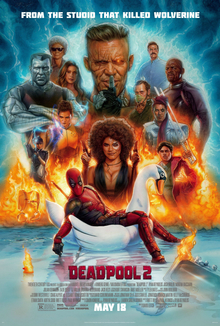
Deadpool 2

After an experimental cancer treatment leaves Special Forces veteran Wade Wilson (Ryan Reynolds) deformed, insane, and capable of healing from any injury, he becomes the costumed mercenary Deadpool. But when personal tragedy strikes, a despondent Wade finds himself searching for purpose. He reluctantly forges a friendship with Russell (Julian Dennison), a troubled teenage mutant with pyrokinetic abilities. Meanwhile, Cable (Josh Brolin), a cybernetic soldier from the future, has lost his wife and daughter to an older Russell’s wrath. He travels back in time to kill Russell before the teen turns murderous, leading Wade to recruit a team to protect his young friend.

2016’s Deadpool pulled a coup of sorts, transforming an absurdist, self-referential comic book into a successful R-rated action-comedy. In this follow-up, the novelty of seeing The Merc with the Mouth on the screen has worn off, but it’s still a highly entertaining outing.

As with the previous film, Deadpool 2 is not for the young or squeamish. There is plenty of violent slapstick and crude humor to go around, and several characters bite the dust in morbidly amusing ways. However, this irreverence is tempered by a surprising amount of sentimentality. Wade’s love for Vanessa (Morena Baccarin), suicidal despair, and eventual concern for Russell are all played straight, and the franchise’s friendly rivalry with the Wolverine films sees Deadpool try to consciously eclipse Logan’s more poignant moments.

Reynolds continues to do excellent work in the title role, shifting from fourth wall-breaking wisecracks to inventive threats to heartfelt declarations, all with equal conviction. It helps that he is given plenty of great lines courtesy of writers Rhett Reese and Paul Wernick. The duo directed this film as well, and though they replaced a special effects pro in Tim Miller, Deadpool 2’s aesthetics don’t seem to suffer much for it. The action sequences remain fast and fluid.

The supporting cast features exactly the right mix of personalities for Reynolds to play off of. Among the returning allies, Brianna Hildebrand’s Negasonic Teenage Warhead continues to cast a disapproving side-eye, Stefan Kapcic’s Colossus continues to try to make a hero out of Wade (though even he has limits), and formerly timid taxi driver Dopinder (Karan Soni) seems eager to get in on the action. Newcomer Zazie Beetz brings both snark and competence to her role as luck-manipulating mutant Domino. Brolin’s casting as Cable was somewhat controversial given the other rumored candidates, his lack of towering height, and the fact that he is already voicing another Marvel character (which Wade, of course, lampshades – “Zip it, Thanos” indeed). Though arguably not the best possible choice, Brolin still does the character justice, and his grim gravitas makes Cable an effective foil for Wade’s antics.

Deadpool 2’s plot, however, seems like little more than a contrivance to bring these characters together. Derivative and creatively barren, it shamelessly samples The Terminator, Looper, and other sci-fi action fare. Granted, Deadpool fans likely didn’t pick this flick for its story, but even by those low standards, this is a weak link.

Funny and filthy, thrilling and touching, Deadpool 2 packs a lot of entertainment into its two hours. A rumored follow-up – X-Force – may have trouble meeting expectations when the bar has already been set this high.


8/10

Wednesday, March 28, 2018

Car-Themed Crime Capers: Baby Driver and Logan Lucky

There was a time when a car-themed action movie was not an invitation to low expectations. The original Vanishing Point trafficked in a search for meaning and existential themes as much as it did in chase sequences while the original Gone in 60 Seconds, though low-budget and amateurish, showed a remarkable amount of ambition for a small, independent project. Even the first Smokey and the Bandit, cheesy relic that it may be, had plenty of off-kilter charm. These artifacts contrast heavily with today’s self-plagiarizing and self-parodying franchise fare (think Fast and the Furious/Transporter) where cool cars serve as signifiers of anti-heroism and little else.

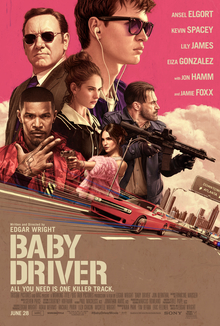
Fortunately, a pair of 2017 films have made some inroads into reversing this trend. In Edgar Wright’s Baby Driver, the titular protagonist’s prowess behind the wheel is as much a burden as a blessing. The nature of his work also ensures that for every bright red Subaru Impreza he pilots, he also cruises around in far less conspicuous rides. Meanwhile, in Steven Soderbergh’s Logan Lucky, the nominal hero isn’t a hotshot driver. His sister, who operates a borrowed Ford Shelby GT, comes closer to fitting the bill, but her leadfooted proclivities are identified as a potential liability rather than an asset. Both movies work to subvert car flick expectations in interesting ways and are quite entertaining in their own right.

Baby Driver’s Baby (Ansel Elgort) is a young man stricken with tinnitus from the car wreck that killed his parents. He constantly listens to music on his iPod to drown out the ringing in his ears, often while he serves as a getaway driver for heists organized by Doc (Kevin Spacey), to whom he owes a debt. A chance meeting with a waitress, Debora (Lily James), gives Baby a shot at an honest life, but Doc has other ideas.

Aside from his collaborations with Simon Pegg, Wright is perhaps best known for directing Scott Pilgrim vs. The World, and Baby Driver calls that film to mind in its use of music and over-the-top sensibility. Almost all of Baby Driver is synched to Baby’s playlists, and the selection is impressively varied. Everything from Simon & Garfunkel to Queen to Danger Mouse makes an appearance, and the timing is impeccable. The action is well-choreographed albeit often ludicrous, and the same can be said for some of the performances. Jamie Foxx walks a thin line between hilarious and terrifying as the violently unstable robber Bats, and while Spacey might be a despicable human being, he remains a fine actor, adding layers of complexity to the overbearing boss-type that he has played many times before.

That said, James’s role is underwritten and Elgort is all too often overshadowed by the star power that surrounds him. This is also a style-over-substance movie, and while its style is original, fluid, and highly engaging, one wishes there was more than just genre clichés at its heart.

Speaking of familiarity, Logan Lucky can’t help but call to mind Soderbergh’s previous work as it plays like a cross between his Ocean trilogy and Talladega Nights. Newly laid off from his construction job at Charlotte Motor Speedway, Jimmy Logan (Channing Tatum) conspires with his one-handed war veteran brother Clyde (Adam Driver) and sister Mellie (Riley Keough) to rob the Speedway during a big race. To succeed, the siblings will need to break veteran safecracker Joe Bang (Daniel Craig) out of jail, but things become complicated when Bang insists on the participation of his idiot brothers.

Though it lacks Baby Driver’s verve, Logan Lucky is hardly an unstylish film. Soderbergh deploys his usual array of quick cuts, montages, and editing tricks. Both David Holmes’s score and a soundtrack featuring the likes of Loretta Lynn and Patsy Cline fit the film’s setting and on-screen action.

While Logan Lucky’s script (courtesy of the mysterious “Rebecca Blunt,” a possible pseudonym for the director and/or his wife Jules Anser) has its share of funny lines, the movie also derives quite a bit of humor from its casting. From Tatum playing against type as something of a loser to a bleach blond Craig as a redneck savant to Driver (an actual Marine veteran best known for playing the arch nemesis kin to a one-handed warrior) to NASCAR ace Carl Edwards as a state trooper, there are plenty of unexpected, amusing, and inspired choices.

And yet for something that was supposed to momentous – Soderbergh’s return after a well-publicized 2013 retirement – Logan Lucky can’t help but feel like a minor work, an enjoyable movie though not an impactful one. Moreover, the absence may be enough to make the director’s old tricks seem new again, but one hoping for something new may feel a bit let down.

With ninth and tenth installments in the works, we’re in no danger of running out of Fast and Furious films any time soon, and their brand of boisterous brainlessness will continue to cast a large shadow. However, as Wright and Soderbergh have shown us, we needn’t take “car movie” as a synonym for skippable.

Baby Driver: 8/10

Logan Lucky: 7.75/10

Monday, December 18, 2017

Star Wars: The Last Jedi

Pursued through space by the nefarious First Order, the Resistance faces dwindling fuel and a leadership crisis. Former stormtrooper Finn (John Boyega), mechanic Rose Tico (Kelly Marie Tran), and droid BB8 travel to resort planet Canto Bright to recruit a master codebreaker who will allow the Resistance to disable the First Order’s tracking device. They are aided by ace pilot Poe Dameron (Oscar Isaac), whom General Leia Organa (Carrie Fisher) recently reprimanded for his recklessness. Meanwhile, former scavenger Rey (Daisy Ridley) has journeyed to remote Ahch-To to recruit Jedi master Luke Skywalker (Mark Hamill) to the Resistance’s cause and learn more about her burgeoning Jedi abilities. Luke, however, wants nothing more than to be left alone as he is still stung by the defection of his nephew Ben Solo (Adam Driver) to the dark side. Now, as the First Order operative Kylo Ren, Ben uses his psychic link to Rey to try to win her allegiance while she does the same to secure his.

For all of George Lucas’s half-baked ideas and for all of the valuable contributions made by others (his ex-wife/editor Marcia, screenwriter Lawrence Kasdan, and producer Gary Kurtz especially), Star Wars films have, for the most part, been a continuation of a story Lucas began telling forty years ago. Even 2015’s The Force Awakens, a Lucas-free affair helmed by J.J. Abrams – owed an obvious debt to 1977’s A New Hope. The eighth episode in the series sees not only a new writer/director (Rian Johnson, best known for Brick and Looper) but one who would dare take the franchise in a different direction. This, of course, raised the ire of longtime fans, for whom such deviations are heresy. Factor out such allegiances, however, and The Last Jedi is still a divisive film: beautifully shot and convincingly acted but poorly plotted and clumsy in its messaging.

At two-and-a-half hours, The Last Jedi is the longest Star Wars film to date, but it does not have the feel of a long movie. It’s a fluid film that maintains tension and excitement throughout. Spacecraft combat, chase sequences, and hand-to-hand fights make for lively viewing. From the creepy caves of Ahch-To to the blood red mineral deposits of the planet Crait, there are some striking visuals. Johnson complements this rich palette with a preference for practical effects and puppetry rather than conspicuous CGI. Were it not for a ridiculous shot of Leia using Force powers to twirl through space, this would easily be best-looking Star Wars film to date. John Williams’ music remains as fitting as ever.

While Johnson thrives as a director, his writing very nearly sinks this film. Not since Dawn of Justice has an otherwise credible big-budget affair been this badly plotted, and a large chunk of the problem boils down to misplaced priorities. The Finn/Rose sidequest to Canto Bright comes across as a waste of time when the codebreaker they retrieve (Benicio Del Toro in an underwritten role) proves not all that he cracked (pun intended) up to be. Instead, it not only pads the film but also plays as a flimsy pretext for tossing in broadsides against economic exploitation and animal cruelty. This is still more that can be said for the needless conflict between Poe and awkwardly introduced Resistance Vice Admiral Holdo (a purple-haired Laura Dern, who is given more to work with), a point of contention that could have easily been avoided had Holdo filled Poe in on her plan when he asked. Frustratingly, Johnson chose these threads as worthy of emphasis while deeming an explanation for the First Order’s sinister Supreme Leader Snoke (voiced by Andy Serkis) surplus to requirements.

Johnson also likely won few admirers by transforming Luke from a triumphant symbol of hope into a bitter and scared old man. However, this decision actually pays off: it adds an edge to Luke’s do-gooder character that was previously missing, and it gives Hamill a chance to do more actual acting. Though best known for his voicework these days, he proves up to the task. He’s in good company: with the exception of Del Toro (who, again, had very little to work with), most of the cast puts on a good showing. The late, much-missed Fisher gives one hell of a final performance as Leia, imbuing the ex-princess with both steely resolve and well-timed sarcasm. Isaac and Boyega continue to grow their characters as Poe learns some measure of restraint while Finn gains the willingness to lay his life on the line for a cause. The Rey-Kylo dynamic continues to fascinate, and both Ridley and Driver do a great job of projecting inner anguish.

Like its predecessors, The Last Jedi offers annoying kid-friendly critters. This time, they take the form of porgs, a type of big-eyed bird. The best that can be said is that the audience isn’t the only one suffering in their presence: they are a thorn in Chewie’s side throughout the film, something that is played for laughs. Speaking of humor, The Last Jedi consciously plays it up at times. It’s a great deal more conspicuous than the improvised Han Solo quips of yore. Sometimes, it works (Luke acknowledges that Rey’s home planet is pretty much nowhere); in other places, it feels forced.

At one point in The Last Jedi, Kylo comes to the conclusion that the only way for him and Rey to find a way forward is to destroy what remains of the past. At first glance, Johnson seems all too comfortable with that notion, but by the end, The Last Jedi has sewn hope for the future, both in story and out. It is unfortunate that getting there was such a contrived, if exhilarating, mess.


7.75/10

Friday, May 12, 2017

The Accountant

An autistic math genius (Ben Affleck) who takes the names of famous mathematicians as cover identities works as a forensic accountant for criminal organizations. His latest client, a robotics company headed by Lamar Blackburn (John Lithgow), initially seems like a change of pace, but after he and in-house accountant Dana Cummings (Anna Kendrick) uncover an embezzlement scheme, their lives are endangered. Meanwhile, retiring Treasury official Ray King (J.K. Simmons) has tasked analyst Marybeth Medina (Cynthia Addai-Robinson) with bringing the accountant down.

From Rain Man to Cube, films have had the unfortunate habit of stereotyping autistic individuals as socially impaired savants. At first glance, The Accountant, appears to continue this trend. However, Affleck’s protagonist is actually a subversion, for while he is skilled at computation and somewhat socially awkward, he is also successful, independent, and a deadly fighter and marksman (more on that later). By giving “Christian Wolff” a number of ritualistic behaviors (i.e. repeating a nursery rhyme as a calming mechanism) while refusing to allow him to be defined solely by them, Affleck and screenwriter Bill Dubuque successfully created a complex, fully realized character. His is not the only character here that defies cliché. Dana does not become a romantic interest, King is not a Javert-like bureaucrat, and even the primary villain is given a plausible motivation.

Unfortunately, these characters are wedded to a dumb, contrived action plot. The in-story rationale for “Christian” being a lethal combatant is that his military officer father trained him from a young age as a way of helping him cope. Right. Maybe Affleck got jealous of all that Matt Damon was able to do as Jason Bourne, maybe he wanted to practice fisticuffs in between outings as Batman, or maybe he felt the need to compensate for the passiveness of autistic characters in previous films. Whatever the rationale, executing headshots with improbable aim or disabling assassins at close range works against the nuance of the characterization. It isn’t that the action sequences are poorly filmed – to the contrary, the fights make good use of Indonesian-style martial arts and director Gavin O’Connor’s previous experience helming Warrior – it’s that they are unnecessary. Having “Christian” be underestimated and prevail through his mathematical skills and/or attention to detail would have made for a far more interesting film.

As an action film, The Accountant is serviceable, but it had the potential to be quite a bit more.


7/10

Wednesday, December 21, 2016

Rogue One

After sending his daughter Jyn into hiding, scientist Galen Urso (Mads Mikkelsen) is forcibly recruited by Imperial weapons developer Krennic (Ben Mendelsohn) to work on the Death Star. Years later, Jyn (Felicity Jones) is freed from prison by Rebel Cpt. Cassian Andor (Diego Luna) and his droid K2SO (voice of Alan Tudyk), who need her to forge an alliance with Rebel extremist Saw Gerrera (Forrest Whitaker), who is holding an Imperial defector (Riz Ahmed) carrying a message from Galen. En route to Gerrera, the Rebels join up with Chirrut (Donnie Yuen), a pious blind warrior, and Baze (Jiang Wen), his cynical mercenary friend. Meanwhile, Krennic is facing increased pressure to prove the Death Star’s effectiveness in the face of skepticism from his rival, Grand Moff Tarkin.

Given the renewed interest in the Star Wars franchise stirred by the success of Episode VII, it is easy to see Rogue One, a side story, as an unnecessary attempt to keep milking the cash cow. However justified this cynicism may seem, for a placeholder (until Episode VIII arrives next year), Rogue One is a lot better than it needs to be. For Star Wars fans, it bridges the gap between Episode III and the original/Episode IV, adding context to the earlier stories while bringing back some familiar names and faces (such as Jimmy Smits as Bail Organa and, notably, James Earl Jones as Darth Vader). For those who typically find Star Wars silly or are simply not well-versed in its mythology, Rogue One works well enough as a stand-alone film featuring a darker tone and a lack of annoying kid-appeal characters.

Though it clocks in at over two hours, Rogue One moves briskly with no real lags. Director Gareth Edwards previously helmed 2014’s Gozilla reboot, and he seems to have ironed out the pacing problems that plagued that film. Edwards brings to Rogue One a sharp eye for stylized action, deftly blending martial arts, shootouts, and spacecraft battles. The latter remain a bit visually disorienting – too many objects on screen to keep track of at a time – but no moreso than previous Star Wars films, and the battle that takes up the last half-hour of the movie (during which dogfights play a key role) is executed impressively well. Edwards also helps bring to life new planets, and the changes of scenery are refreshing even if some of the locales are destined to be fodder for the Death Star’s devastating power.

While two hours of kinetic, aesthetically pleasing combat and mayhem would have been enough to satisfy some viewers, Rogue One also manages, as best it can, to add some complexity to the franchise’s central good vs. evil conflict. The forces of the Empire are as malevolent and foreboding as ever, but they are not a monolithic evil. Here we get a look at the political maneuvering and brinksmanship within the Imperial ranks. The Rebels, for their part, take on a more morally ambiguous role than in previous films: Andor is willing to straight-up assassinate Galen if he believes it will halt the Death Star, and the leadership council is fraught with bickering. Though we know, by virtue of Rogue One’s place in the Star Wars chronology, that the movie will end on a hopeful note, it doesn’t take the easy way in getting there.

Unfortunately, that fixed place in the chronology makes for some stilted character development. There are definitely exceptions to this shortcoming: Jyn transitions from cynical criminal to someone who is willing to take up a cause, Andor rediscovers a measure of idealism after making many coldly pragmatic decisions, and Galen shows that it is possible to serve (however unwillingly) the side of darkness and maintain a measure of humanity. Not surprisingly, these roles were the best-acted, and Mikkelsen’s sympathetic turn is a welcome break from the antagonists he usually plays. Credit too goes to Tudyk, whose K2 is the prissy C3PO’s opposite: a combat capable, brutally honest, and insolent (though ultimately loyal). Beyond that, however, the characters are either static, underdeveloped, or both. Cool as he is, Chirrut is a zatoichi caricature, Baze seems to be just along for the ride, it is never made clear what drove Ahmed’s character to ultimately defect, and Krennic is too much of a one-note career climber to be truly threatening. Lastly, a woefully miscast Whitaker gives a distractingly bad performance. He’s supposed to be the Star Wars equivalent of Che Guevara, but instead he comes across closer to a less sinister Robert Mugabe: an aged, deeply paranoid former revolutionary. The screenplay (by Chris Weitz and Tony Gilroy) is funny in places, but there is also a fair amount of clichéd/uninspired dialogue and a general lack of quotable lines.

Rogue One lacks the grandeur, memorable characters, and world-building of a “proper” Star Wars film, but in unencumbering itself and accepting its place in the larger scheme of things, it also loses grating sidekicks and plot bloat. It is by no means a vital film, but it is definitely an enjoyable one.


8/10

Thursday, April 21, 2016

Nostalgic Spy Cinema: Spectre and Mission Impossible: Rogue Nation

The Cold War, for all its multifaceted awfulness, lined the pockets of many a writer, particularly those in the espionage genre. After all, there was a readily identifiable, ripped-from-the-headlines antagonist: the nefarious Soviet Union and its proxies. Fighting global Communism gave Western secret agents not only the license to kill, but licenses to seduce, betray, assault, abuse, and cause untold millions of dollars in property damage. Even on occasions when Soviet and Western operatives teamed up to face a bigger threat, there were tensions and cross-cultural misunderstandings to be exploited. Of course, it’s always easy to critique decades after the fact, and for many, the nostalgia filter is as sturdy as the Berlin Wall used to be. Love them or hate them, the Cold War years gave birth to undeniably impactful spy franchises, James Bond and Mission: Impossible among them. Half a century of wars, seismic geopolitical shifts, and franchise reboots later, and both series are still very much alive. Not only that, but in an introspective (sort of) feat that wouldn’t have been possible years ago, both find themselves grappling with their very reasons for existing in this day and age. Paradoxically, rather than using that as an opportunity to break new ground, both have instead delved into their respective pasts, with decidedly mixed results.

Both 2015 releases have a remarkably similar plot, to the extent that plagiarism accusations abounded post-release. In both films, the venerable spy agency (MI6 and IMF, respectively) is called to account for its excess and questionable methods and put under the watchful eye of a skeptical bureaucrat (Andrew Scott and Alec Baldwin, respectively). Despite this added scrutiny, the protagonists (Daniel Craig’s James Bond and Tom Cruise’s Ethan Hunt) push the envelope to take down a nefarious global organization (SPECTRE and The Syndicate).

For fans of these series, the nostalgia factor is high. Not only does Spectre bring back the eponymous organization, but there are homages galore to prior entries. Snowy mountain chases, deadly fisticuffs aboard trains, and love interests with criminal parents all make an appearance here, as does criminal mastermind Blofeld (Christoph Waltz, who plays the character under an alias for a good chunk of the film) and his white cat. Those who objected to previous Daniel Craig entries being too Bourne-like will have enough here to conceivably tilt their criticism the other way. For its part, Rogue Nation embraces disguises, gadgets, and teamwork, all features of the original television series that were sometimes absent in previous cinematic outings.

Both films, however, offer more than just reference and in-jokes. Directors Sam Mendes and Christopher McQuarrie keep a brisk pace and provide plenty of thrilling action set pieces. By now, Craig and Cruise have had plenty of time to grow into these roles and play them with competence and confidence. They are matched by amusing comic-relief tech support (Ben Whishaw as a dry-witted Q and Simon Pegg doing Simon Pegg things as Benji Dunn), leading ladies who defy expectations (Leya Sedoux’s Dr. Swann initially regards Bond as a crazed thug while Rebecca Ferguson’s Ilsa Faust leavers viewers guessing as to her true allegiance), and chillingly cold villains (Waltz and Sean Harris).

The biggest distinction here lies in the writing. Rogue Nation incorporates plenty of twists and strains credibility at times, but it avoids biting off more than it can chew. Positioning its antagonists as former spies gone rogue, it shows what might happen if IMF lost its way. Spectre, on the other hand, suffers from overreach. It’s attempt to position SPECTRE as the driving force behind events of the previous three films comes across as an awkward retcon while giving Blofeld a more personal connection to Bond and a revenge-based motivation arguably cheapens the character. Moreover, while Rogue Nation is in some ways an improvement over its back-to-basics predecessor, the previous Bond film, Skyfall, was easily the best Bond film in 20 years and thus gave Spectre too high a bar to reach.

Looking ahead, it is unlikely that either franchise will come to a crashing halt any time soon, but both will need to adapt to survive. The search is already on for Craig’s replacement, and the 53-year-old Cruise cannot run and jump forever. Last year, these franchises showed us the allure of classic espionage. Here’s hoping they can find a way to look forward as well as back.

Spectre: 7.25/10
Rogue Nation: 7.75/10