Showing posts with label Memoirs. Show all posts

Thursday, August 20, 2020

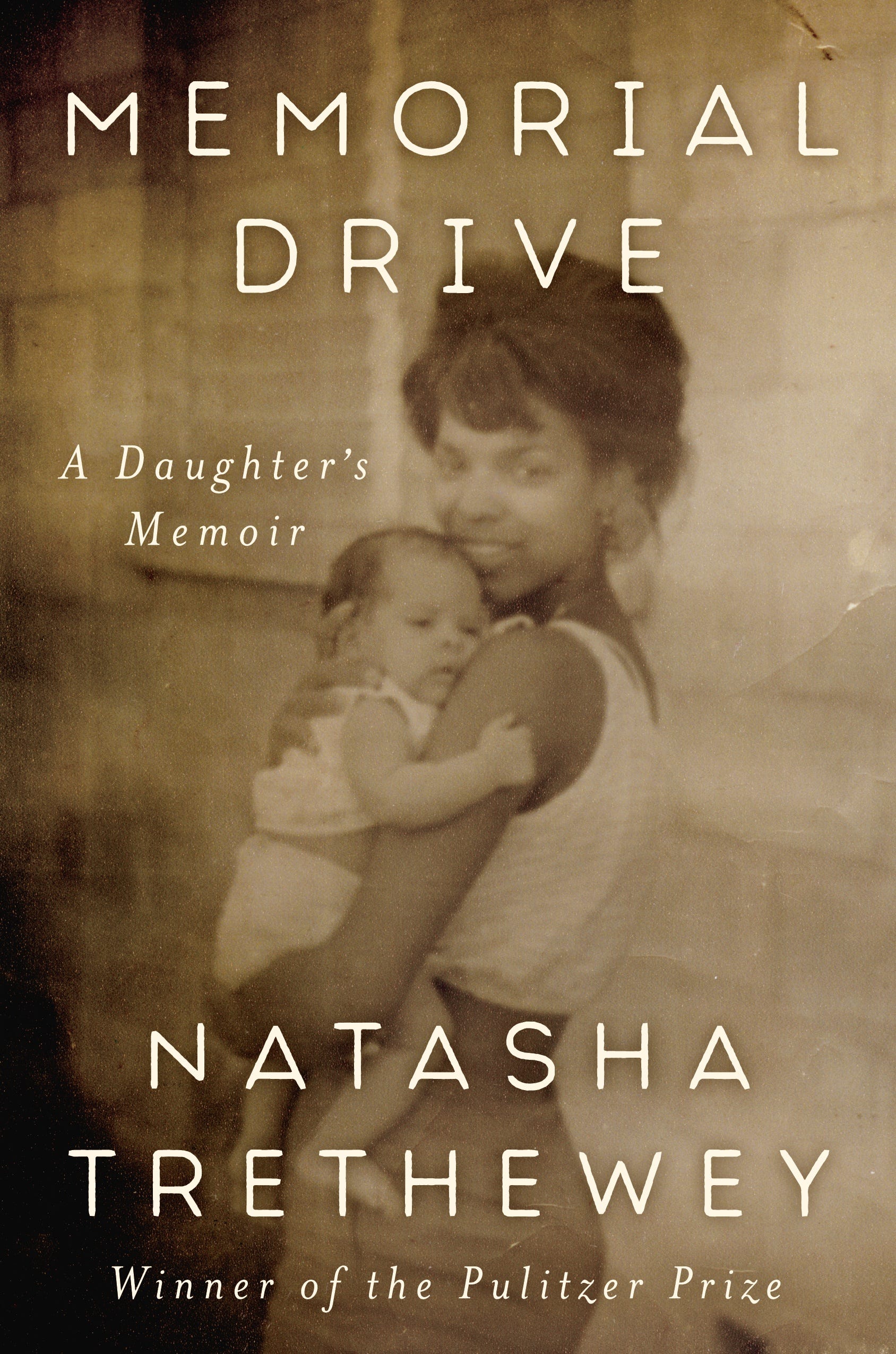
Memorial Drive: A Daughter's Memoir


When Natasha Trethewey was nineteen, her mother was murdered by her abusive, unstable former stepfather. Years later, Trethewey has crafted a memoir that looks at her childhood, her relationships with the woman who raised her and the man who took everything, and the circumstances surrounding the fateful event.


A former U.S. Poet Laureate, Trethewey writes with the precision and care one would expect, but her prose amounts to far more than well-crafted turns of phrase. Though reflective and digressive, Memorial Drive is marked by undercurrents of sadness and tension that enchant audiences and bind the narrative. Trethewey shifts fluidly from personal ruminations to documentary evidence such as police reports and phone transcripts. The latter’s inclusion may seem jarring, but it helps to create an indelible (and horrifying) impression of the terror that Joel Grimette subjected his (former) family to and Gwen’s rational yet futile attempts to resist.


There are strong parallels here between Tretheway’s tale and the one shared by Trevor Noah in Born a Crime. Like Noah, Trethewey is biracial, and as in Born a Crime, Memorial Drive explores the complexities of racial identity. But whereas Noah (a comedian) tempered his accounting of his life’s calamities with humor, Trethewey leaves us only the anguish of avoidable tragedy.


Sunday, January 13, 2019

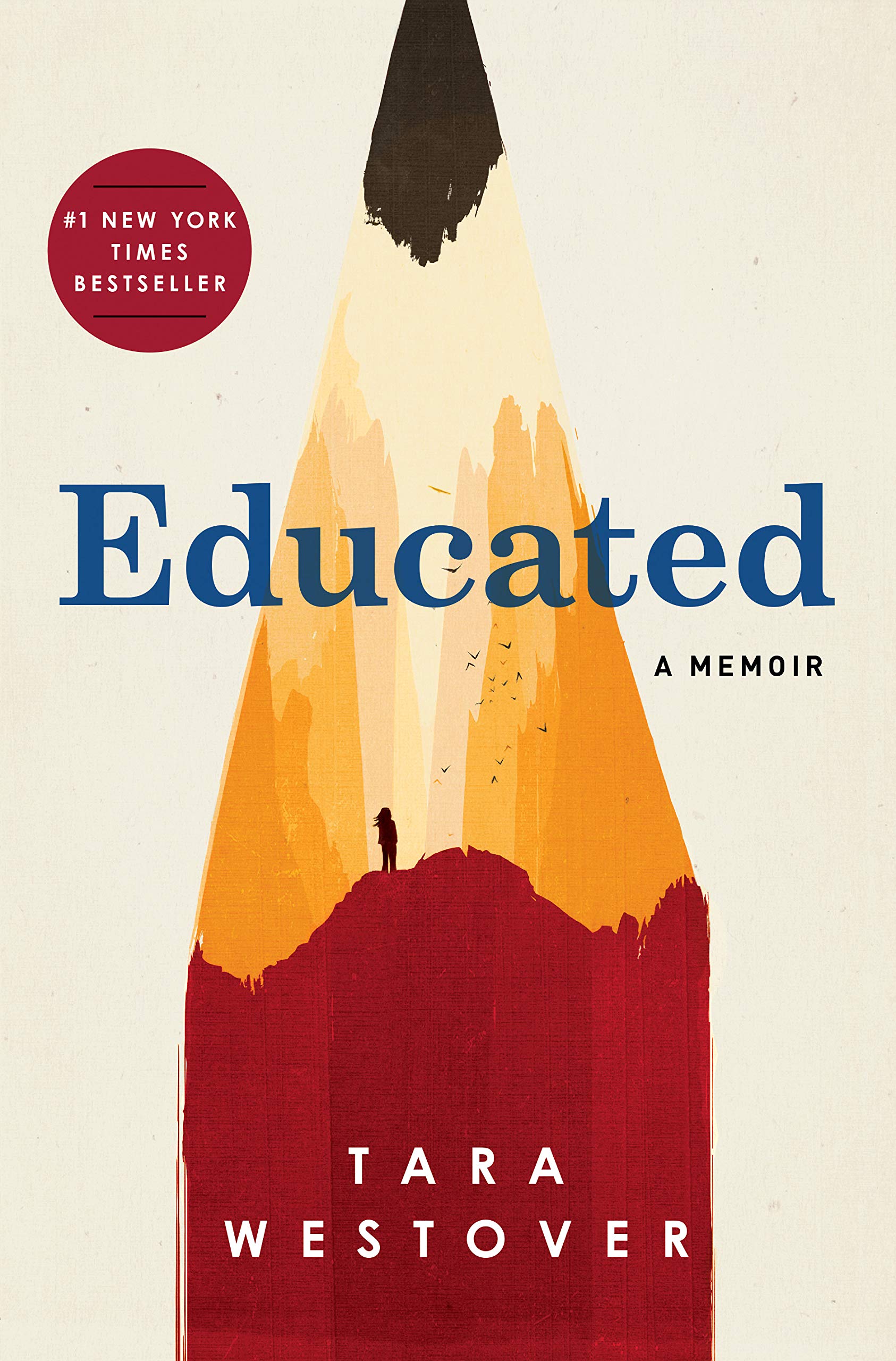
Educated: A Memoir

In this 2018 account, Tara Westover explores her childhood as the youngest of seven siblings in a Mormon survivalist family in rural Idaho. Public schools and doctors were considered the tools of the devil, and Westover spent the first nine years of her life without a birth certificate. After her older brother, Tyler, left home to go to college, he encouraged Tara to do the same. But even as she worked toward independence by acting in local theater productions and studying for the ACT, family stood in her way: her father did not support her ambitions, and another older brother, “Shawn,” violently bullied and abused her. Against long odds, Westover won a scholarship from Brigham Young University, a fellowship from Harvard, and, finally, a doctorate in history from Cambridge, a process of ongoing education that gave – and cost – her much.

Since its release last year, Educated has garnered praise from the likes of Barack Obama and Bill Gates. It isn’t hard to see why. A raw, messy, yet ultimately inspirational tale, it is at once astonishing and relatable. Not going to the hospital after suffering life-threatening injuries or making it to college without ever having learned what the Holocaust is may seem unfathomable to the great majority of us who did not share Westover’s upbringing. At the same time, balancing affection for family with the need for space, standing up to abuse, battling self-doubt, and trying to find your place in the world are hurdles that many have had to cross, and Westover captures the difficulty of doing so as well has her own often conflicted feelings with clarity and poise. She shows both steel resolve and paralyzing uncertainty as well as a thirst for knowledge and exploration tempered by the lure of the past.

That being said, it is possible that Educated has taken some measure of dramatic license. Westover’s parents have disputed the account, but that can easily be read as living in denial or trying to save face. However, even Tyler, though generally supportive of the memoir, has challenged the depiction of their parents as anti-education (as opposed to merely homeschoolers who disdained public schools). Add to that a 2009 photo of their father that shows none of the facial deformities the book makes clear that he has as well as the author’s admitted haziness regarding some of her own memories, and it is fair to ask what may have been altered to tell the best story.


These concerns do not invalidate the book or make it any less worth reading, nor should it be read for the wrong reasons. Educated is not an indictment of Mormonism or of homeschooling, but rather of the sort of warped mindset that regards rolling up one’s sleeves while working outside in the summer heat as a scandalous affront, BYU as a hotbed of worldly, godless socialism, and being in excruciating pain after narrowly surviving an explosion a divine gift that should be warmly welcomed. The book – and the “Dr.” that now precedes Westover’s name – also affirm that adversity is not destiny, and it is this latter message that is needed now more than ever.
Friday, June 1, 2018

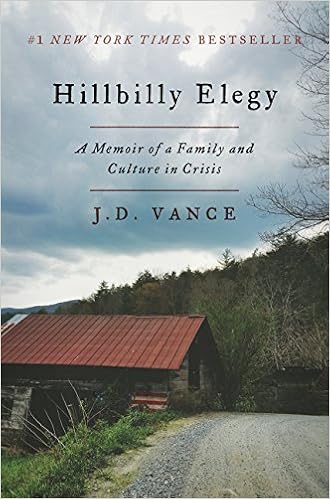
Hillbilly Elegy

In this memoir, Marine veteran and Yale Law graduate J.D. Vance describes growing up in a dysfunctional family in the Rust Belt of Ohio and the influence of the rural Appalachian values instilled by his Kentucky-bred grandparents.

Admittedly, I approached this book with skepticism. Theories of social rot/moral decay rank up there with the purported impact of violent video games in terms of eye-rolling and dead-horse tropes. Nevertheless, I am glad that I gave it a chance. Vance has a powerful tale to tell, and it’s one worth hearing no matter who you are or where you come from.

With commendable candor, Vance describes the difficult circumstances faced not only by him and his family but by the economically depressed communities they inhabited as well. Raised by a drug-addicted mother and her string of short-lived husbands and boyfriends, the overweight J.D. is propped up by his fierce gun-toting grandmother and encouraged to make something of himself. He eventually does, but not without considerable difficulty, first as a Marine disdainful of authority and later as a conservative white man from a poor background at Yale.

The portrait that Vance paints of working-class white America is not a flattering one: he shows hillbilly culture to be insular, distrustful to the point of paranoid, and prone to addiction and violence. Though some have attacked him on this point – and he arguably does paint with too broad a brush — the book is not a hatchet job. Vance also talks about the loyalty shown by family and the positive influence of his grandmother, traits that served him well later in life.

If this were the extent of Hillbilly Elegy, it would be a fine example of a contemporary memoir. Unfortunately, Vance also dips his toe in the pool of sociology and political science, and these aspects of the book are far less convincing. To Vance’s credit, he creates distance between himself and the conspiracist vitriol embraced by white hillbillies. His contention that certain bureaucracies (i.e. Social Services) are ill-equipped to meet their needs is also not without merit. And yet Hillbilly Elegy is very light on solutions. Perhaps unfairly, this book was hyped as something that could explain the rise of Trumpism. By that measure, it’s a failure.

If you ignore the faltering attempts at achieving broader relevance and focus on the personal story told within, Hillbilly Elegy is an engaging, inspiring read, sometimes funny, sometimes horrifying, but never insipid or canned.


7.5/10

Monday, August 21, 2017

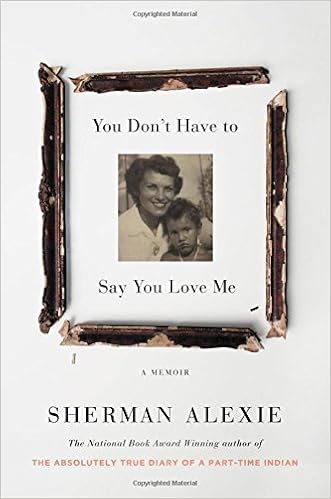
You Don't Have to Say You Love Me


            In the aftermath of his mother’s death in 2015, Sherman Alexie examines her influences on his life. He tries to reconcile her role as a healer in their Native community with her sometimes cruel parenting, and he explores the factors that made them both what they are.
            A Spokane-Couer d’Alene man who grew up not only in poverty on a reservation but also with seizure-inducing hydrocephalus, Alexie could fill volumes just on the suffering he and his family have endured. But Alexie has never been one to grab the low-hanging fruit, and therein lies his brilliance. While You Don’t Have to Say You Love Me does indeed catalog accounts of poverty, substance abuse, sexual abuse, bullying, and more, Alexie also weaves in moments of tenderness and quite a bit of his now-familiar dark humor. This willingness to confront life’s complexities can be found throughout this memoir. Alexie both slams the late Lillian Alexie for her anger and verbal abusiveness while also honoring her as a survivor and a stabilizing force. He condemns years of white oppression while also excoriating his Indian abusers and the stifling reservation climate of conformity that allows abuse to go unchecked. He blends bullying woes and basketball triumphs, alternates between recounting the facts of his life and imagining hypothetical lives unlived (i.e. “What if I had stayed on the reservation?”) and switches seamlessly between prose and poetry.
            This constant movement may prove disorienting and perhaps distracting for the uninitiated, and Alexie’s recounting does become thematically repetitive after a while. To the frustration of some, You Don’t Have to Say You Love Me is not a taut narrative but a sprawling, deeply personal work of introspection.
However, the honesty of Alexie’s insights provides adequate motivation to overlook the book’s structural lapses and idiosyncrasies. As a bonus, the author narrates the audiobook version and gives an impassioned reading throughout. This is a must-read (or listen) for those who want to see how adversity can be handled with compassion.


8.5/10