Showing posts with label Thriller Films. Show all posts

Sunday, January 8, 2023

The Menu


Margo (Anya Taylor-Joy) accompanies enthusiastic foodie Tyler (Nicholas Hoult) to the Hawthorn, an exclusive restaurant situated on a private island. They are joined by a food critic (Janet McTeer), a movie star (John Leguizamo), and other wealthy elites for an extravagant meal prepared by world-renowned chef Julian Slowik (Ralph Fiennes). But as the evening progresses, it becomes clear that the only thing Slowik really plans to serve is revenge.


Directed by Mark Myold, The Menu is part thriller, part darkly comedic social commentary. It’s aesthetically impeccable with a handful of strong performances and several hilarious and unnerving moments, but Will Tracy’s script with its underwritten characters and clumsy messaging is tough to swallow.


The Menu’s opening – insufferable rich folks board a boat for an island getaway that blows up in their faces – will seem familiar to anyone who saw fellow 2022 release The Glass Onion. However, whereas Rian Johnson’s cast of scoundrels was amusingly audacious, this group is largely forgettable. There are the aforementioned critic and actor, a trio of Wall Street bros, a perpetually drunken older relative, etc. Leguizamo playing a boorish has-been actor doesn’t strain the imagination (interestingly he based his performance on horrible memories of working the Steven Segal) though anyone could have played this role (and it was actually written with Daniel Radcliffe in mind). Hoult’s character is an exception to this bland stereotyping as Tyler vacillates between giddy excitement and sociopathic indifference to the growing danger around him. He’s ultimately too pathetic to be truly disturbing, however.


The movie’s attempt at thematic resonance is another misfire. A straightforward eat-the-rich bromide, while tired, would have at least been coherent. The Menu, however, seems to want to both validate that message while simultaneously pushing its antithesis. In addition to being unhinged, Slowik is by his own admission complicit in everything he rails against.


Despite these flaws, The Menu is a far cry from a disaster. Fiennes is in peak form here, playing Slowik as both deranged and wounded, monstrous yet all too human. Though her character is hampered by the aforementioned script problems, Taylor-Joy is often the film’s anchor, acting as an audience surrogate by calling out the excesses all around her. Hong Chau also does good work as Elsa, Slowik’s maitre’d who follows him with steely resolve and cult-like devotion.


Moreover, for all of its muddled messaging, The Menu’s means of delivery is wickedly funny. Slowik’s acts of vengeance embody all of the pretension and visual spectacle we associate with haute cuisine. In one moment, guests are served tortillas with embarrassing moments printed on them; in another, a sommelier’s description of a bottle includes notes of regret. The dish descriptions that follow each of the movie’s “courses” are another pitch-black highlight.


The Menu is a satisfying main with an unpalatable side. Eat and enjoy what you can of it, ignore the rest, and hope that nothing gets stuck in your teeth.

Sunday, March 13, 2022

The Batman


On Halloween night, Gotham City mayor Don Mitchell Jr. (Rupert Penry-Jones) is brutally murdered by masked killer The Riddler (Paul Dano), who leaves behind a cryptic clue for vigilante crimefighter Batman (Robert Pattinson). Though Gotham police higher-ups have a deep distrust of the caped crusader, Lt. James Gordon (Jeffrey Wright) trusts him and welcomes his help. Batman decides to look for leads at the Iceberg Lounge, a nightclub run by Oz Cobblepot aka the Penguin (Colin Farrell) on behalf of mafia don Carmine Falcone (John Turturro). While infiltrating the lounge, Batman meets Selina Kyle (Zoe Kravitz), a thief who enlists him to help her find her missing friend. As the Riddler’s targets expand to include more and more corrupt Gotham officials, Bruce Wayne – Batman’s civilian alter ego – begins to see a connection to his murdered parents. His growing obsession disturbs his butler and confidant Alfred Pennyworth (Andy Serkis), but he will not stop until The Riddler is unmasked and the truth is revealed.


Matt Reeves’ long-delayed and long-anticipated take on a Batman film grew out of what was supposed to be a Ben Affleck project before morphing into something else entirely. The end result manages to provide a semi-fresh take on an oft-adapted character and a gripping murder mystery that only occasionally falls prey to its excesses.


The Batman is both tonally and aesthetically a very dark film. Even more so than most adaptations, Gotham here is depicted as a cesspool of bottomless corruption. Correspondingly, The Riddler’s murders of those responsible for it are that much more brutal than typical costumed villain hijinks. Much of the action takes place at night, and Michael Giacchino’s haunting theme only adds to the ambiance. Reeves’ film isn’t quite as dazzling as Christopher Nolans’ trilogy (a testament to how well those films hold up visually after more than a decade), but it’s still well-choreographed with style to spare. A chase scene involving the Batmobile (reimagined here as a massively modded muscle car) pursuing a gun-toting Penguin down a highway is a particular standout.


A capable cast largely supplies the substance to match. Pattinson is an excellent Batman, mastering the character’s menacing whisper, noirish voiceover, and unflappable dedication while also showing hints of vulnerability that befit a hero still coming into his own. The Bruce Wayne side of the character, on the other hand, feels hollow and underwritten. True, Batman is the “real” personality and Bruce the mask, but the civilian identity has always been a crucial part of the character whether it takes the guise of a frivolous playboy or an astute and responsible business mogul. Here, we’re given Bruce as a pallid ultra-recluse. And while Batman’s arc is learning to be more than just a symbol of fear and vengeance by providing hope, Bruce himself gets no such redemptive moment. So little attention is paid to this side of the character that Serkis as Alfred doesn’t make much of an impact either.


Fortunately, the other roles are meatier. Dano eschews the camp goofiness of Frank Gorshin and Jim Carrey and instead borrows from Cory Michael Smith of Gotham’s more demented Riddler with elements of the Zodiac Killer thrown in for good measure. It’s an effectively creepy performance though Dano’s high-pitched exhortations seem distractingly showy. A completely unrecognizable Farrell effectively plays Al Capone to Falcone’s Johnny Torrio, laying the groundwork for more screentime later. Kravitz’s Selina is a compassionate and sympathetic Catwoman who is nevertheless willing to get her hands dirty. It’s not as memorable a rendition as Michelle Pfeiffer provided, but it does the character justice. Given that this film plays up Batman’s role as a detective, it’s fitting that Wright’s version of Gordon functions as his de facto partner, not only the rare honest Gotham cop but a capable investigator in his own right.


The Batman draws heavily from The Long Halloween storyline, and even while condensing the plot and excising characters (don’t go looking for Harvey Dent), it still feels, at nearly three hours, a bit bloated. Pacing isn’t nearly as poor as the DCEU/Snyderverse films, but once the biggest mystery is solved, the film loses steam with only a few exciting set pieces and a memorable cameo to preserve audience interest.


More a moody noir thriller with flair than a superhero film, The Batman is a finely attuned synthesis of new and old. It’s overlong and far from essential, but it’s overall quite well-made. 

Thursday, December 30, 2021

I'm Thinking of Ending Things


A young woman (Jessie Buckley) takes a road trip through the snow with her boyfriend Jake (Jesse Plemons) to visit his parents’ farm despite her reservations about their relationship. Along the way, she weighs her desire to end the relationship against what she sees as Jake’s better qualities. Meanwhile, a lonely old high school janitor (Guy Boyd) makes his rounds, ignored by students who are enthusiastically rehearsing for a production of Oklahoma!


Charlie Kaufman’s 2020 adaptation of Ian Reid’s twisty psychological thriller isn’t the first time the writer/director took on difficult-to-adapt source material. But whereas his take on Susan Orlean’s The Orchid Thief took on a life of its own (yielding the excellent Spike Jonze-helmed Adaptation), I’m Thinking of Ending Things hews more closely to the source material albeit with Kaufman’s strange, discomfiting, boldly imaginative stamp.


There’s little that can be said about this film’s plot without spoiling its surprises. Eschewing a conventional narrative structure, I’m Thinking of Ending Things instead offers a series of increasingly surreal set pieces (tense conversations in a car, an awkward family dinner, etc.) whose symbolism only becomes truly apparent toward the end. Kaufman revisits some of his favorite themes – fear of failure, loss of identity – while dishing out allusions to poetry, film criticism, science, and musical theatre. While that sounds like an esoteric slog, there’s plenty of tension here. The cinematography at times evokes a horror film while the deliberate disregard of continuity has a deeply unsettling effect.


Both of the film’s leads rise to the challenge of navigating viewers through the film’s ambiguities. Much as she did in season 4 of Fargo, the Irish Buckley boasts an impeccable American accent, and her increasingly skeptical inner monologue makes her an effective audience surrogate. The seemingly placid Plemons offers moments of bashful hurt and verge-of-snapping rage while a chameleon-like Toni Collette plays his mom as kind-hearted though a bit ditzy. Opposite her, David Thewlis is equally benevolently awkward/oblivious though his English accent seems out of place for a midwestern farmer.


Though less self-indulgent than Kaufman’s opus Synecdoche, New York, I’m Thinking of Ending Things is a challenging and divisive film that will likely leave you feeling cold by the end. However, the strange detours it takes to reach that point may make it worth your while.

Friday, April 17, 2020

Parasite


The Kims are a poor family struggling to make ends meet. Min (Park Seo-joon), a college student and friend of Ki-woo Kim (Choi Woo-Shik), recruits the latter to take over for him as an English tutor for Da-hye Park (Jung Ji-so), a high school student from an upper-class family. After getting his sister, Ki-jung (Park So-dam), to forge university credentials for him, Ki-woo is hired by the Da-hye’s gullible mother, Yeon-gyo (Cho Yeo-jeong). Ki-woo, now answering to “Kevin,” begins a secret romance with Da-hye and talks Yeon-gyo into hiring his American-educated cousin “Jessica” (actually, Ki-jung) as an art therapist for her young son, Da-song (Jung Hyeon-jun). Before long, the Kims have inserted themselves into the Park household, using underhanded means to get rid of existing servants who stood in their way. However, their scheming threatens to come back to bite them.

As 2013’s underrated Snowpiercer demonstrated, director Bong Joon-ho has a knack for visually striking cross-genre filmmaking laced with social commentary. While Parasite is a very different film, it carries on in that same tradition. Unfortunately, its critical acclaim and subsequent backlash have complicated a discussion of the film’s merits, which is almost as much of a robbery as what’s depicted on-screen.

Parasite begins as a dark comedy before morphing halfway through into a tense thriller and, ultimately, a tragedy. These tonal shifts can be jarring, but they make for an experience that is more than the sum of its parts. It also helps that the cast does a great job of shifting gears. As Mr. Kim, Song Kang-ho spends the first half of the movie as a shrewd but utterly shameless (albeit amusing) bum only to later settle into nihilism and regret. He’s matched by Jang Hye-jin as Mrs. Kim, an acid-tongued woman posing as a kindly housekeeper, and by Lee Jeong-eun as her predecessor in that role, a seemingly dutiful matron harboring a huge secret.

Though this film doesn’t match Snowpiercer as a visual spectacle, it still benefits from tight editing and aesthetics that reinforce the class divide. The Kims’ semi-basement apartment is small and cramped while the Parks’ house is large, bright, and airy. So too does a picturesque sunny day contrast with vicious rain the evening before as one family’s cause of celebration is another’s reminder of loss.

Given this unsubtle treatment of theme, it would be tempting to read Parasite as a work of eat-the-rich resentment in the vein of Joker, but to do so would be to ignore the complexities at play here. The Kims’ situation renders them sympathetic, but they are also liars and predatory schemers who screw over even other working-class folks. On the other hand, with the exception of Mr. Park (a condescending snob), the Parks are nice people, but, as Mrs. Kim notes, this is because they can “afford to be.” Ultimately, it is the film’s refusal to stereotype its characters that elevates it from predictable propaganda into more engaging fare.

Wednesday, November 6, 2019

Joker


In crime-infested, poverty-stricken early 1980s Gotham, promotional clown and aspiring comedian Arthur Fleck (Joaquin Phoenix) takes care of his sick mother, Penny (Frances Conroy), who is convinced that her former employer, the wealthy Thomas Wayne (Brett Cullen), will come to their aid. Arthur, who suffers from a condition that causes him to laugh inappropriately, is similarly hopeful that he will one day appear as a guest on a popular late night show hosted by Murray Franklin (Robert DeNiro). After a series of misfortunes culminates in Arthur taking vengeance on a trio of tormentors, he begins to embrace all of the behaviors that had been alienating him from others.

From flamboyant gangster to giggling prankster to crazed criminal mastermind, the Joker has worn many guises throughout the character’s eighty-year history. This malleability makes a definitive backstory an impossibility, but Todd Phillips’ stab at one does successfully distill much of what makes the character tick. In particular, Joker runs with Alan Moore’s vision of a beleaguered chap driven completely mad by one (horrendously) bad day. However, the film also owes a considerable debt to Martin Scorsese as Arthur blends Travis Bickle’s (Taxi Driver) vigilante righteousness with Rupert Pupkin’s (The King of Comedy) delusional desperation (ironically, DeNiro, who played both parts, seems to occupy roughly the same role Jerry Lewis played in the latter).

For all of the film’s indebtedness, however, Phoenix turns in a singularly remarkable performance. Everything about Arthur radiates sickness: his uber-gaunt appearance and his heavy smoking habit are the physical counterparts to his laughing fits, his lack of social and (tragically, for a would-be comedian) comic awareness, and his general disregard for boundaries. The film does not glamorize him in the least, nor does it glorify him through victimhood. Rather, through Phoenix’s magnetism and lack of inhibition, it reminds us that the Arthurs of the world cannot simply be wished out of existence.

The rest of the film cannot match the power of its central performance, and it often does not seem like it is even trying to. Thomas Wayne (Batman’s famously murdered dad) is uncharitably reduced to a generic One Percenter while Zazie Beetz has a thankless role as a neighbor who catches Arthur’s eye. The film’s gritty, grimy aesthetics almost make viewers forget that Phillips is a comedy director, but the ironic soundtrack (Sinatra, Gary Glitter, and “Send in the Clowns”) serves as a reminder thereof (though Hildur Gudnadottir’s dark, string-heavy score is praiseworthy).

Upon release, Joker engendered a frankly ridiculous amount of backlash that saw the moral panics of old rise anew. Predictably, these fears amounted to naught, but in the process, the ensuing controversy turned an OK film featuring a great performance into a cultural moment, something that the Joker (one version, anyway) would likely find hilarious.

Thursday, May 11, 2017

Infidelity and the Unerotic Thriller: The Girl on the Train and Nocturnal Animals

Though its antecedents date back to classic hardboiled noir, the erotic thriller reached its peak in the late 1980s and early 1990s. Offering a blend of suspense, romance, and shameless titillation, films like Fatal Attraction and Basic Instinct pitted a morally compromised male lead (often Michael Douglas) against a dangerous femme fatale, to varying degrees of success. One-dimensional characterization, recycled plot elements, and declining production values all conspired to do the genre in. A quarter century later, and there is no shortage of films that tackle infidelity, passion, betrayal and murder, thematic elements that were once the purview of erotic thrillers. But these contemporary films distinguish themselves in several ways: they have a literary pedigree, they allow for some more nuanced (or at least more ambiguous) characterization, and they aspire to be something more than seedy entertainment.  Call them unerotic thrillers.

Gone Girl is perhaps among the best – and best known – of this lot, but it does not lack for company. The Girl on the Train and Nocturnal Animals, both 2016 releases, can also be classed as part of the subgenre. Both feature heroines in the aftermath of marriages doomed by affairs who find themselves connected to murders. Despite these similarities (and those to Gone Girl), however, they make for very different viewing experiences.


In The Girl on the Train, an adaptation of Paul Hawkins’s bestseller, the title role refers to Rachel (Emily Blunt), a depressed, divorced, unemployed alcoholic who spends her days aimlessly riding a train and envying both her ex-husband Tom (Justin Theroux) and his new family as well as local couple Scott (Luke Evans) and Megan (Haley Bennett), whom she sees as perfect. But when Megan goes missing, Rachel goes from observer to active participant, both as a suspect and later as Scott’s ally. This involvement draws the suspicion of Tom’s wife, Anna (Rebecca Ferguson), who already sees Rachel as dangerously unstable.

In book form, The Girl on the Train succeeded in utilizing alternating multiple perspectives to develop characterization and build tension. Readers’ impressions of a character were shaped by one point of view only to be complicated by another. Unfortunately, this technique did not translate well to screen, and in place we are left with poorly paced, muddled melodrama. While Gone Girl, which utilized similar alternating perspectives, also suffered in translation, David Fincher was a sufficiently accomplished stylist and found other ways to imbue intrigue. The same cannot be said for The Girl on the Train’s Tate Taylor, whose direction seems adrift. Swapping settings – New York in for London – didn’t help matters either, nor did Americanizing much of the cast. The one improvement over the source material is Blunt’s take on Rachel, transforming the book’s irksomely pathetic sad sack (at least in the early chapters) into a still-troubled but more capable protagonist.


Nocturnal Animals, an adaptation of Austin Wright’s Tony and Susan, draws its name from a book within the film. Susan (Amy Adams), an art gallery owner with a philandering husband, unexpectedly receives a manuscript from her ex-husband Edward (Jake Gyllenhaal). The book concerns Tony (also Gyllenhaal), who is run off the road in Texas by local thug Ray (Aaron Taylor-Johnson) and two accomplices. After they leave him stranded and rape and murder his wife and daughter, he and a dedicated detective (Michael Shannon) see to it that justice is served. Reading the manuscript unnerves Susan and prompts her to reflect on her relationship with Edward, which ended acrimoniously.

Director Tom Ford is a fashion designer by trade, so it isn’t surprising that Nocturnal Animals is a good-looking film. For instance, The bright hues of the Texas outdoors contrast with the pristine sterility of a Los Angeles gallery. What is more surprising, however, is that Nocturnal Animals is as narratively sound as it is. A story-within-a-story is inherently gimmicky, and the manuscript story, though presented as powerful, is also rather familiar: think a touch of Straw Dogs (emasculated man pushed too far) mixed with half a dozen revenge thrillers. And yet it takes on quite a bit of added significance when read as a metaphor for Susan and Edward’s relationship. The film also boasts some strong performances, including Taylor-Johnson as a charismatic creep and Gyllenhaal and Adams showcasing a variety of moods to suit the flashbacks to different stages of their relationship. That said, while it makes sense for her character in the main story’s present-day to be somewhat checked out, Susan’s dialogue early on is conspicuously expository, and Adams’ delivery conspicuously flat. Armie Hammer is also one-dimensionally loathsome as Susan’s current husband and even comes with the face-punchingly snobbish name of Hutton. Still, Nocturnal Animals is a deftly constructed film, even if it could have used a bit more emotional heft.

The Girl on the Train: 6.25/10


Nocturnal Animals: 7.75/10

Wednesday, November 25, 2015

The Guest


After its oldest son, Caleb, dies in combat in Afghanistan, the Peterson family receives a visit from David Collins (Dan Stevens), one of Caleb’s brothers-in-arms. The family takes David in and at first finds him to be helpful and polite. However, it later becomes clear that David harbors several secrets and may not be all that he claims to be.

Directed by Adam Wingard and scripted by Simon Barrett, The Guest is both a throwback to 1980s-style thrillers (think The Stepfather with a dash of The Terminator thrown in for good measure) and one that fully engages more contemporary concerns. Neither of these things make it a truly good movie, but for the cheap thrills that it provides, it’s a lot better than it needs to be.

There are a number of elements present here that work to elevate The Guest above the B-movie fray. First, it uses what would have otherwise been an overly convenient plot point (David’s military background) to make a fairly effective statement about the dehumanizing nature of war. Next, it boasts a memorably idiosyncratic goth and indie-rock dominated soundtrack. Synths a la Clan of Xymox form an ironic counterweight to the onscreen carnage. Lastly, it benefits from some unexpectedly solid performances. Stevens’ seeming sincerity and well-mannered charisma make his eventual course of action all the more disconcerting while the always-reliable Lance Reddick exudes authority and competence as a military officer with connections to his past.

Despite these perks, The Guest also manages to fall prey to the worst conventions of the genre. When the danger increases, several characters display a naiveté and a lack of self-preservation that is annoying as it is predictable. The ambiguous final scene may have been intended as a Halloween homage, but it comes across as a dull surprise. In addition, some of the other performances – such as Maika Monroe’s flat rendition of the eldest Peterson daughter – simply aren’t good.

The Guest doesn’t shine enough to win over non-horror fans, but it is far more accomplished than the average time-filler.


7.25/10

Friday, December 23, 2011

The Girl With the Dragon Tattoo


Disgraced investigative journalist Mikael Blomkvist (Daniel Craig) is hired by aging Swedish industrial magnate Henrik Vanger (Christopher Plummer) to discover which of his despicable relatives murdered his beloved niece Harriet 40 years ago. As Blomkvist’s investigation uncovers links to ritual murders, he is joined by Lisbeth Salander (Rooney Mara), an expert computer hacker with a dark and troubled past.

For years, the words “American remake” were harbingers of a butchered adaptation of a foreign-language favorite. But as The Departed, Let Me In, and Insomnia have proven, Yankeefied versions of well-received films needn’t be substandard. The 2011 version of The Girl With the Dragon Tattoo certainly belongs in this grouping as well as both the cast, production values, and, above all, the director, make it worthy of, if not better than, both the original film and the source material.

In this case, the source material happens to be a wildly popular novel (reviewed here), the first in the late Steig Larsson’s Millennium Trilogy. For the 2009 film adaptation, director  Niels Arden Oplev excised much of the book’s informational clutter and coaxed a dynamite performance out of Noomi Rapace in the titular role. The bar, in other words, was set quite high.

Fortunately, this could not have fallen into the hands of a better-suited director. From Se7en to Zodiac, David Fincher has mastered the thriller like no other, and his expert command of tension is fully on display here. Though there isn’t much action per say until the film’s last hour, the sense of menace grows and grows as Blomkvist and Salander burrow closer to the truth. And knowing exactly how things will play out plotwise does nothing to dissipate it.

Fincher is aided in his delivery by some breathtaking visuals. Snow-covered northern Sweden is frigid and pristine, a perfect thematic foil for the sordid doings of its inhabitants. These sights are paired with some edgy sounds courtesy of Trent Reznor and Atticus Ross. Their version of Led Zeppelin’s “Immigrant Song” blares over the opening credits, and while it is likely to enrage Zeppelin purists, it is a good fit for the film’s dark sensibilities.

From a casting standpoint, the remake’s biggest hurdle was measuring up to Rapace’s strong performance. Several big names auditioned for Salander, but the role ultimately fell to the decidedly un-Swedish Mara, last seen as the indirect impetus for the creation of Facebook in Fincher’s The Social Network. But Mara, nearly unrecognizable here, thoroughly owns this role. It’s more than just the jet black hair, the surprisingly convincing accent, the pseudo-Goth attire; it’s the way she embodies Salander’s silent fury. Though not her equal, the usually arrogant Craig adapts well to playing a more reserved character, and Plummer makes the most of a rare sympathetic turn (though one has to wonder if Max Von Sydow was simply unavailable).

All of the ingredients of a great film are here, and yet The Girl With the Dragon Tattoo disappoints in one key regard. As original director Oplev put it, "Why would they remake something when they can just go see the original?" For as faithful an adaptation as the film is, a strong sense of purpose is missing here. That, the sheer brutality depicted onscreen (feminists and animal lovers will probably want to stay away), and the slackening of tension once the central mystery are resolved nibble at the film’s credibility, but they aren’t big enough bites to derail this Scandinavian-accented thrill ride.

8.25

Sunday, February 21, 2010

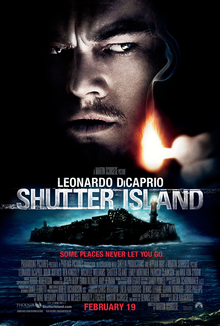
Shutter Island


In 1954, federal marshals Teddy Daniels (Leonardo DiCaprio) and Chuck Aule (Mark Ruffalo) are summoned to a mental hospital on an island off the coast of Massachusetts to search for an escaped patient. A storm leaves them stranded not long after they get there and their investigative resolve puts them at odds with Dr. Cawley (Ben Kingsley), the chief psychiatrist. Daniels suspects something sinister afoot, but is that the evidence or his trauma (dead wife and memories of liberating Dachau) talking?

Dennis Lehane’s thrilling novel is given the star treatment, as Martin Scorsese and an A-list cast team together to create a film with a very high cinematic pedigree. The results do not disappoint. It’s a faithful adaptation, beautifully rendered. “Beautiful,” however, does not always equal “pleasant” and that’s especially true in this case. There’s plenty of disturbing imagery (raving mad inmates and frozen dead concentration camp inmates are just the beginning) to go with the period clothing and the stormy solitude of the island creates a profound sense of disquiet from the moment the marshals arrive. Not since Stanley Kubrick’s adaptation of The Shining has a director been able to extract such place-based tension from the get-go.

The acting isn’t quite on par with the aesthetics, but its fine in its own right. DiCaprio delivers a gripping performance as a conflicted man who threatens to unravel under pressure. Max von Sydow adds a hint of stately menace as a smug Germanic psychiatrist, while Emily Mortimer convincingly conveys fragile instability as the missing patient, a delusional woman who supposedly drowned her own children. Kingsley is a bit understated for his own good and the Boston accents are probably too thick, but these aren’t fatal flaws.

Despite the tension and paranoia in the air, Shutter Island is not a quick-moving film. It slowly branches out, unfolding its mystery piece by sinister piece. Some will grow bored and frustrated with the deliberate pace, just as some will find its twists and turns (including a key revelation toward the end) gimmicky and predictable. These are valid criticisms, but it’s important to realize that this is a film where whatever actually happened takes a backseat to the effects that it produces on the characters and viewers alike.

As evident from the trailers, Shutter Island is not for the feint of heart. It is also not for those who demand absolute ingenuity in plotting. But for those who can live with those constraints and focus on the craftsmanship, this is as good as it gets.

8.25/10

Monday, January 25, 2010

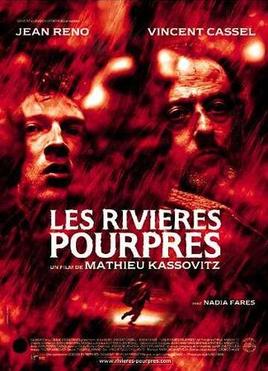
The Crimson Rivers


When an eyeless, handless corpse is found in an isolated French university town, highly regarded police detective Pierre Niemans (Jean Reno) is brought in from Paris to investigate. Meanwhile, about 60 miles away, streetwise cop Max Kerkorian (Vincent Cassel) is working an investigation of his own: the desecration of a grave of a 10-year-old girl who died in a gruesome car accident. It isn’t long before additional bodies pile up and the two cases begin to intersect.


From the opening shot of a worm-ravaged body lying in snow to the closing fade away atop the icy mountains, this 2000 French thriller by Matthieu Kassovitz is nothing if not evocative. Gruesome, suspenseful and chilling, it features a taut pace, breathtaking cinematography and a creepy, if occasionally overbearing score.


The acting takes a backseat to the film’s technical elements, but it is far from deficient. Reno plays the veteran cop as calm, collected and determined….save for a mysterious fear of dogs. Cassel is annoying at times as his younger counterpart, but gets some of the film’s funnier lines and gives Max an edge. The strangest performance may be that of Dominique Sanda as the dead girl’s mother – a shadow-dwelling nun who looks like she stepped off the set of The Omen.


Given the film’s many strengths, it’s a shame that it builds to such an unsatisfying, confusing and ultimately preposterous conclusion. The killer’s identity is a major letdown and Kassovitz’ attempt at political allegory, while well-intentioned, is thoroughly mishandled and misplaced.


Had Kassovitz not fumbled by biting off more than he could chew thematically, The Crimson Rivers probably would have been a great film. Instead, it will have to settle for being a good one with a bad ending.


7.5/10