Showing posts with label Historical Films. Show all posts

Monday, August 4, 2025

Sinners


In 1932, Elijah “Smoke” and Elias “Stack” Moore (Michael B. Jordan), twin veterans of World War I and the Chicago underworld, return to Clarksdale, Mississippi to open up a juke joint. They recruit their younger cousin Sammie (Miles Caton), an aspiring musician, against the wishes of his preacher father (Saul Williams) and bring old friends and lovers into the fold. While the opening of their establishment draws out the Black community, it also attracts the attention of Remmick (Jack O’Connell), an Irish vampire who sees in Sammie a way to connect to his ancestors.

Writer-director Ryan Coogler has never been one to be constrained by genre. To a body of work that includes the hard-hitting biopic Fruitvale Station, the franchise-rejuvenating Rocky spinoff Creed, and the Afro-futurist spectacle Black Panther, he adds a mashup of neo-noir and Southern Gothic horror. The craftsmanship, the thematic focus on the dispossessed, and several recurring collaborators remain constants, but to a greater extent than his previous films, Sinners sees Coogler taking more cinematic risks. For the most part, they pay off bountifully.

Both visually and narratively, Sinners is full of striking period detail. The promise of the open road that the Moores traverse is punctuated by the sights of chain gangs and segregated stores while the raucous dancing of their opening-night celebration is darkly mirrored by the jig-performing vampires massing outside. Ludwig Gonarsson, Coogler’s go-to composer, outdoes himself here, offering a soundtrack that honors the Delta blues while reaching well beyond them. It features contributions from the likes of blues legends Buddy Guy (who also has a rare acting role) and Bobby Rush but also folk singer Rhiannon Giddens and Metallica drummer Lars Ulrich as well as several of the musically inclined members of the cast (Caton, O’Connell, Hailee Steinfeld, and Lola Kirke, among others).

The cast is rock-solid as well. Jordan – Coogler’s regular leading man – overdoes the Mississippi accent at times, but he otherwise succeeds in giving two very different performances as the cold, quiet, resolute Smoke and the friendlier, more charismatic Stack. In shades of one of Jordan’s best-known roles (Black Panther’s Erik “Killmonger” Stevens), O’Connell brings a sense of tragedy to a ruthless character willing to commit reprehensible acts. Even the supporting roles that seem stereotypical at first glance – a conjure woman who knows how to ward off evil and a perpetually drunk old bluesman — are given touches of complexity thanks to both Coogler’s script and the work of capable actors like Wunmi Mosaku and Delroy Lindo.

Speaking of the script, it manages to weave together many disparate influences (fans of Devil in a Blue Dress and From Dusk Till Dawn take note) without collapsing. The Moores’ names are pointedly Biblical and Sammie is loosely based on Robert Johnson, but Coogler wisely avoids making Remmick one-dimensionally devilish. The Irish vampire, who fled the English and many others since, tries to sell turning his victims as a means of providing them the egalitarianism that society will forever deny African Americans…albeit at the cost of their individuality. It’s a pointed critique, but thanks to the film’s energy, Sinners never slows down enough to feel pedantic. It isn’t until the prolonged final quarter or so when the contrived coincidences and conveniences begin to pile up to the point of distraction, but even the comparatively weak ending doesn’t come close to torpedoing the movie.

Some might argue that there is enough horror in history to make Coogler’s metaphorical marriage of the two unnecessary. However, it is unlikely that a more straightforward period drama would be able to captivate to the extent that Sinners does.


Thursday, May 29, 2025

The Brutalist


Laszlo Toth (Adrien Brody), a Hungarian-Jewish architect and Holocaust survivor, immigrates to the United States, hoping to one day reunite with his wife Erzsebet (Felicity Jones). Laszlo is taken in by his cousin Attila (Alessandro Nivola), a Philadelphia furniture store owner who has assimilated and married a Catholic woman, Audrey (Emily Laird). Through Attila, Laszlo meets the wealthy industrialist Harrison Van Buren (Guy Pearce), who becomes his patron and helps Erzsebet and their niece Zsofia (Raffey Cassidy) emigrate. Despite this turn in fortune, Laszlo’s uncompromising nature, the toll of the Holocaust’s suffering, and the jealousy of Van Buren’s son Harry (Joe Alwyn) threaten to be his undoing.

It would seem ironic that a movie about an architectural movement that values minimalism clocks in at three and a half hours, but The Brutalist is every bit as thoughtfully crafted – and divisive – as its inspiration. Directed by Brady Corbett (who co-wrote the script alongside his partner Mona Fastvold), The Brutalist avoids being dragged down by its length and the familiarity of its premise thanks to strong performances and impeccable design.

Taking a sledgehammer to the American Dream wouldn’t have been a fresh take thirty years ago, and it certainly isn’t one now, but the way that Corbett does so here is still resonant (as is the film’s exploration of anti-Semitism). Through Toth and Van Buren’s relationship, he casts a withering eye on America’s treatment of immigrants: happy to accept them as long as they can claim credit for supporting their successes and obsessed with the idea that they don’t forget their place in the pecking order. And while Toth has shades of The Fountainhead's Howard Roark, Corbett does not idealize him, showing him as prone to angry outbursts and self-abuse.

Brody once again scored an Oscar for portraying a tormented Holocaust survivor, and it isn’t hard to see why. He conveys not only pain but outrage and devotion, all with conviction. Jones’s role is no less challenging: an Oxford-educated journalist working below her talents as her body fails her and her husband becomes a stranger before her eyes. She’s quite good in it, and it’s a shame that she isn’t on screen longer. While high-handed antagonists are definitely in Pearce’s wheelhouse, he gives the elder Van Buren enough complexities and contradictions to make him interesting despite his veiled monstrousness. The same cannot be said for Alwyn as his son, a one-note entitled creep. And while Nivola isn’t really bad as Attila, his inconsistent accent is distracting. We’re supposed to imagine a Philadelphian who’s trying too hard to cover up his Ashkenazi roots, but instead we get what amounts to a Boston guy who occasionally remembers he’s an immigrant.

The film’s look and sound at least do no wrong. The Brutalist is filmed in old-school VistaVision (think mid-1950s Paramount films) for a retro look. It oozes style thanks to cinematographer Lol Crawley (sharp-angled shots that allow the architecture to loom godlike over the cast) and production designer Judy Becker. Daniel Blumberg’s score mixes classical with industrial to mimic construction sounds and add tension.

Given how measured much of The Brutalist is, it isn’t surprising that some critics have taken its precision for hollowness, an impression amplified by the runtime. But this is not a case of aesthetics papering over emptiness. Just like the architecture it depicts, there is meaning in the seemingly cold and impersonal for those willing to see it.


Wednesday, December 18, 2024

Gladiator II


Years after the death of emperor Marcus Aurelius, his chosen successor Maximus, and his usurping son Commodus, Rome has slid further into tyranny under the misrule of twin emperors Geta (Joseph Quinn) and Caracalla (Fred Hechinger). Popular but war-weary general Acacius (Pedro Pasqual) conquers Numidia in North Africa in their name. In the process, Hanno (Paul Mescal) is captured and enslaved and his wife Arishat (Yuval Gonen) killed, leaving him to swear vengeance. His opportunity may come thanks to Macrinus (Denzel Washington), a gladiatorial gamesmaster who buys him. However, things are not what they seem: Hanno is really the former emperor’s grandson Lucious, his mother Lucilla (Connie Nielsen) plots with her husband Acacius to depose the emperors, and the ambitious Macrinus has an agenda all his own.


Given Gladiator’s critical and box office success, a follow-up seemed inevitable. One was in the works for decades (including, at one point, a crazy Nick Cave script that featured a resurrected, immortal Maximus) before it finally came together. The finished product (with a much more sedate script courtesy of David Scarpa) attempts to pull off playing on nostalgia for the first film without diminishing itself in the process, an endeavor at which it sometimes succeeds.


Narratively, Gladiator II is lackluster. Its story beats are often familiar to the point of predictable, and characters extoll the late Maximus’s virtues to an awkwardly repetitive extent. Only when Marcinus’s motives are revealed do we get what feels like an attempt to say something new.


Despite these shortcomings, the action, visuals, and even some of the acting is praiseworthy. Rumors of the 87-year-old Ridley Scott losing his touch with age are premature. His direction is as surefooted as ever, and he has a two-and-a-half movie feeling like one that runs a half-hour shorter. He managed to introduce even more spectacle to the coliseum combat scenes this time around without tilting too far into cartoonish absurdity.


No one expected Mescal to match Russell Crowe’s Oscar-winning performance, but he holds his own here. Whereas Maximus’s was a cold fury informed by martial discipline, Hanno’s burns hot. Mescal also gives the character a cynical edge. The more principled and dutiful aspects of Maximus’s character are passed off to Acacius, a role that Pascal handles capably but one that does little to challenge him. The returning Nielsen is likewise more a steady presence than a transcendent one. Washington is great as he often his, and he deploys his capacity for intensity amid calm to give Macrinus terrifying layers. That said, Quinn and Hechinger are wasted talents as largely one-dimensional Caligula wannabes.


Gladiator II does not quite measure up to let alone surpass the first film, but it offers enough craftsmanship and rousing entertainment to make it a worthy successor.


Friday, March 5, 2021

Judas and the Black Messiah


In the late 1960s, petty criminal Bill O’Neal (Lakeith Stanfield), arrested and facing prison time, is recruited by FBI agent Roy Mitchell (Jesse Plemons) to infiltrate the Illinois chapter of the Black Panthers and get close to its leader, Fred Hampton (Daniel Kaluuya), whom the bureau has designated a threat. The closer that O’Neal gets to Hampton and his inner circle, the more money – and pressure – he receives from Mitchell to keep gathering intelligence…and worse.


Historical dramas are, sadly, too often staid and predictable affairs. Even when the performances do the subjects justice, the storytelling often follows a familiar arc. Kudos then to writer/director Shaka King and his collaborators Kenny and Keith Lucas for delivering an inspired-by-fact film that is powerful and full of tension.


Though the title suggests a simplistic morality, Judas and the Black Messiah is full of complex, multilayered performances. Kaluuya is charismatic and commanding as the young revolutionary Hampton, doomed to be murdered by police during a raid, a man given to both inspirational speeches and cult-like indoctrination alike. As O’Neal, Stanfield is quick-witted and increasingly (and intensely) conflicted, a sympathetic take on a treacherous and selfish figure. Plemons, who is well-versed in playing characters a great deal more dangerous or competent than they initially appear, gets a change of pace here. The manipulative Mitchell has enough of a conscience to be disturbed by his superiors’ nefarious COINTELPRO tactics yet lacks the will and introspection needed to affect change. That said, while Martin Sheen under heavy makeup brings name recognition and the requisite note of menace to J. Edgar Hoover, he feels miscast in a brief role that is more caricature than character.


Were Spike Lee in the director’s chair, Judas and the Black Messiah may have featured a number of awkward cuts to contemporary racial justice protests. Instead, King wisely trusts his audience to implicitly make these connections and keeps his film largely grounded in time and place, marking it as a period piece with resonance rather than a grand treatise on race and injustice some had hoped for. If nothing else, it is both more affecting and more interesting than many movies set during the same turbulent era, and it shows us that just because the outcomes are preordained, our response to and understanding of them needn’t be.


Thursday, May 7, 2020

The Lighthouse


In the late 1800s, Ephraim Winslow (Robert Pattinson) takes a contract job as an assistant lighthouse keeper on a remote island off the New England coast. The head lighthouse keeper, Thomas Wake (Willem Dafoe), is a demanding, unhygienic, boastful drunk. Winslow is also tormented by a one-eyed gull who seems to mock him at every turn. After learning about each other’s pasts, Winslow and Wake begin to get along better. However, the menace of a storm threatens to destroy their rations, their truce, and, ultimately, their sanity.

Directed by Robert Eggers (The Witch) and written by his brother Max, The Lighthouse is an exacting film that commands respect though not necessarily admiration. Ostensibly inspired by Edgar Allan Poe’s last story (“The Light House”), the film also takes cues from Melville and Coleridge, Greek mythology, the historic Smalls Lighthouse Tragedy, and, at least tonally, Lovecraft. It’s awash in symbolism that is refracted through Winslow’s dreams and hallucinations, some of which are revelatory (i.e. a vision of Wake’s one-eyed previous assistant - reincarnated in the gull, perhaps?) and some of which are just unsettling (giant octopus tentacles and mermaid sex). For every meaningful detail imparted, however strange or disturbing, The Lighthouse seems content to also offer us random shrieks and shouts and nonsense.

Questionable editing aside, The Lighthouse is aesthetically striking, and its two leads fully embrace their challenging roles. Eggers shot in black and white on 35-mm film to give the movie a vintage look, and Mark Korven’s score makes good use of appropriately ominous droning. As Wake, Dafoe sounds like the Sea Captain from The Simpsons with a puffed-up lexicon. He’s a grotesque and pathetic figure, equal parts controlling (he refuses to let Winslow anywhere near the lantern room) and desperate for approval. Speaking of desperation, a lean, Maine-accented Pattinson gives Winslow a past-haunted, repressed-violent quality that is evident even before his sanity starts to fray. It isn’t to Jack Nicholson in The Shining levels of crazy-gone-crazier, but it does lend tension to the abuse and misfortune that he endures in a subservient role in the film’s early going.

Thematically and symbolically rich and skillfully crafted, The Lighthouse is nearly undone by its excesses, but it’s still worth watching even if the experience makes you never want to watch it again.

Saturday, November 30, 2019

The Irishman


From a nursing home, an elderly Frank Sheeran (Robert DeNiro) recounts his involvement in the American underworld. A World War II veteran and truck driver, Sheeran begins selling stolen wares to the Philadelphia mob before graduating to arson and finally “painting houses” or murder-for-hire. As his star rises, he abandons his first marriage, becomes more active in his local union, and befriends two very powerful figures: Scranton mafia boss Russell Bufalino (Joe Pesci) and Teamsters president Jimmy Hoffa (Al Pacino). Though allied at first, Hoffa and the mob have a falling out, which puts Sheeran uncomfortably in the middle. Years later, predeceased or abandoned by everyone once close to him, he divulges the missing labor leader’s fate.

The first Scorsese-DeNiro-Pesci film in nearly a quarter-century (and the first Scorsese-Pacino pairing ever), The Irishman should have been the kind of film that studios salivate over, but instead, its production was nearly as long and tortured as the story it depicts. First, there are plenty who are skeptical of Sheeran’s account, which came to light when his lawyer, Charles Brandt published it as the book I Heard You Paint Houses in 2004, the year after Sheeran died. Next, it took a considerable amount of cajoling to bring Pesci out of retirement. And then, no studio wanted to foot the bill for the special effects needed to digitally de-age the leading trio of septuagenarian actors. Thus, what would have been a leading Oscar contender in bygone days became a delayed Netflix release.

This ignominy aside, however, The Irishman is a thing of beauty to behold aesthetically, dramatically, and narratively. Scorsese’s eye for period detail remains very much intact as he and his collaborators recreate the look and feel of the Kennedy and Nixon eras. The soundtrack is thoughtfully curated as well, but in place of Goodfellas’ Eric Clapton-backed murder montage or Casino’s operatics, The Irishman’s pivotal moment – the drive to pick up an unsuspecting Hoffa on the day of his final meeting – is marked by silence.

The choice to go quiet instead of loud is a mark of maturity, and it’s one that extends to the film’s themes. Previous gangster fare has a tendency to glamorize its subjects no matter how vicious it ultimately reveals them to be, and Scorsese’s films have been no exception. Henry Hill may have fallen from grace by the end of Goodfellas, but that he was able to thumb his nose at being a solid citizen says something about the lofty perch he once occupied. Sheeran, however, is denied even this fleeting sense of nostalgic grandeur. By the end of The Irishman, he is in failing health and truly alone. One can take issue with how little screen time women have in the film – Anna Paquin, as Sheeran’s disapproving daughter says maybe a dozen lines – but they nevertheless serve as a powerful rebuke to the idea that Sheeran’s way of life was for some family-affirming greater good.

Given the cold nuance of the film’s approach, a cast best known for showy performances (to put it lightly, in Pacino’s case during the past two decades) would seem a strange fit, but Scorsese evidently commands enough respect to get the most out of his performers, and in turn, they remind audiences of what they were capable of before they reached the point of self-caricature. DeNiro, who is of average height, captures the much-taller Sheeran’s shambling movements, his soldier’s stoicism, and the hints of anguish that peek through the veneer all quite believably. As the charismatic yet belligerent Hoffa, Pacino gets to do his fair share of yelling, but the performance is far from one-note. He captures the man’s vanity and bigotry as well as his amiability toward children and belief in the righteousness of his cause. Perhaps the biggest surprise here is Pesci, best known for playing corrosive, diminutive psychopaths who immeasurably complicate the lead gangsters’ lives. Instead, he plays Bufalino as shrewd and calculating, a man whose quietly whispered request could have ten times the impact of one of Tommy Devito or Nicky Santoro’s worst outbursts. Ironically, the specter of Pesci’s past roles shows up here in the form of Anthony “Tony Pro” Provezano, a short-but-volatile mobster whose prison contretemps with Hoffa fuels much of the second-half conflict. Tony Pro is played without an impeccable accent by the Englishman Stephen Graham in a turn that calls to mind his Boardwalk Empire work (as a young Al Capone) minus any hint of likeability.

For all these strengths, however, The Irishman does have several noticeable faults. For starters, it is very long, even by the standards of gangster epics. The three-and-a-half-hour runtime and leisurely pacing demand patience, and even the committed will find themselves wondering if Thelma Schoonmaker (Scorsese’s longtime editor) couldn’t have trimmed fifteen minutes or so. The much-discussed de-aging technology is also a miss albeit not a catastrophic one. DeNiro never looks any younger than his mid-40s even when Sheeran is supposed to be, and it is difficult to buy Pacino seeming even that young.

A gripping exploration of the mythology of midcentury American power and the corruption that underpinned it told through the eyes of a bloody-handed fixer, The Irishman is a slow but masterfully executed assault on the very idea of innocence. If this is the last time that Scorsese gets to work with any of these leads, then the film, like a rival cab company that Sheeran sees to, is going out with a bang.

Monday, April 30, 2018

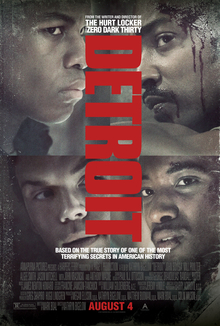
Detroit

In 1967 amid Detroit’s 12th Street Riots, police officers led by Phil Krauss (Will Poulter) descend upon the Algiers Motel in response to shots supposedly fired their way. In their attempt to identify the shooter, they subject the motel’s occupants – a returning Vietnam War veteran (Anthony Mackie), members of an R&B band (Algee Smith and Jacob Lattimore), and two white girls (Hannah Murray and Kaitlyn Dever) – to increasingly abusive and terrifying interrogations. Melvin Dismukes (John Boyega), a security guard, is uncomfortably caught in the middle.

Directed by Kathryn Bigelow and written by Mark Boal (the team behind Zero Dark Thirty), Detroit is a polarizing film both in terms of its treatment of history and its creators’ stylistic and narrative choices. What it does well it does exceedingly well, but that strength comes at the expense of nearly all else.

As should come as no surprise for fans of Bigelow’s work (see The Hurt Locker), Detroit is an extremely tense film. The film’s long, brutal interrogation sequence is unflinching, unglamorous, and uninterrupted by either music (arguably a waste of James Newton Howard’s talents) or Hollywoodized false hope. It grabs audiences and makes them feel as uncomfortable as the beleaguered motel patrons, a relevant and resonant move given contemporary worries about police tactics.

Unfortunately, this comes at the expense of diminishing both character development and the film’s conclusion. Poulter stands out as a rabid, paranoid, violent cop who is nevertheless assured that he is in the right, but other actors aren’t given enough to work with – it’s hard to build layers of character when most of your screen time calls for you to either casually drink or look scared. Moreover, because the motel scenes take up so much of the film’s nearly two and a half hour run time, the aftermath, which is supposed to make us feel the repercussions of the damage done, instead comes across as almost an afterthought. It simply pales compared to the dramatic crescendo that preceded it.

All of this makes Detroit an ambitious, admirable, yet frustratingly flawed and not particularly likeable film. It’s worth watching for its intensity, but one wishes it had broadened its focus.


7.5/10

Monday, January 1, 2018

Silence

In the 17th century, young Portuguese Jesuit priests Rodrigues (Andrew Garfield) and Garupe (Adam Driver) travel to Japan in search of their fellow priest and mentor Cristovao Ferreira (Liam Neeson), who is rumored to have apostatized. Guided by disgraced fisherman Kichichiro (Yosuke Kobuzaka), the priests come across a Christian community that is being persecuted by the Tokugawa shogunate and its inquisitor, Inoue (Issey Ogata). Though Rodrigues arrives hopeful and determined, watching the converts’ suffering repeatedly tests his faith.

Martin Scorsese’s adaptation of Shusaku Endo’s novel is not a film with mass appeal: it’s long (2 hours and 40 minutes), talky, and full of torture. In lesser hands, that would make it unbearable. But Silence is a passion project for Scorsese, and the effort shows. It’s still a somewhat divisive film albeit a rewarding one for those who have the patience and the stomach for it.

Working in Silence’s favor are lush visuals, well-written characters, and a complex treatment of theme. The film makes the most of its setting, juxtaposing the natural beauty of Japan with the harsh realities of feudal village life. Jay Cocks’s script allows for a good deal of character ambiguity, and the cast is largely successful in playing that out. Kichichiro repeatedly renounces his Christian faith when threatened yet seeks Rodrigues’s forgiveness every time. Through Kobuzaka’s anguish, we see him as a sympathetic figure rather than a treacherous weasel. As Rodrigues, Garfield is sort of an anti-Thomas More. His attempts to remain resolute invite horrible consequences, and the film toys with the idea that he is motivated by a desire for the glory of martyrdom rather than mere benevolence. Ogata plays Inoue as genial rather than sadistic even though the punishments that he inflicts become crueler and crueler. The film works to raise questions about the cost of belief, but it wisely avoids providing obvious and ham-handed answers.

As with many longer films, Silence drags at times, and the score is too understated to impart much tension. A bigger distraction, however, is the film’s treatment of language. English stands in for Portuguese here, a pragmatic choice that nevertheless invites several problems. At one point, a character remarks about the confusion between “son” and “sun,” something that would not exist in Portuguese. Garfield and Driver begin with unconvincing Portuguese accents that are not consistent throughout the film while Neeson doesn’t even bother. Meanwhile, Ogata’s English evokes racist stereotypes and would not sound out of place in a World War II-era propaganda reel. Given how much attention was paid to other elements of the film’s production, it is puzzling to see communication get short shrift.

Despite his deep personal commitment to it (the film was in development for years as the director took other projects solely to secure financing), Silence is not among Scorsese’s best works. It is, however, still thought-provoking and well-crafted in its own right.


8/10

Thursday, August 3, 2017

Dunkirk

In 1940 in Occupied France, Allied soldiers are pushed to the coastal town of Dunkirk where they await evacuation. Tommy (Fionn Whitehead), a British Army private meets fellow soldier Gibson (Aneurin Barnard) on the beach, and the two try to gain access to a ship that will take them across the channel. Meanwhile, Mr. Dawson (Mark Rylance) volunteers his yacht to aid the war effort, and he, his son Peter (Tom Glynn-Carney), and Peter’s younger friend George (Barry Keoughan) set out aboard the vessel toward Dunkirk to provide life jackets and rescue survivors along the way. In the air, a group of Spitfires piloted by Farrier (Tom Hardy) and Collins (Jack Lowden) attempt to shoot down Luftwaffe bombers before they can attack the troops waiting at Dunkirk.

Nearly two decades ago, Steven Spielberg’s Saving Private Ryan set the gold standard for wartime realism with its brutal depiction of the Allied Invasion of Normandy. Though Christopher Nolan’s Dunkirk shares some surface elements with it (Allied soldiers on a French beach during World War II), it is very nearly the former film’s antithesis. It is also, in many ways, its equal.

After a brief glimpse of a frame story, Saving Private Ryan promptly offered twenty minutes of frenzied carnage before developing its characters and conflict and contemplating the value of sacrifice. Dunkirk does virtually none of that. Rather than offering a focused narrative, Nolan presents the film asynchronously. The overlapping land, sea, and air segments are meant to depict one week, one day, and one hour, respectively, which can make it a chore to keep up with. The PG-13 rating also ensures that Dunkirk is light on gore. Most of the action takes the form of aerial dogfights and troops swimming away from imminent doom. Lastly, instead of humanizing its characters by delving into their backstories, Dunkirk keeps them relatively anonymous: they work as everymen because they could be any men.

Despite these departures from war film conventions, Dunkirk is very much not a pretentious or sanitized affair. As with many of Nolan’s previous films, it is stylistically breathtaking, be it the plumes of smoke rising over the bombarded beach or the sweeping maneuvers of the Spitfires. Hans Zimmer’s score also leaves quite an impression. In lieu of valorous reveries, he offers a ticking clock, ominous strings, and compositions befitting a horror movie, an appropriate (if unexpected) choice given the subject matter.

The film’s style works to impart a near-constant sense of dread. Though the audience never sees the face of the enemy, we are constantly reminded that the enemy is out there. We know that it is only a matter of time before the next attack, and the characters know it too. They are trapped in their own existential hells, whether it is Tommy going from sinking ship to sinking ship or Farrier running across one German plane after another as his fuel supply dwindles. Like previous Nolan films, Dunkirk reaches a hopeful note – in this case, a surviving character reads a Winston Churchill speech in a newspaper – but it makes both the characters and the audience suffer for it.

Speaking of characters, the cast of largely lesser-known actors does a lot with a little. As Tommy, Whitehead is wholly believable as a scared young man who just wants to get home in one piece. A lesser film would have him start that way and “grow” into something of a sacrificial action hero by the end, but Nolan wisely avoided that pitfall. The cast does boast a more conventional action hero in Hardy, and while he plays Farrier with cool competence, his escapades do not strain credulity. On the opposite end of the spectrum, the two Allied characters positioned most antagonistically – a shell-shocked survivor (Cillian Murphy) rescued by Dawson and a hotblooded Scottish soldier (Harry Styles) – are driven by the same thing that drives Tommy: survival. Aside from Hardy and Murphy, the two biggest “names” are Rylance and Kenneth Branagh. The former plays Dawson with uncompromising bravery and integrity while the latter, as a Navy commander, personifies the British stiff upper lip. All of these actors get by with very little dialogue, and even the Shakespearean Branagh avoids spotlight-hogging showiness.

Traditionally, war movies dramatize victory, however much they show of its often-steep costs. Dunkirk, on the other hand, dramatizes a long retreat. In doing so, however, it does not slander its subjects but rather affirms their humanity and their service (conscious or not) to the greater good. After all, dying en masse in Britain’s name would have meant little if there was no one left to defend the homeland (curiously, the contributions of French soldiers are downplayed, much in the way that British contributions are diminished in American WW II films), and the evacuation directly led to Churchill’s rousing speech. It is unknown if Dunkirk will seem as tense, refreshingly unorthodox, and stylistically masterful in the years to come as it does today, but it’s so far among the best films that 2017 has to offer.


8.5/10

Friday, June 17, 2016

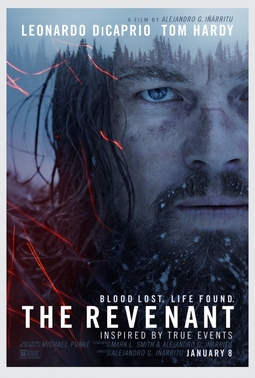
The Revenant


In the 1820s, frontiersman Hugh Glass (Leonardo DiCaprio) and his half-Pawnee son Hawk (Forrest Goodluck) act as guides for fur trappers led by Captain Andrew Henry (Domhnall Gleeson). After the party is attacked by hostile Ree, tensions rise between Glass and John Fitzgerald (Tom Hardy), a trapper with strong anti-Indian sentiments. Not long thereafter, Glass is attacked by a bear and seriously wounded. Though Henry leaves Fitzgerald and Jim Bridger (Will Poulter) to watch over him, they instead leave him for dead. However, the iron-willed Glass isn’t vanquished yet and swears revenge. To get it, he will have to travel through territory patrolled by rival French trappers and a Ree chief who will kill anyone in order to find his missing daughter.

Thanks to an unfounded rumor, many will only know The Revenant as “that movie where Leo was raped by a bear.” There is no bear-rape here, but there is plenty else that makes The Revenant stand out. Alejandro Inarritu (of Birdman and Babel fame) directed this adaptation of Michael Punke’s novel, itself loosely based on a true story. In the spirit of Cormac McCarthy’s Western novels, it’s a harsh, violent film yet one that pairs its gore with an elegiac view of nature, here in the form of Emmanuel Lubezki’s sharp cinematography. Ryuichi Sakamoto’s haunting score is an appropriate complement.

Those who have a frame of reference beyond the bear incident may also know of The Revenant as the film that finally netted DiCaprio an Academy Award. That selection rightly raised some eyebrows (this is not DiCaprio’s best work and Matt Damon or Michael B. Jordan were just as worthy), but it is not without merit. While he doesn’t have much dialogue, DiCaprio underwent a Christian Bale-like physical transformation and ably conveyed Glass’s determination and sense of anguish. Hardy favorably called to mind Josh Brolin’s villainous turn in True Grit while Poulter plays Bridger (a future frontier legend) as both naïve and capable. Gleeson, on the other hand, seems miscast: his father, Brendan, would have exerted the experience and authority needed for this role.

Despite the talent involved on both sides of the camera, there is no ignoring the idea that The Revenant simply doesn’t bring anything new to the table. The plot is that of a simple revenge tale, the notion that the frontier was an uncompromising land of moral grayness has been explored before, and even the characters’ deeper motivations – grieving over lost family – seem perfunctory here. Given Babel’s nonlinear approach and Birdman’s all-around strangeness, The Revenant’s straightforwardness will strike some as a waste of creative capability.

It may not be novel and it certainly isn’t for the squeamish, but The Revenant does provide enough stylistic flair and acting oomph to justify its two-and-a-half-hour runtime. This is the kind of movie that you can appreciate while still wishing that it offered more.

8/10

Thursday, August 28, 2014

Grand Budapest Hotel

Beside his monument, a girl reads the memoirs of a famous author. From his desk in 1985, the author (Tom Wilkinson) tells his tale. In the late 1960s, he (Jude Law) journeyed to an impoverished communist-run European republic and visited the once-esteemed Grand Budapest Hotel. The author happens to come across the hotel’s humble, enigmatic owner, Zero Moustafa (F. Murray Abraham), who then shares his story. In the early 1930s, young Zero (Tony Revolori) joins the hotel’s staff as a lobby boy under Gustave H. (Ralph Fiennes), the hypercompetent concierge who romances wealthy older female guests. When one such guest, the aristocratic Madame D (Tilda Swinton) dies unexpectedly, she wills a valuable painting to Gustave, much to the chagrin of her scheming, belligerent son, Dmitri (Adrien Brody). Though Gustave soon finds himself in a lot of trouble, Zero becomes his heir and accomplice.

Wes Anderson’s latest quirky, ensemble-driven concoction is very much in keeping with the spirit of his prior successes while still offering something new. As is Anderson’s wont, artifice is on full display here: fake setting, fake newspapers, even fake nationalities (This makes Brody’s part as a supposedly European nobleman with a New York snarl all the more hilarious). Indeed, style – which includes exaggeratedly bright hues and a perfectly paired Alexandre Desplat score – takes center stage.

However, there is a considerable amount of substance behind that style. The ugly specter of fascism (and, later, communism) looms large here, as do classism, nativism, and a number of ugly –isms. Grand Budapest Hotel shows that even a director as whimsical (and there is plenty of whimsy here) as Anderson isn’t afraid to get his hands dirty, and with a few gruesome murders and a good, old-fashioned shootout, this is easily his darkest film to date.

That darkness is offset by the stealth humor of the script and the incandescence of the cast. From the main players to the fleeting cameos, this film is impeccably cast. Fiennes has an air of irrepressible handiness (even whilst cursing and preparing to die), Willem Dafoe injects menace as Dmitri’s hired thug, and Saorise Ronan lends a plucky determination (and finally gets to use her native Irish accent!) as Agatha, a baker who wins Zero’s affection. Among the smaller roles, Harvey Keitel leaves an impression as a tattooed convict and a number of famous faces (Owen Wilson, Jason Schwartzman, Bob Balaban, and, of course, Bill Murray) play disaffected hotel staffers.

If there is one shortcoming here, it is that Grand Budapest Hotel, in contrast to a great many other films, isn’t long enough. The story feels truncated, particularly with regard to Zero and Agatha’s relationship and the aftermath of Gustave’s heroics. This is undoubtedly intended to foster a sense of loss (the past can’t all be whimsical, after all), but it contributes to the film’s smallness.

While Anderson aficionados will find a lot of familiar idiosyncrasies here, you don’t have to like – or even be familiar with – his work to appreciate this film. Elegant aesthetics and a deceptively smart script make Grand Budapest Hotel well worth a visit.


8.5/10

Tuesday, May 6, 2014

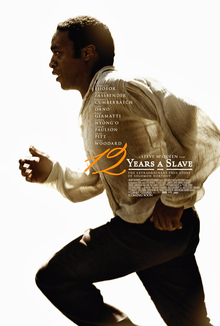
12 Years a Slave

In 1840s New York, Solomon Northup (Chiwetel Ejiofor), a skilled free black carpenter and violinist, is hired by a pair of traveling entertainers to perform on tour in Washington D.C. Upon arrival, however, Solomon is drugged and sold into slavery. Working at first for the relatively benign William Ford (Benedict Cumberbatch), he defends himself against a jealous overseer (Paul Dano) and is sold to Edwin Epps (Michael Fassbender), an alcoholic sadist who believes slavery is biblically sanctioned. To make matters worse, Epps has become obsessed with slave Patsey (Lupito Nyongo), which draws the abusive ire of his wife (Sarah Paulson). Though bearing witness to such savagery has taken its toll on Solomon, he refuses to give up hope that he will regain his freedom. A chance meeting with an abolitionist Canadian laborer (Brad Pitt) could prove the opportunity he is looking for.

Slavery, like the Holocaust, is a difficult subject to commit to film, not merely because of its inherent monstrousness, but because showing that monstrousness time and time again risks rendering it passé. Thus, the twin challenges faced by would-be filmmakers are giving the subject its due while finding new ways to engage an audience. Django Unchained dispensed with any pretense of historicity and dared to be funny (as well as incredibly violent) while still managing to get at slavery’s poisonous heart. 12 Years a Slave takes as different (somber, frank, and graceful) an approach as is possible yet is no less impactful.

Directed by Steve McQueen, 12 Years a Slave is stylistically arresting and full of verisimilitude. Shot on several former plantations, it features convincing costuming and other period detail. The use of bright, sunny hues forms a sharp contrast with the onscreen cruelty. Hans Zimmer’s score may evoke his previous work, but it is no less elegant. And give or take a few embellishments, John Ridley’s screenplay hews closely to Northup’s carefully verified memoir of the same name.

The acting here is top-notch. Ejiofor gives an Oscar-worthy performance as the resolute, dignified Solomon, a man who refuses to abandon hope despite the direness of the circumstances. He is matched by newcomer Nyongo, who imbues the doomed Patsey with toughness and grace. Channeling Amon Goeth, Fassbender is chilling as the psychopathic, fanatical, whip-happy Epps while Paulson plays his jealous wife as cold and cruel in her own right. Only minor hiccups (Pitt’s decidedly un-Canadian accent, the perfection of Nyongo’s teeth) throw the movie off-kilter at times, but it quickly rebounds.

Brutal and uncompromising, 12 Years a Slave is not an easy movie to watch. However, its violence, wretched characters, and harrowing circumstances are all reminders that human dignity should never be taken for granted.


8.75/10

Sunday, July 21, 2013

The Great Gatsby

From a sanatorium, burned-out alcoholic Nick Carroway (Tobey Maguire) narrates his experience in New York in the summer of 1922. Setting out from the Midwest to become a bond trader, he rents a house on the nouveau riche side of Long Island and reconnects with his bubbly cousin Daisy (Carey Mulligan) and her husband Tom (Joel Edgarton), a college friend from an old-money family. They introduce him to jaded golf pro Jordan Baker (Elizabeth Debicki), and he becomes a reluctant witness to Tom’s philandering. Not long thereafter, Nick is invited to the palatial home of his neighbor, the mysterious Jay Gatsby (Leonardo DiCaprio), who entrusts Nick with a weighty secret of his own.

By virtue of theatricality and star power, Baz Luhrmann’s 2013 take on F. Scott Fitzgerald’s classic novel distinguishes itself from prior adaptations, but different isn’t always better. This movie has style to spare and some good performances yet suffers from a hollow core and questionable directorial and scripting choices.

Though unconventionally cast (Indian screen vet Amitabh Bachchan appears briefly as Jewish gangster Meyer Wolfsheim), The Great Gatsby is generally well-acted. DiCaprio has great screen presence in the title role: he is supremely confident yet guardedly insecure. Likewise, Mulligan excels at tapping the sadness beneath Daisy’s flighty exterior, and Maguire gives nondescript Nick some anxious energy. On the other hand, Edgarton, sporting a ridiculous moustache, turns the already insensitive and buffoonish Tom into a virtual cartoon character by pumping him full of endless bluster.

As one would expect given Luhrmann’s (Moulin Rouge) pedigree The Great Gatsby is also a visually striking film. Shot in sumptuous 3D, it features handsomely designed sets and convincing period apparel. The onscreen opulence magnifies the grandeur and excess of Gatsby’s parties while the dim grays of the Valley of Ashes underscore the industrial dumping ground’s desolation.

Unfortunately, other aspects of the production mar the visual splendor. The film’s Jazz Age setting clashes awkwardly with its 21st century soundtrack. Whether Luhrmann intended to draw parallels between the flapper and hip-hop lifestyles or whether he simply wanted to heighten the appeal to contemporary audiences is anyone’s guess. What is known is that it reduces parts of the film (party sequences in particular) to a third-rate music video and robs it of pathos.

A more grievous shortcoming is a change in the characterization that arguably undermines the spirit of the narrative. Fitzgerald’s book was a pointed critique of the callousness of the rich, and much of what made Gatsby such a tragic character was that he spent so much of his adult life in pursuit of someone who wasn’t worth it. But because the film softens Daisy up considerably (her terrible parenting is excised, for instance), that element is lost, and Gatsby’s tragic appeal is diminished. Thankfully, other changes (such as the addition of the frame story and the downplaying of Nick’s relationship with Jordan) don’t have the same impact.

The Great Gatsby needn’t have been a flawless adaptation to have succeeded as a film, and the strength of the performances elevate it above mere eye candy. But, in fitting mimicry of its subject matter, the lack of depth and the predilection for easy amusement are things that even a huge budget and a grand presentation cannot overcome.

7.25/10

Monday, May 20, 2013

Lincoln


It’s early 1865, and as the Civil War rages on, President Abraham Lincoln (Daniel Day-Lewis) is determined to oversee the passage of the Thirteenth Amendment, which will abolish slavery. He and his advisors must work around the mistrust of Rep. Thaddeus Stevens (Tommy Lee Jones) and the Radical Republicans, the reservations of Francis Preston Blair (Hal Holbrook) and the Conservative Republicans (who would prefer that Lincoln make peace with the South), and the outright opposition of the Democrats in order for the bill to pass the House. Meanwhile, Lincoln’s relationship with his family remains tense: oldest son Robert (Joseph Gordon-Levitt) is intent on joining the Union Army, but his mother Mary (Sally Field) can’t stand the thought of losing him.

Directed by Steven Spielberg, scripted by Tony Kushner, and boasting a huge cast, Lincoln has the pedigree of a historical epic, but it isn’t one. A more apt title would have been The Thirteenth Amendment: The Untold Story. Indeed, the film is less of a biopic and more of a two-and-a-half hour episode of The West Wing, replete with idealistic speeches, character-establishing anecdotes, and cunning political maneuvering, but absent (save for the opening, a brief but bloody depiction of the Battle of Jenkins’ Ferry) much action.

Despite its myopic narrative focus, Lincoln remains, in most regards, a well-crafted film. The acting is impeccable. Day-Lewis, a meticulous method actor, deservedly picked up a third Best Actor Oscar for his work in the lead role: he skirts the mythology of “Honest Abe” and plays the 16th president as a powerful, determined, but very conflicted human being. He is surrounded by an equally game cast. Field’s Mary Todd Lincoln is appropriately high-strung, Texan Jones somehow works as the Ohioan Stevens, David Strathairn makes for a principled Secretary of State William Seward, and Gordon-Levitt is (justifiably) indignant as Robert.

Lincoln is also handsomely albeit restrainedly designed. Period detail offers everything including Abe’s stovepipe hat, but this isn’t the type of film meant to wow you with style. Similarly, John Williams’ score is effective, but not one that jumps out at you.

The big question regarding any historical drama is accuracy, and on that account, Lincoln succeeds more than it fails. Yes, there are departures from the historical record — maverick Democrat Clay Hawkins is a composite character and Tad Lincoln is depicted without a speech impediment, for instance – but the Hollywoodization is kept to a minimum. And while the film does offer a decidedly positive depiction of Lincoln, it doesn’t veer into hagiography. He takes note of his own capacity for demagoguery, and he is shown engaging in slick lawyer tricks and what amounts to bribery-by-proxy (albeit for a good cause).

Because Lincoln is less about the man and more about one of many achievements, it is easy to see it as a misguided effort or a wasted opportunity. However, if history is defined by the moments that matter most, the filmmakers captured this one as best as anyone could.

7.75/10