Thursday, September 5, 2019

Beyu Caffe

 Beyu Caffe

Located at 341 West Main Street in downtown Durham, Beyu Caffe offers coffee drinks, cocktails, and Southern-influenced food. It is open seven days a week from 8 to 8 (8 to 6 on Sundays) and offers breakfast all day. Formerly a regular jazz venue, Beyu still offers occasional live music.

Beyu is pronounced Be You, and that sense of individual character permeates this cool and comfortable spot. Conveniently located and reasonably spacious, Beyu offers a comfortable ambiance: lively without being loud.

This character extends to the menu as well, which features names to remember (Dope coffee specialties, a Chuck Berry Parfait) and fresh takes on familiar dishes (i.e. chicken wings and French toast subbing in for chicken and waffles). Hungry and tired, my wife and I opted for coffee drinks (Mexican coffee and a Carver’s Peanut Butter) and lunch items (Satchmo Po Boy and Shrimp and Grits). Everything was ordered at the register prior to seating, and service thankfully proved expeditious.


Both coffee drinks were excellent. The Mexican coffee added cinnamon, nutmeg, and chocolate to the standard brew and made for a bold and rich concoction. The Carver’s Peanut Butter combined espresso, peanut butter, steamed milk, and honey. If peanut butter in coffee causes you to raise an eyebrow, a few sips of this smooth and tasty blend will make a convert of you.

Unfortunately, the food wasn’t quite up to the same standard. The Shrimp and Grits used Italian sausage in place of Tasso ham, an odd choice but not a poor one. However, the shrimp were just short of overcooked, and the grits needed copious stirring to reach the right consistency. Thankfully, the flavor still delivered. Meanwhile, the Po Boy – actually, a pair of fried catfish sliders – featured nicely breaded fish, but the accompanying side salad sported dubious-looking lettuce.

Given the atmosphere and coffee quality, I would not hesitate to return to Beyu the next time I’m in Durham, but I might think twice about ordering lunch.

Kaddish.com


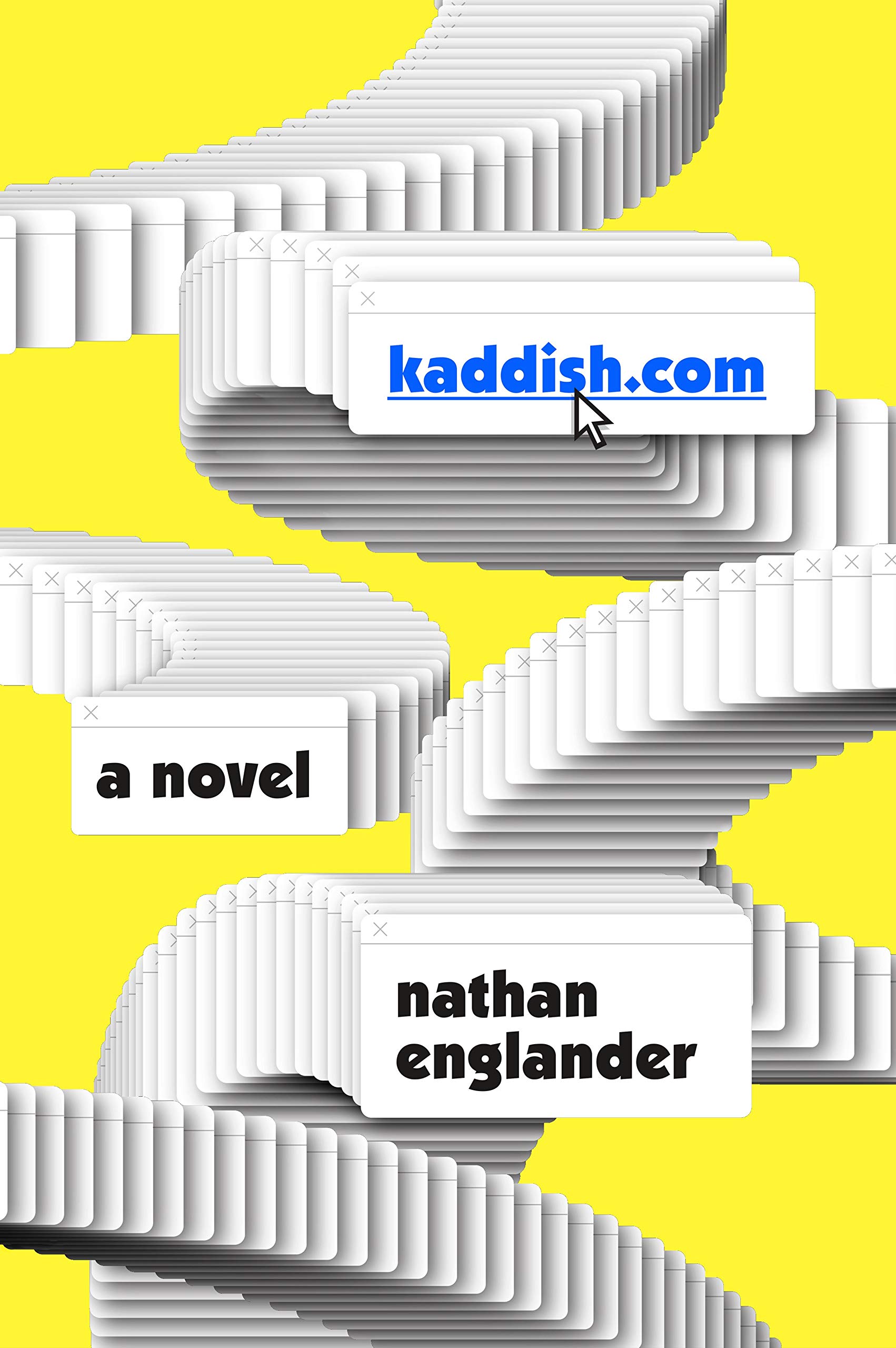
Larry is the loutish, atheist son of Orthodox Jewish parents. When his father dies in 1999, he is tasked with saying the Kaddish – a prayer for the dead – every day for a year. However, Larry refuses the call and instead secretly uses the Web site kaddish.com to contract with Chemi, an Israeli student, to pray in his stead. Twenty years later, Larry (now going by Shuli) has returned to his faith and is a rabbi teaching at a religious school. A chance encounter with a student fills him with dread over his earlier shirking of filial duty, and he embarks on a desperate quest to track down Chemi and reclaim his birthright.

Part satire and part affirmation of faith, Kaddish.com is an odd duck of a novel that captivates while falling short of its ambition. Nathan Englander remains a talented writer well-versed in Orthodox practices and culture, and as with his short story collections, he is able to navigate them with a deft blend of humor (Shuli, furtively browsing a school computer, is stunned by how fast technology has become since he abandoned it) and sincerity (the burning desire to right a wrong). But even those skills cannot mask the absurdity of Shuli’s obsessive odyssey, which is wife, speaking for the audience, rightly condemns.

Kaddish.com continues a long tradition of exploring intersections and divergences between what is Halakhic and what is by other measures right and tries to update it for the digital age. However, that is an issue that needs more than the book’s 200 pages allow.

This Storm


In the early 1940s, as America goes to war, LAPD and Army intelligence officer Dudley Smith senses an opportunity. The cunning and ruthless Irish cop conspires to smuggle drugs as well as Japanese and Mexican laborers into the U.S. in military vehicles. His scheming is aided by a Tong boss restaurateur, a high-ranking Mexican Sinarquista, and by Hideo Ashida, a closeted and conflicted Japanese-American LAPD chemist. To thwart Dudley, his more straight-laced but equally ambitious rival, LAPD captain Bill Parker, recruits forensic biologist/Navy officer Joan Conville to work alongside and keep tabs on Ashida. Though distrustful of one another at first, a series of discoveries brings them closer together and puts them – as well as Dudley and LAPD officer Elmer Jackson – in pursuit of a Communist-Fascist conspiracy and a cache of stolen gold.
            The second book in James Ellroy’s Second LA Quartet, This Storm is all but inaccessible without having read the first book (2014’s Perfidia) and requires a decent understanding of WW II-era history to boot. A sprawling, character-laden six-hundred-plus page exploration of Ellroy’s favorite subject (mid-century American corruption), This Storm will appeal to a narrow band of patient, strong-stomached readers, and even then, it will test their commitment.
            As with Ellroy’s previous oeuvre, This Storm breathlessly catalogues the violence and sleaze lurking behind the veneer of respectability. Not only do characters like Dudley eradicate the lines between cops and criminals, but politicians and entertainers (chiefly, the real-life Fletcher Bowron and Orson Welles) are painted as indulgent and corruptible. “Fifth column’s fifth column” pops up as a refrain, and it works to capture the greed and thuggery that unite partisans of widely differing political stripes.
            All of this is delivered in Ellroy’s rapid-fire staccato style, which is as much a curse as a blessing. On the one hand, it suits the subject matter well and keeps a long book from being unbearably longer. On the other hand, it stands in the way of characters developing their own voices (excerpts from the journal of police pal Kay Lake notwithstanding). This is a shame because Ellroy has finally diversified his protagonists. The familiar corrupt white cop battling a greater evil is still present here in the form of Elmer (a redneck running a prostitution ring who foreswears white supremacy and murder), but Joan (who plays Bill and Dudley against one another as she looks for a means to avenge her father) and Hideo (whose growing attraction to Dudley clashes with his growing sense of guilt from enabling him) allow for new stories to be told. And yet, they are only fleshed out as much as the plot demands them to be, which is often not nearly enough.
            This Storm takes its name from a fabricated quote by W.H. Auden. “This storm. This savaging disaster” is repeated by various characters within the book, and it’s tempting to see it as a description of the text (relentless and unyielding as it is) itself. However, another frequent phrase is actually a better fit. “It’s all one story,” Joan notes as her cases begin to converge. Here, too, Nazism, Communism, theft, and murder are all viciously intertwined, to the detriment of anything else worth focusing on.  

Wednesday, August 28, 2019

The Penny Path Cafe & Crepe Shop


Located at 104 East Martin Luther King Jr. Drive in downtown High Point, The Penny Path Café & Crepe Shop offers sweet and savory crepes and coffee drinks. The establishment is open Tuesday through Sunday.

Boasting an intriguing concept, colorful décor, and tasty food, The Penny Path could desperately benefit from a bigger location. This place is tiny, which wouldn’t be a problem if it were coffee-only. The scarcity of space, however, undercuts its appeal as a dine-in destination.

Fortunately that (and déclassé paper plates/plastic forks) is the only reason for complaint here. The staff are pleasant and were kind enough to let us come in a few minutes prior to the official opening time. The menu boasts plenty of options ranging from classic crepes (sugar, honey, Nutella, suzette) to more fanciful sweet (fruit cheesecake) and savory (pizza, red pepper) concoctions to the bold Kitchen Sink (a multi-cheese/spread/veggie behemoth). 


My wife and I went with the Mandarin Dreams (cream, mandarin oranges, Nutella, and shaved coconut) and the fruit cheesecake (cream, strawberries, raspberries, blueberries, blackberries, and honey with a chocolate drizzle). Both crepes were under $8, generously portioned and very, very good. The fruit cheesecake was sweet without being cloying, and the berries paired nicely with the chocolate and cream. I would not hesitate to reorder though the savory side of the menu merits exploration as well.

The twenty-person (or fewer) seating capacity combined with its popularity conspire to make frequenting The Penny Path a challenge, but if you are blessed with patience and/or stop by at an off hour, the crepes are worth it.

Tuesday, August 27, 2019

Furious Hours


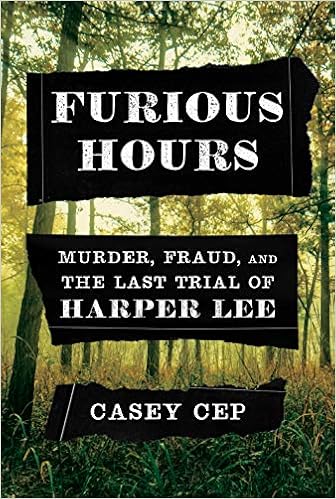
Casey Cep’s first book is a true crime account with seemingly limitless amounts of intrigue. Divided into three sections, it focuses alternately on the Rev. Willie Maxwell, attorney Tom Radney, and Harper Lee and a series of crimes in 1970s Alabama that serves as a point of convergence. Maxwell, a rural black minister, acquires a sinister reputation after a succession of wives and other relatives die in mysterious “accidents” and he cashes in on multiple insurance policies. Never convicted, Maxwell is nonetheless the subject of ceaseless gossip up until he his gunned down at the funeral of one of his suspected victims. Radney, a politically connected liberal lawyer, represents Maxwell and helps him sue reluctant insurers. But after years of defending the sinister minister, he then becomes counsel for the reverend’s killer, Robert Burns. Lee, fame-averse and ambivalent about the smash success of To Kill a Mockingbird, travels from New York back to Alabama to get the story but finds tight-lipped locals and a disheartening amount of innuendo.

Blessed with lively prose, Furious Hours succeeds in mining its characters’ contradictions and complexities albeit sometimes at the expense of sustaining tension. Biographical detours into the pasts of Radney and Lee help frame them as tragic figures (Maxwell not so much), but in doing so, the book loses the central thread of the Burns trial. In Radney’s case, this fleshing-out shows the dichotomy between courtroom bully and a gracious gent run out of politics by Klan-aligned forces. In Lee’s case, it reveals a witty writer and skillful researcher embittered by taxes and a loss of privacy. The latter’s tale isn’t anything new to Lee devotees, but it still does her justice.

While Furious Hours will disappoint some by straying from Maxwell-related malfeasance and others by including Lee almost tangentially, the hybrid true crime/character sketch approach is, if nothing else, refreshing.

Thursday, August 1, 2019

Once Upon a Time in Hollywood


By 1969, Rick Dalton (Leonardo DiCaprio) is a former TV Western star turned failed film actor and alcoholic, reduced to taking villainous guest star roles that play on his former fame. He is supported by his best friend and erstwhile stunt double Cliff Booth (Brad Pitt), a war veteran and alleged wife killer who works as Rick’s valet. When Rick learns that Roman Polanski (Rafal Zawierucha) and Sharon Tate (Margot Robbie) have moved in next door, he begins plotting a comeback. Meanwhile, Cliff crosses paths with a young hippie woman (Margaret Qualley) whose “family” is staying out on an old movie ranch.

Excess has been a constant in Quentin Tarantino’s long and varied career, but the nature of that excess has changed considerably. In the 1990s, it was profanity and violence, but for the past decade, it has largely been character-building conversations. Whereas his previous outing, The Hateful Eight, was a tense though largely bloodless buildup to a gory final third, Once Upon a Time in Hollywood is a loose, ambling, often comedic romp that saves its barbarity for a few scant, explosive moments toward the end.

A devotee of B-movies and genre entertainment, Tarantino could not have asked for more suitable subject matter, and from an aesthetic standpoint, he absolutely nails the setting. The cars, the clothes, and the music are obvious cues, but the film’s bright palette and even the title fonts all scream 1960s Hollywood. This makes the scenes that step outside of that bouncy, boozy milieu – a visit to the Manson Family-occupied Spahn Movie Ranch is singularly creepy – all the more jarring.

Once Upon a Time in Hollywood is also absolutely awash in trivia, in-jokes, and meta-references. Rick thumbs his nose at Italian-produced spaghetti westerns and their questionable production values, yet this movie owes a debt beyond its title to Sergio Leone. When Rick lands a guest starring spot on Lancer, who should appear as gunslinging series lead James Stacy but Timothy Olyphant, referencing his trigger-happy turns as Seth Bullock (Deadwood) and Raylan Givens (Justified). Kurt Russell (also the film’s narrator) and Zoe Bell show up as a husband and wife stunt coordinator team, a play on their opposing turns in Tarantino’s earlier Death Proof.

For the most part, the film is impeccably cast. DiCaprio can go from self-pitying to stone drunk to intensely determined at will, and though she isn’t given nearly as much material to work with, Robbie makes for a vivacious and (according to the slain actress’s sister) very convincing Tate. Newcomer child actress Julia Butters holds her own as a serious young thespian opposite Rick on Lancer while former child actress Dakota Fanning is unrecognizable – and unhinged – as Squeaky Fromme. The likes of Al Pacino, Bruce Dern, Luke Perry (in his final role) and others show up as well though the film is sorely missing a Samuel L. Jackson appearance, and Steven R. McQueen may have fared better as his namesake grandfather than Damian Lewis.

Stellar cast aside, some elements of characterization strike a false note. Bruce Lee (Mike Moh) is disrespectfully portrayed as a braggart while Tate’s friend/ex-boyfriend Jay Sebring (Emile Hirsch) comes across as an immature, opportunistic weasel despite being a Korean War vet and a very successful hair stylist. Perhaps the biggest question mark is Cliff, who is treated like a weird loser by nearly every character besides Rick despite being a very competent driver and fighter who looks like Brad Pitt.

Even more divisive, however, is the film’s ending, which focuses on an infamous August night on Cielo Drive. It is as gory as expected but definitely not in a way that is expected. Whether Tarantino is trying to write the history he would have wanted to see it happen or whether he is trying to make a statement about overt chaotic evil vs. entrenched yet concealed malevolence is anyone’s guess.

Some have speculated that Once Upon a Time in Hollywood is Tarantino’s reaction to a midlife crisis: a middle-aged white guy pushing back against notions of his own irrelevance. But one needn’t have any sympathy for Rick or Cliff or see in them any rectitude to find their misadventures, long and drawn out as they may be, thoroughly amusing.

Wednesday, July 31, 2019

The Mecca Restaurant


Located at 13 East Martin Street in downtown Raleigh, The Mecca Restaurant offers Southern food for breakfast and lunch daily and dinner every day except Sunday. There is a full bar, and private dining is available.

Calling a restaurant “The Mecca” sounds like the height of hipster pretention, but this place is very much the opposite. Founded by Greek immigrants in 1930, The Mecca is as old-school as old-school gets with classic décor, a comfortably familiar menu, and competent execution all-around.

While there are definitely more chic and comfortable places to dine, The Mecca oozes nostalgia. Red stools along a long counter, a black and white checkered floor, and heavy wooden booths give the look of a place untouched by time. The menu is equally immune to faddishness, offering Southern favorites (fried chicken, fried fish, and chopped BBQ), a few nods to the founders’ heritage (a Greek salad and Zorba’s beef tips), and the eyebrow-raising Garry Dorn burger (a veal cutlet sandwich).


Hungry from wandering around GalaxyCon, my wife and I bypassed sandwiches in favor of platters: fried fish and BBQ, respectively. Both came with a hushpuppy, slaw, and two sides (mac n cheese for both of us, butter beans for her, and fried okra for me). While neither dish was attractively plated, both tasted considerably better than they looked. After decades, The Mecca has making this kind of food down to a science. Both the fish and the okra were fried to a golden brown sans greasiness, the slaw was creamy, and the BBQ was not dried out. Admittedly, vinegar-based is not my preferred style, but The Mecca’s was as good as a rendition of that type as I’ve had anywhere.

For three quarters of the meal, service was courteous, prompt, and attentive. However, we made the mistake of ordering a blackberry cobbler after The Mecca got busier, and the dessert took so long to reach us that they ended up comping it. At under $3, it still would have been worthwhile, and much of The Mecca’s menu is similarly value-conscious. Both lunch dishes were under $10 apiece, and while the fried fish contained a disappointingly small amount of fish, there was still enough on the plate for a filling meal.

The Mecca is the kind of time-displaced icon that everyone should try at least once, but for those who are willing to trade innovation for simplicity, it’s more than just a novelty act.