Showing posts with label Novels. Show all posts

Friday, April 16, 2021

The Committed


This 2021 sequel to Viet Thanh Nguyen’s 2015 debut novel The Sympathizer picks up where the previous book left off. The unnamed protagonist (“Vo Danh” on paper and Crazy Bastard to his friends) is a “man of two minds,” the son of a French priest and a Vietnamese mother, a Communist agent recruited to infiltrate anticommunist expats. His ability to sympathize with his supposed enemies won him a trip to a Vietnamese reeducation camp where he was tortured at the behest of a masked commissar, secretly his blood brother Man. Now exiled to Paris, he meets up with his other blood brother Bon, a hardened yet grief-stricken anticommunist who has vowed revenge on the commissar, unaware that it is Man behind the mask. Together, they fall in with a criminal syndicate whose drug trafficking operation has put them in the crosshairs of an Algerian gang. Meanwhile, he is watched over by a Vietnamese agent posing as his aunt, and her leftist intellectual friends regard him with a combination of fascination and contempt. A revolutionary without a revolution, the protagonist must keep Bon from killing man, the Algerians from killing or being killed by his new friends, and his true allegiances – at times, a secret even to himself – well-hidden.


The Committed is a messy, ambitious, wildly uneven book, at times brilliant and at times almost painful to read. At its best, it operates in the tradition of Graham Greene, using political intrigue and a crime plot as the backdrop for a deeply personal crisis of faith and a dose of moral introspection. Nguyen does an excellent job of fleshing out the protagonist, a man wracked by guilt (he imagines the voices of those he killed chiding him) and loathing (both internal and external) who is also hilariously irreverent. This latter quality leads to many fitfully funny moments, such as the protagonist trolling his would-be captors over their failures as tortures or drinking a cocktail that “look(s) like holy water and taste(s) like Hell” as a form of penance.


At its worst, however, The Committed is offputtingly self-indulgent. Some of the typographical choices come across as needlessly dramatic, and not since Atlas Shrugged has a novel torpedoed its own momentum by spiraling into unnecessarily digressive declarations of political principle. A lesser annoyance is Nguyen’s aversion to names. One of the aunt’s set is The Maoist PhD, a bouncer at a brothel is the eschatological muscle, and the Algerian gangsters are introduced to us as Beatles, Rolling Stones, and the Mona Lisa. Much as Thomas Pynchon’s ridiculous character names serve to distract and lower the stakes, so too does Nguyen’s serial nicknaming.


Those who enjoyed The Sympathizer may find The Committed a bit of a let-down, but its frustrations are still worth enduring for its skillfully complex characterization and at-times captivating prose.


Thursday, September 5, 2019

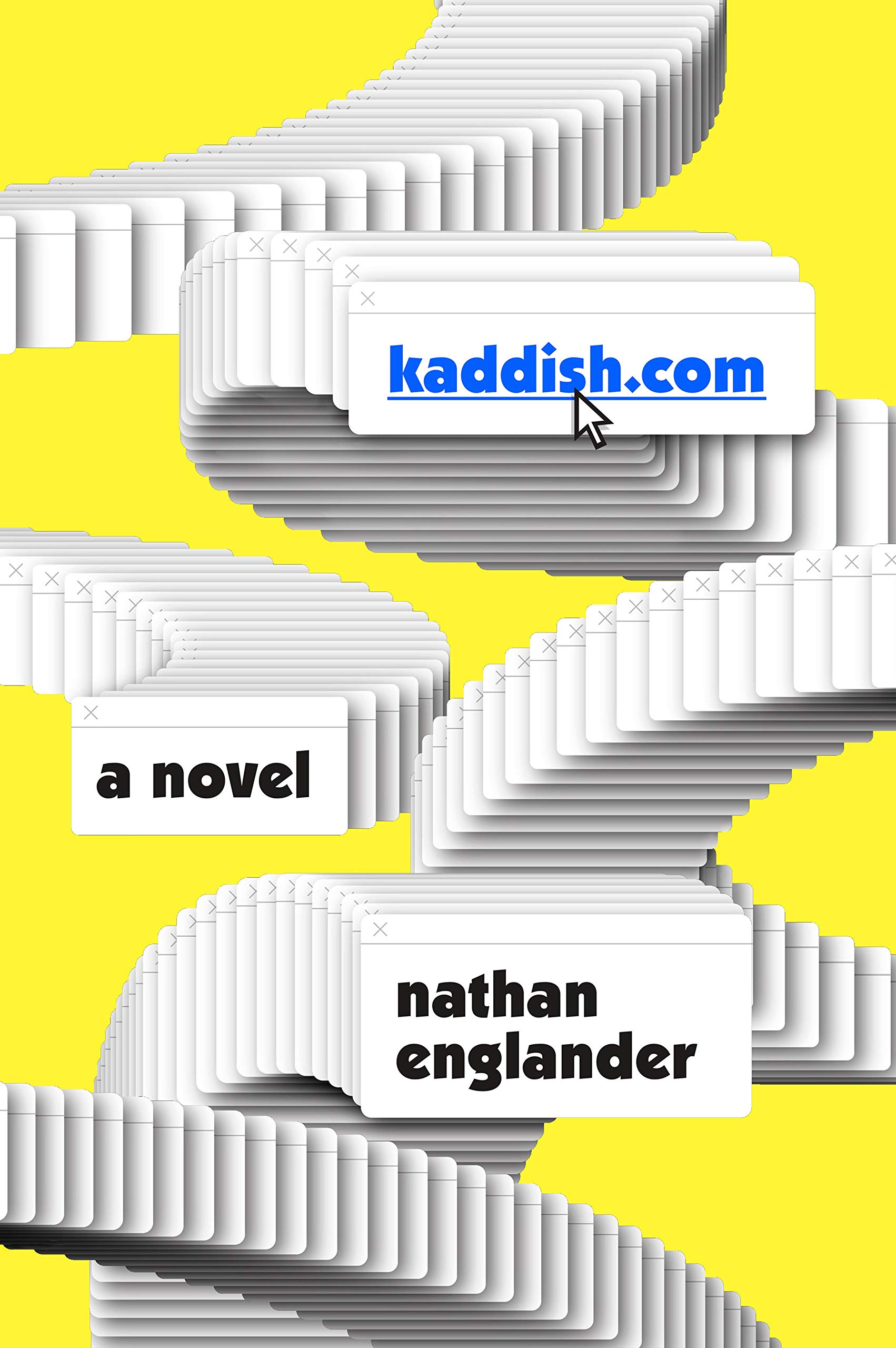
Kaddish.com


Larry is the loutish, atheist son of Orthodox Jewish parents. When his father dies in 1999, he is tasked with saying the Kaddish – a prayer for the dead – every day for a year. However, Larry refuses the call and instead secretly uses the Web site kaddish.com to contract with Chemi, an Israeli student, to pray in his stead. Twenty years later, Larry (now going by Shuli) has returned to his faith and is a rabbi teaching at a religious school. A chance encounter with a student fills him with dread over his earlier shirking of filial duty, and he embarks on a desperate quest to track down Chemi and reclaim his birthright.

Part satire and part affirmation of faith, Kaddish.com is an odd duck of a novel that captivates while falling short of its ambition. Nathan Englander remains a talented writer well-versed in Orthodox practices and culture, and as with his short story collections, he is able to navigate them with a deft blend of humor (Shuli, furtively browsing a school computer, is stunned by how fast technology has become since he abandoned it) and sincerity (the burning desire to right a wrong). But even those skills cannot mask the absurdity of Shuli’s obsessive odyssey, which is wife, speaking for the audience, rightly condemns.

Kaddish.com continues a long tradition of exploring intersections and divergences between what is Halakhic and what is by other measures right and tries to update it for the digital age. However, that is an issue that needs more than the book’s 200 pages allow.

Saturday, February 16, 2019

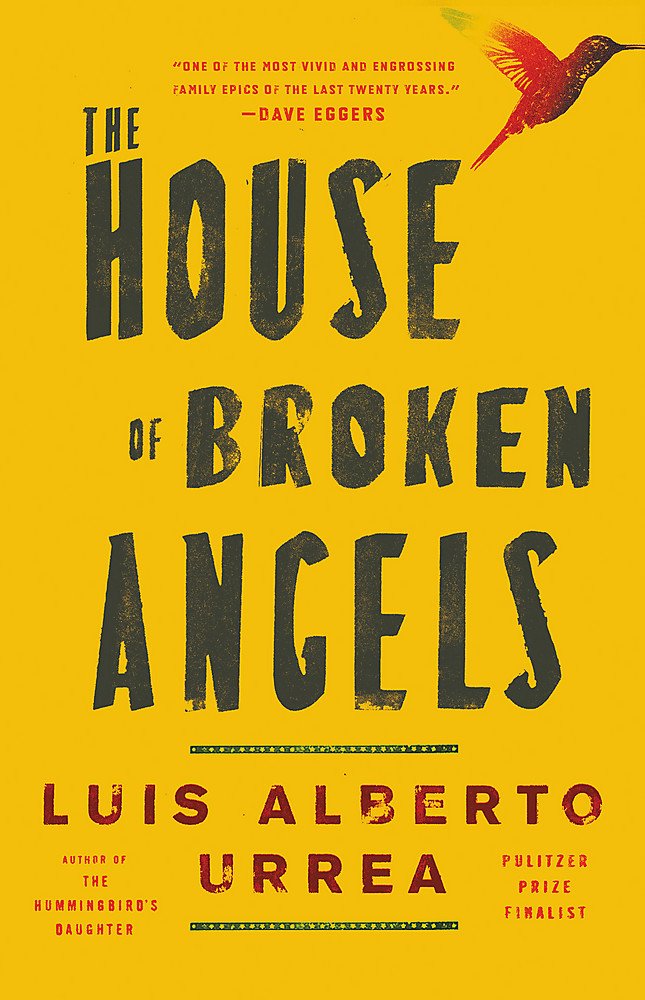
The House of Broken Angels

Not long after burying his own mother, Big Angel de La Cruz, the revered, terminally ill patriarch of a large Mexican-American family gathers his kin for one final celebration before he says goodbye. Attending him are his wife, Perla, his daughter Minerva/”La Minnie,” his son Lalo, and his half-American half-brother and namesake Little Angel, among others. Past and present converge as Big Angel’s memories illuminate his final days.

Luis Alberto Urrea’s 2018 novel comes from what is likely a place of pain. Like Little Angel, Urrea has had to juggle Mexican and American identities, and also like Little Angel, the author recently lost an older brother. But despite this inherently sorrowful premise, The House of Broken Angels is far from being simply a sad read. Urrea tempers the novel with vivid writing and equal parts humor and pathos.

Though Big Angel is arguably the focal point, The House of Broken Angels tells a multigenerational story from a variety of perspectives. The sheer number of characters is a chore to keep up with though few, if any, are dull. Perla, outwardly the doting wife, still bitterly recalls being scorned by her in-laws as a dark-skinned peasant. Lalo, a weary military veteran, lives in the shadow of his murdered brother, whom his own son presses him to avenge. The relationship between the two Angels is also fraught with tension as the two live in different worlds despite sharing mutual respect as well as a name. There’s also a benevolent priest, a tyrannical boat captain uncle, and a grand-nephew who plays in a metal band as The Satanic Hispanic.

The novel’s tones are every bit as rich and diverse as its cast. Urrea pokes gentle fun at border Spanglish and the Mexican preoccupation with impractically large American cars. However, he also offers sincere critiques of stereotyping, machismo, and classism.

All of this makes for a rewarding read, but it would have to be given the book’s nearly fatal flaw: an at-times stultifying lack of momentum. The House of Broken Angels dispenses with a conventional plot in favor of a series of character sketches, and not since Mrs Dalloway has a book, in its worst moments, felt so listless and stalled. The saving grace here is that there are enough humorous, humanizing, shocking, or otherwise compelling beats in both the past (a brazen attempt to smuggle a green parrot across the border) and present (Big Angel stubbornly trying to act on his attraction to his wife despite the limits imposed by his failing health) to compensate for its structural incoherence and bouts of tedium.

The House of Broken Angels has as much capacity to alienate as it does to captivate, but for those who are willing to look past its inconsistencies and character bloat, it is meaningful, impassioned, and warm. For a book ostensibly about dying, it is remarkably full of life.


NOTE: Urrea narrates the audiobook version himself and does a fantastic job.

Wednesday, July 25, 2018

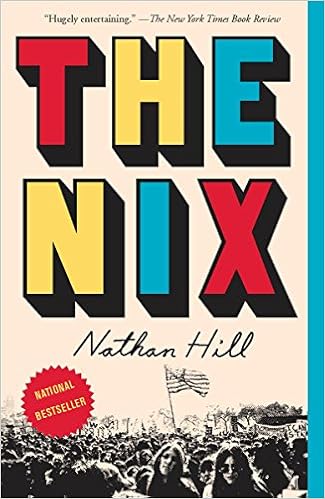
The Nix

After his mother Fay abandoned the family when he was a boy, Samuel Anderson grew up to become a failed writer, bored English professor, and hopeless gaming addict. However, when Fay becomes a brief cause celebre after throwing rocks at a controversial presidential candidate, Samuel is encouraged/threatened by his media-savvy publisher to get her story. Though reluctant at first to reconnect, Samuel eventually begins to search for answers, a journey that sees him research Fay’s midwestern roots, unlikely late-1960s student activism, and the titular Nix, a supposed family curse that followed Fay’s father from Norway.

The Nix may be Hill’s debut novel, but at times it reads like an accomplished author’s magnum opus. It satirically savages everything from grandstanding reactionary politicians to socially inept gamers to self-absorbed hippies to entitled millennial college students, often with hilarious results, and the stylistic shifts that accommodate these different perspectives are spot-on. However, the book does this without relying on mere caricature. Hill’s characters are often more complex than they seem, and even the most antagonistic or vile among them (such as a student who resolves to get Samuel fired after he busts her for plagiarism or a cop-turned-judge with a deep-seated grudge) are given some sympathetic edges.

That depth of characterization also extends to the Andersons, whose mysteries – Why did Fay leave? Why is Samuel such a jaded washout? How did the family curse come about? – are revealed gradually. Hill uses digression frequently and often to good effect (witness the woes of Samuel’s gamer friend Pwnage), but between that and the book’s frequent hops across place (Iowa to Chicago to New York) and time (the present to the 1960s to the early 2000s), The Nix is guaranteed to try some readers’ patience. For those who stick with it until the end, there is a definite payoff in seeing how the pieces come together.

If there is one thing that does mark The Nix as a first novel, it is a certain amount of unevenness. At times, it feels excessive. Hill often posses Fay’s (and Samuel’s) trials and tribulations against historical backdrops, and both the violence of the 1968 Democratic National Convention riots and cameos from the likes of Walter Cronkite and Allen Ginsberg felt gratuitous. On the opposite end of the spectrum, parts of the ending came across as too neatly packaged.
Sharply witty yet achingly sincere, The Nix is an auspicious debut and an engrossing family saga that is well worth the time invested in it.


8.75/10

Friday, December 29, 2017

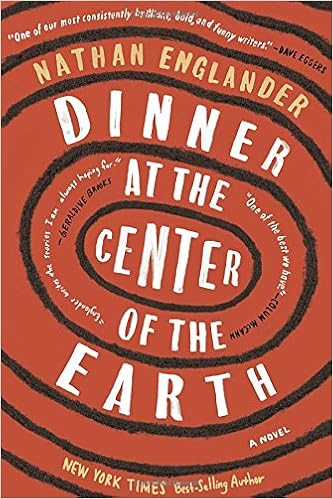
Dinner at the Center of the Earth

For more than a decade, Prisoner Z has been housed off the books in a covert prison in the Negev Desert, his only company a lone guard. An American by birth, Z was formerly an Israeli Mossad operative who later betrayed his adopted country. He bides his time writing letters to The General, the man who sentenced him to his fate and the only one who can set him free. He is unaware that the General is in a comatose limbo, trapped by his memories, largely unresponsive to the outside world, and watched over by his trusted confidant Ruthi, who happens to be the guard’s mother.

Nathan Englander’s 2017 novel is an ambitious book, equal parts captivating and frustrating. It’s an existential character study that wears the trappings of a historical spy novel, engrossing in its complexity yet nearly undone by a contrived ending and by leaving too much off the page.

Dinner at the Center of the Earth alternates between several different times, places, and viewpoints. The “present-day” (actually, 2014) chapters reveal a codependent relationship between guard and prisoner (an odd, co-dependent friendship) and mother and son (the latter cannot fathom the former’s fanatical devotion). The “past” chapters take us to 2002 where Z falls for an Italian-Jewish waitress in Paris (to be named Shira in later chapters) as his espionage career unravels. Other past chapters focus on Farid, a Palestinian ex-pat living in Berlin whose life is upended when he meets a Canadian businessman. The quick movement from one perspective to another will alienate some readers, but for those who are willing to keep up, this structure sustains the story’s momentum by drawing the audience to a point where past and present converge.

Englander also takes care not to stereotype his characters. The General is Ariel Sharon in all but name, and the novel does not shy away from confronting the controversial legacy of his long and bloody military career. However, it also shows the affection he had for his family and the veneration he inspired in those such as Ruthi. Contrastingly, Farid is shown in a relatively sympathetic light, but the dark path that he takes is not excused let alone exalted.

In light of this character development, however, Z comes across as a weak protagonist both inside and outside of the story. Within, Shira continuously points out his deficiencies as a spy and his mother his inadequacies as a son. For us as readers, he comes across as a naïve fool too easily swayed to take up one cause and then another. Were Englander to show more of him working his way from A to B and B to C, he would be both more believable and worthier of taking up so much of the book’s focus.

Given the novel’s content and tone, the title seems completely out of place, as is the incident it refers to: a romantic rendezvous between Shira and a Palestinian mapmaker in a tunnel beneath disputed territory. Their relationship is supposed to serve as a counterpoint to Shira’s years-ago (but not forgotten) relationship with Z, but whereas the book’s other parallels seemed more organic, this one is clumsily forced, and the distracting build-up to it makes the latter quarter of the book something of a letdown.

In The Dinner at the Center of the Earth, Englander bites off more weighty concerns (questions of culpability, the efficacy of vengeance, etc.) than his trim 250-page-book can effectively chew. It's an admirable attempt but one that comes across as underdeveloped.


7.5/10

Monday, July 21, 2014

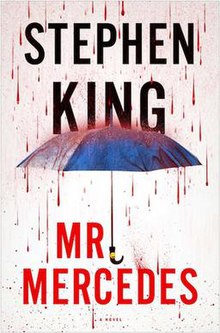
Mr. Mercedes

After running down a crowd of job seekers using a stolen car, demented Brady Hartsfeld anonymously contacts retired police detective Bill Hodges, hoping to goad the listless ex-cop into committing suicide. Instead, he spurs Hodges into action, prompting him to launch an off-the-books investigation aimed at taking the Mercedes Killer down. The more Hartsfeld and Hodges push each other’s buttons, the higher the stakes become for them both.

Marketed as a departure for Stephen King – a straight-up mystery/thriller without supernatural elements – Mr. Mercedes will hardly seem novel to the author’s longtime readers. After all, King has struck paydirt outside the horror genre (Shawshank Redemption, anyone?) before. Furthermore, some of his most chilling antagonists are not the otherworldly creatures who commit evil for evil’s sake but flesh-and-blood people – terrible people, but people just the same. Brady Hartsfeld is a welcome continuation of this tradition, and King does well to explore his perspective. What emerges is a portrait of a nihilistic, sociopathic genius with a tragic life and a burning hatred for everyone. King makes him pitiable but no less monstrous. By steering him away from cliché, King leaves us dreading a nemesis that could very well exist instead of yawning at a straw-abomination that can’t.

The bad guy isn’t the only well-defined character here, though. King’s heroes tend to be everyman-types who, through desperate circumstances, become hardened survivors or unlikely chosen ones destined to combat evil. Bill Hodges is a welcome subversion of all of that. Though he starts at a position of nominal heroism as a former police officer, Hodges is old, fat, and full of self-recrimination. Even as he becomes fully engaged in the case, he is beleaguered by physical limitations. This forces him to be a more cerebral hero albeit one who is not afraid to cross some ethical lines.

Unfortunately, the supporting cast isn’t nearly as well-drawn. Jerome, an intellectual black youth who acts as Hodges’ right hand, has a sarcastic, subservient alter ego…who inexplicably talks like Stepin Fetchit. As embarrassing as this characterization is, it still isn’t as painful to read as that of Holly, a cousin of one of Hartsfeld’s victims. King has long been enamored of the Magic Child, only instead of a boy with telepathy or a girl with pyrokinesis, he’s shoehorned the trope into a sheltered, mentally unbalanced middle-aged woman with improbable computer skills. That she takes on such a pivotal role in the plot despite not appearing until the middle of the book makes her all the more insufferable.

Despite these shortcomings, King still knows how to spin a good yarn. Mr. Mercedes moves briskly and keeps the reader invested in Hodges and Hartsfeld’s increasingly diabolical attempts to get under each other’s skin. Though we know who they are right away, watching them make discoveries about each other keeps the pages turning. Only the ending – contrived, circumstantial, and unsatisfyingly anticlimactic – rings a false note.

Mr. Mercedes is far from King’s finest novel, but it is also far from his worst. Though he proves incapable (or perhaps unwilling) of breaking entirely free from well-worn clichés, he still manages to apply his time-honed storytelling to a different kind of story. That makes Mr. Mercedes, if nothing else, a pleasant diversion, worth at least a test drive.


7.75/10

Friday, November 27, 2009

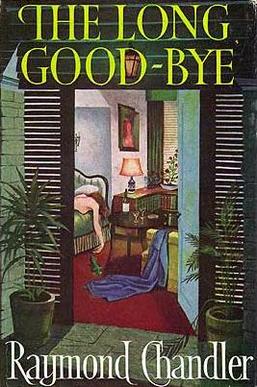
The Long Goodbye


Published in 1953, Raymond Chandler’s classic crime novel continues the adventures of private detective Philip Marlowe. Here, Marlowe befriends Terry Lennox, an emotionally and physically scarred drunk with a crumbling marriage. Lennox calls on him for a ride to the airport one night and Marlowe soon finds himself in the thick of a murder investigation. Not one to stay out of trouble for long, he soon becomes entangled with another alcoholic – the writer Roger Wade – and his attractive wife. It isn’t long before Marlowe suspects Lennox and Wade had more in common than a drinking problem.


Hardboiled detective fiction, of which Chandler was a chief purveyor, is a veritable minefield of tropes, types and clichés. Femme fatales, crooked cops, menacing gangsters, caricatured ethnic sidekicks and gratuitous cigarette smoke are but a few staples and they all show up in The Long Goodbye. The familiarity of these elements begs a question: is a mystery with so little mystery still worth reading?


The answer, in the case of The Long Goodbye, is a resounding “yes.” Though crime novels are by necessity plot driven, Chandler does a great job with characterization. You can see the stock origins of a lot of the minor players (the servant Candy in particular), but the main characters are fairly well-developed. Unlike his contemporary Sam Spade (unbelievably and effortlessly slick), Marlowe is complex and thoroughly human. He talks and acts tough, but he is also subject to injury, inadequacy and doubt. Similarly, Lennox and both Wades walk a morally ambiguous line in that they are devoid of neither sympathy nor malice.


Chandler also succeeds at sustaining tension. The Long Goodbye weighs in at 316 pages, but is remarkably taut with very little filler. It takes several pages to establish its narrative footing and it ends on a rather abrupt note, but everything in between is expertly paced. The prose is surprisingly crisp too – descriptions are neither purple nor threadbare.


Though sex-and-murder laden, The Long Goodbye is not the literary equivalent of a popcorn movie. Chandler uses Marlowe and Co. to explore the nature of power, truth and corruption and he does it without making us feel like we’re being lectured. There are a few places where Marlowe comes off as annoyingly self-righteous in his quest to defend Lennox’s good name, but if he didn’t believe so thoroughly in what he was doing, we probably wouldn’t care enough to read about it.


In the 50-plus years since its publication, The Long Goodbye has been the subject of parody, reinvention and critical acclaim (or, in the case of Robert Altman’s 1973 film adaptation, all three at once). It is, however, a book which can stand ably on its own two feet regardless of the printing date or the mythic reputation of the author.


8/10