Showing posts with label Mystery Books. Show all posts

Monday, May 1, 2023

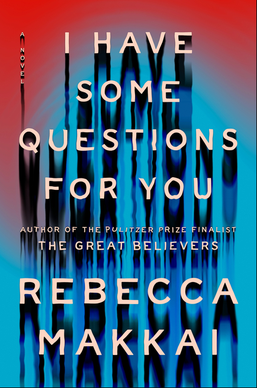
I Have Some Questions for You


Bodie Kane, a podcaster famous for exposing Hollywood abusers, returns to her prep school to teach. Her students opt to make the focus of their own podcast the murder of Bodie’s then-roommate more than twenty years earlier. As they pry into whether the wrong man was convicted, Bodie is forced to reopen old wounds and examine her role in the lead-up and aftermath.


Taking on everything from #metoo to Twitter mobs to true crime podcasts, Rebecca Makkai’s 2023 novel screams “topical,” which is often shorthand for “desperate to clumsily assert relevance.” That may hold true in lesser hands, but Makkai excels in injecting this campus murder mystery with complexity and nuance that leaves us guessing for much of the narrative. Is the convicted killer Omar another young Black man railroaded by the justice system or a violent abuser rightly sent away? Is a predatory teacher the real culprit, or does Bodie, disgusted that he’s avoided suspicion all these years, merely want that to be true? Admittedly, the abundance of characters can make I Have Some Questions for You feel overstuffed, and the ending’s revelations verge on contrivance. But for much of the book, we’re treated to sharp writing that elevates the story above the faddishness (and, in the case of true crime trendiness, toxicity) of its subject matter.

Thursday, September 5, 2019

This Storm


In the early 1940s, as America goes to war, LAPD and Army intelligence officer Dudley Smith senses an opportunity. The cunning and ruthless Irish cop conspires to smuggle drugs as well as Japanese and Mexican laborers into the U.S. in military vehicles. His scheming is aided by a Tong boss restaurateur, a high-ranking Mexican Sinarquista, and by Hideo Ashida, a closeted and conflicted Japanese-American LAPD chemist. To thwart Dudley, his more straight-laced but equally ambitious rival, LAPD captain Bill Parker, recruits forensic biologist/Navy officer Joan Conville to work alongside and keep tabs on Ashida. Though distrustful of one another at first, a series of discoveries brings them closer together and puts them – as well as Dudley and LAPD officer Elmer Jackson – in pursuit of a Communist-Fascist conspiracy and a cache of stolen gold.
            The second book in James Ellroy’s Second LA Quartet, This Storm is all but inaccessible without having read the first book (2014’s Perfidia) and requires a decent understanding of WW II-era history to boot. A sprawling, character-laden six-hundred-plus page exploration of Ellroy’s favorite subject (mid-century American corruption), This Storm will appeal to a narrow band of patient, strong-stomached readers, and even then, it will test their commitment.
            As with Ellroy’s previous oeuvre, This Storm breathlessly catalogues the violence and sleaze lurking behind the veneer of respectability. Not only do characters like Dudley eradicate the lines between cops and criminals, but politicians and entertainers (chiefly, the real-life Fletcher Bowron and Orson Welles) are painted as indulgent and corruptible. “Fifth column’s fifth column” pops up as a refrain, and it works to capture the greed and thuggery that unite partisans of widely differing political stripes.
            All of this is delivered in Ellroy’s rapid-fire staccato style, which is as much a curse as a blessing. On the one hand, it suits the subject matter well and keeps a long book from being unbearably longer. On the other hand, it stands in the way of characters developing their own voices (excerpts from the journal of police pal Kay Lake notwithstanding). This is a shame because Ellroy has finally diversified his protagonists. The familiar corrupt white cop battling a greater evil is still present here in the form of Elmer (a redneck running a prostitution ring who foreswears white supremacy and murder), but Joan (who plays Bill and Dudley against one another as she looks for a means to avenge her father) and Hideo (whose growing attraction to Dudley clashes with his growing sense of guilt from enabling him) allow for new stories to be told. And yet, they are only fleshed out as much as the plot demands them to be, which is often not nearly enough.
            This Storm takes its name from a fabricated quote by W.H. Auden. “This storm. This savaging disaster” is repeated by various characters within the book, and it’s tempting to see it as a description of the text (relentless and unyielding as it is) itself. However, another frequent phrase is actually a better fit. “It’s all one story,” Joan notes as her cases begin to converge. Here, too, Nazism, Communism, theft, and murder are all viciously intertwined, to the detriment of anything else worth focusing on.  

Tuesday, December 25, 2018

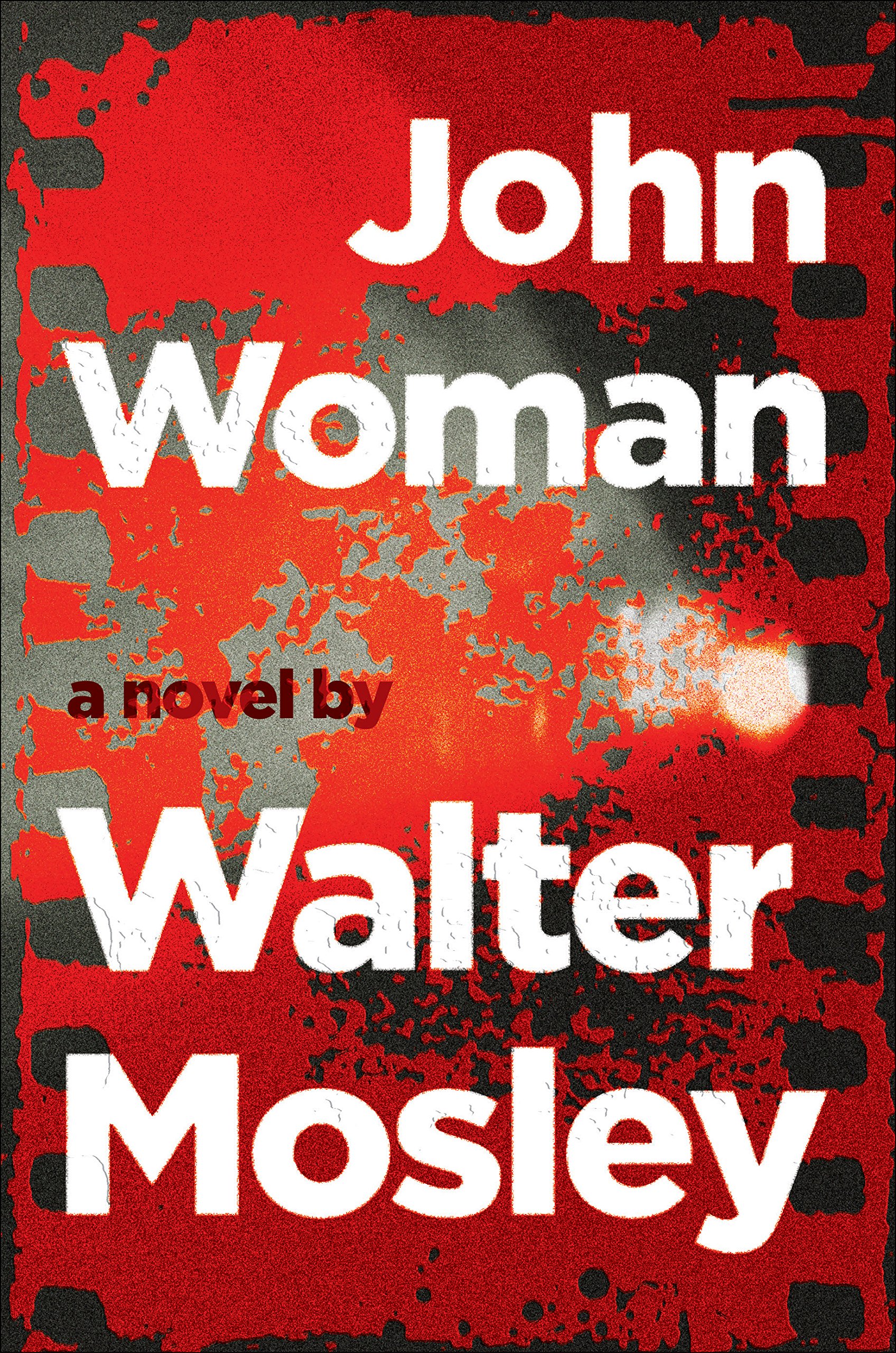
John Woman

The son of an erudite self-taught historian who works as a ticket-taker, Cornelius Jones is forced to flee New York following a sudden tragedy. He reinvents himself as Professor John Woman, a radical historian looking to shake up the establishment at an Arizona university. If his hostile colleagues or his affair with a student don’t prove to be his undoing, his long-hidden past just might.

Wanting to cast off the restrictive label of genre is commendable, but some writers should know their strengths. Walter Mosley is a prime example. His socially conscious detective novels — the mid-century exploits of self-made Los Angeles P.I. Easy Rawlins or the more contemporary tales of redeemed former fixer Leonid McGill — are well-crafted with memorable characters, sharp dialogue, and a keen sense of time and place. On the other hand, his science fiction novels tend to be pompous, hopelessly abstract, and ponderously slow while his erotic thrillers are cringeworthy. John Woman, unfortunately, represents a mix of the worst of all of the above. There is a murder, a political conspiracy, plenty of bloviating, and awkward sex, none of which coheres into an enjoyable whole.

The problem starts with the protagonist. John/Cornelius is deeply flawed, which wouldn’t be a problem if the narrative was not constantly trying to ennoble him. The history professor commits a crime about which we are told that he feels guilty, yet his only real regret seems to be that his father is no longer around. He commits numerous ethical breaches, including sleeping with a student. His view of history as belonging to everyone, including/especially the common man is framed as something bold and revolutionary even though Howard Zinn published A People’s History of the United States more than three decades ago. Every single female character save for his mother seems to be attracted to him. Most glaringly, those who oppose him are presented as insecure (the student’s suspicious boyfriend) or jealous (skeptical fellow professors) and given no redemptive traits. Mosley has spoken about the need for more black male heroes, but sadly, he has not realized that this book’s lead character is decidedly not one.

While the book’s problems might begin with John, they do not end there. A statutory rape is glossed over, long-disappeared characters randomly reemerge, and the Platinum Path, an improbable and hokey Illuminati imitator watches over everything, secretly grooming John for a leadership role. All of this contributes to the sense that Mosley had about five novels he wanted to write, and, not being able to decide among them, decided to merge them into one.

Were John Woman a debut from a nascent writer or the latest putrid offering of a talentless hack, it would be easily forgettable. But Mosley, who has shown himself to be capable of doing much better work, has left an impression for all the wrong reasons. Here’s hoping his next book is, if not a return to form, at least a return to lucidity.

Tuesday, May 22, 2018

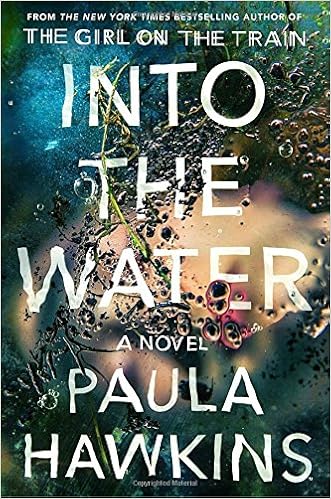
Into the Water

The town of Beckford in rural England has seen more than its fair share of drowning deaths. The latest victims, both presumed suicides, are teenager Katie Whitaker and, a few weeks later, muckraking writer Nel Abbott. Now, Nel’s daughter Lena (the late Katie’s friend) and Nel’s estranged sister Julia are left to pick up the pieces. Though the two surviving Abbotts don’t know, like, or trust one another, asking around leads them both to the same uncomfortable conclusion: Nel’s death was neither suicide nor accident. But trying to unearth a culprit in a town that likes its secrets proves to be a dangerous game to play at.

When Paula Hawkins followed up her successful debut The Girl on the Train with this 2017 novel, there was reason to be optimistic. First novels are often glimpses at potential yet to be realized. Unfortunately, Into the Water is a step backward rather than forward.

First, the good: Hawkins excels at communicating a sense of place. Beckford’s provincialism rings true, and the town’s everybody-knows-everybody quality contributes to the novel’s tension. After all, it is far more troubling to consider that you have been wronged by someone you have known all your life than it is to know you have been victimized by a random stranger.

Speaking of tension, Into the Water’s central mystery – the suspicious drowning deaths of several women – is fairly engrossing. The first drowning described is the centuries-old public execution of a woman wrongfully accused of witchcraft, and that death hangs over the novel. But as with The Girl on the Train, Hawkins complicates the resolution through misdirection, some of it successful, some of it decidedly not.

As with the previous book, Hawkins employs multiple alternating narrators. While the perspective changes may frustrate some readers, if done correctly, they can also shade characters and lead to a more nuanced understanding of them. Unfortunately, however, this technique is abused rather than used wisely. We have chapters told not only from Lena’s and Julia’s points of view, but also from those of Sean (the policeman investigating Nel’s murder), his father Patrick, his schoolmarm wife Helen, and his junior partner Erin, among others. As a result, the narrative focus is stretched too thin, and these different voices aren’t given enough depth. It says something about a book when the character who grows the most – via changing perceptions of her – is one who has been dead from the beginning.

Then again, in some cases, this is just as well: Hawkins continues to struggle to write male characters. As with The Girl on the Train, abusive and devious men function as red herrings, competing for the role of perpetrator. But whereas the previous book gave these characters some definition beyond their malice, here Hawkins instead traffics largely in one-dimensional stereotypes, from Sean’s reactionary patriarch of a father to a pathetic, insecure ephebophile teacher. If a male writer in 2017 wrote every female character as a femme fatale (without parodic intent), he would rightly be dragged for it. So too should Hawkins for her shallow misandry.

Ultimately, Into the Water squanders its deft use of setting and promising premise on too untenable a structure and too little character exploration. Here’s hoping the next novel rights the course.


6.75/10 

Monday, August 21, 2017

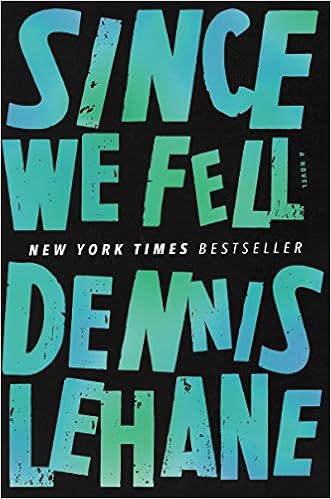
Since We Fell

          The daughter of a domineering psychology book author, reporter Rachel Childs grows up without knowing who her father is. Her quest to unmask his identity following her mother’s death leads her to Brian Delacroix, a Canadian lumber heir moonlighting as a private investigator. Though Brian’s search proves unsuccessful, this is not the last time their paths will cross. Later, a traumatic turn of events in Haiti prompts Rachel to have an on-air breakdown, rendering her jobless, divorced, and a virtual shut-in. Enter Brian, now active in his family’s business, who helps her heal. Though he seems at first like a godsend, over time, Rachel becomes increasingly convinced that Brian is not all that he claims to be. But will uncovering his secrets come at the cost of her sanity?
          Rightly or wrongly, when authors impress us, when they win our appreciation of their craft, we expect them to continue to do so. Dennis Lehane’s Kenzie and Gennaro novels deftly blended snarky narration and urban grit, Mystic River provided a haunting look at child abuse (and inspired one hell of a film adaptation), and The Given Day, the author’s first foray into historical fiction, proved his magnum opus. Since then, Lehane has achieved more recognition thanks to successful film adaptations of his work, but his books have entered a slow decline. The long-awaited sixth Kenzie-Gennaro novel, Moonlight Mile, did not equal the best of its predecessors and the two follow-ups to The Given Day (Live by Night and World Gone By) lacked the first book’s grandeur, offering instead a more personal tale of attempted redemption. In Since We Fell, Lehane tried to revitalize his writing by approaching it through a different lens. Rachel is his first female protagonist and is neither detective nor hoodlum. While this change of pace is commendable, Since We Fell still suffers from a series of missteps that the Lehane of twenty years ago would have known to avoid.
            To his credit, Lehane still has a good ear for dialogue (witness some of Rachel and Brian’s banter in the last third of the book), and he continues to capture New England settings with conviction, even when those settings are Provincetown or swankier Boston rather than blue-collar Dorchester. He also succeeds in creating suspense through paranoia. Though the book’s overall pacing is frustratingly inconsistent, when it finds its rhythm, it makes it difficult for readers to turn away.
            That said, Lehane’s choice of protagonist is a curious one. New for him does not, in this case, mean unfamiliar. A psychologically scarred, unemployed loner named Rachel who becomes suspicious of those around her fits The Girl on the Train as much as it does this book, and at times, the narrative plays like a gender-flipped Gone Girl. In an effort to complicate her characterization, Lehane also puts off delving into the roots of Rachel’s guilt until later in the novel and then ham-handedly wallows in it. His intent – giving a competent and courageous investigative journalist some inner demons to slay – is commendable, but drowning Rachel in recrimination makes her eventual recovery that much harder to take. Indeed, the action-heavy antics of the latter chapters, while breathlessly entertaining, seem at odds with certain aspects of prior characterization.
            Since We Fell also suffers from maddeningly uneven pacing and plotting. Plenty of books start off slowly before gaining momentum; few seem like entirely different novels grafted together. Rachel’s search for her father’s identity, which occupies much of the first few chapters, has little connection to anything later in the book and feels like filler once the pace quickens. Lehane’s decisions of where to begin the story, what to allude to in flashback vs. what to describe in basetime, and what to emphasize all invite second-guessing.
            Flawed as it is, Since We Fell is not an “Abandon ship!” call from Lehane to his longtime readers. There are enough turns and tension to make this book worth a read, and Lehane’s willingness to try something different is a risk that should be rewarded. On the other hand, those who are expecting a return to the rare form of Lehane’s earlier career will be disappointed.


7.5/10
Saturday, June 24, 2017

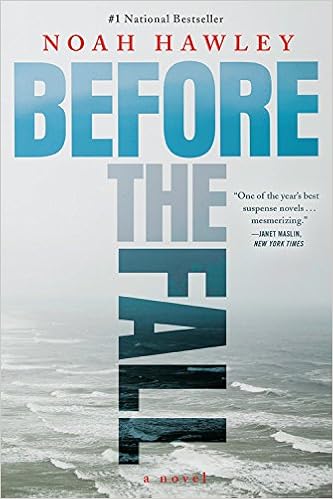
Before the Fall

David Bateman, a conservative cable news mogul, charters a private plane to take him, his wife, and their two young children home to New York City from Martha’s Vineyard. They are joined by another wealthy couple, the Kiplings, as well as Scott Burroughs, a down-on-his-luck middle-aged painter acquainted with Bateman’s wife Maggie. When the plane abruptly crashed into the water, Scott and four-year-old J.J. Bateman are the only survivors. Hailed as a hero for swimming the boy to safety, Scott finds himself the focus of unwanted media attention. Meanwhile, federal investigators, including Treasury officials who were building a case against financer Ben Kipling, are desperate to found out what happened, and Bateman’s controversial star pundit sees an issue worth rallying around.

Noah Hawley is best known these days as the creator of the supremely enjoyable television series Fargo, but 2017’s Before the Fall is the fifth book in a literary career dating almost years. The same sensibility permeates both works. In Fargo, Hawley brings a darkly humorous tone, heavy symbolism, and an almost biblical sense of catastrophe to small-town Minnesota criminal shenanigans. So too goes Before the Fall, where he balances characters’ place-in-the-cosmos fulminations with intimate, seemingly mundane, sometimes funny moments and turns nearly everyone into a tragic figure.

Throughout it all, Hawley maintains a consistent narrative structure that allows him to control the rate of revelation. In the present, Scott moves toward recovery, not only from his injuries, but from years of passivity; Maggie’s sister Eleanor embraces her new role as mother to J.J. despite her greedy, indifferent husband; and crash investigator Gus works his way closer to finding out what happened on that plane. In between, we learn the histories of all on board, from Bateman to his stealthy Israeli bodyguard to young flight attendant Emma to philosophical, well-read Captain Melody. The novel unfolds in layers, drawing the reader in as each is peeled back.

There are, however, unfortunate exceptions to this complexity. Maggie’s husband, a selfish hipster manchild named Doug, is one-dimensionally detestable. And naming the co-pilot who benefitted from his family’s political connections despite his own mediocrity “Busch” seems almost too pointed a barb. Then there is Bill Cunningham, an amalgamation of the worst of Bill O’Reilly, Sean Hannity, and Glenn Beck turned up to eleven, an influential troll who will, through innuendo, smear Scott as a terrorist if it helps the ratings and serves his narrative. Such a one-dimensional buffoon would ordinarily be cause for complaint (compare to Fargo’s much more interesting antagonists), but his snarling opposition does at least drive Scott to take action. That said, their confrontation toward the end of the book is far less climactic than the story warrants.

In Before the Fall, Hawley has gripped readers with a philosophical mystery that meditates on loss as often as it entertains or enthralls, but a few uninspired character choices and a weak ending render it inferior to his television work.


7.75/10

Tuesday, April 4, 2017

Ill Will

Dustin Tillman is a recently widowed Cleveland-area psychologist who uses hypnotism to treat patients. Thirty years ago, Dustin’s parents were murdered, and his adopted brother Rusty was convicted based on Dustin and his cousin Kate’s testimony. Now Rusty has been exonerated and released, and Dustin fears that Rusty might want revenge. To add to his worries, his patient-turned-friend, ex-cop Aquil, suspects that a serial killer is murdering young men in the area and staging their deaths to look like accidents, and he wants Dustin to validate his hypothesis. Meanwhile, Aaron, Dustin’s heroin-using teenage son makes contact with Rusty and finds himself drawn into Aquil’s investigation, all while learning some very unsettling family history.

Dan Chaon’s latest novel is a character study in a thriller’s skin. It is creepy, suspenseful, and unsettling while also offering a multifaceted exploration of its complex and deeply flawed protagonists.

Chaon achieves this by balancing multiple perspectives. If frequent POV changes irk you as a reader, this is not the novel for you. The viewpoint fluctuates not only between Dustin, his son, and his cousins but also between past and present and between conventional narration and an epistolary form. Through these multiple vantage points, Chaon is able to successfully shade his characters and alter readers’ perceptions of them. For example, in the segments he narrates in the present, Dustin comes across as unfortunate and put-upon, forever unable to finish his sentences as friends and patients besiege him with their problems. But through Aaron’s eyes, he comes across as out-of-touch and a bit pathetic. Meanwhile, Kate and her twin sister’s segments show him to be extremely naïve as a child, and his own way, more off-putting than Rusty, whose bad-boy image and all-for-show mock-embrace of Satanism made him a likely suspect when family members turned up dead.

These shifts in perspective and perception work well to advance the idea that memory is malleable. Therein lies the book’s true horror: the notion that those who are privy to monstrous truths may not be able to honestly recollect them. Chaon uses the 1980s Satanic ritual abuse panic as an entry point for fleshing out this theme, and while that occupies an important place in the backstory, it is otherwise underplayed. Considering how many people were maligned by the fantasies of prosecutors and social workers and considering how forgotten the panic is today, it really could have benefitted from more emphasis here.

In place of that Chaon, who is capable of writing tightly controlled prose when the mood strikes him, too often lets his writing become self-indulgent. Between disjointed journal entries, drug-fueled musings, and a lot of distractingly unorthodox typography, there is too much here that, while stylistically distinct, contributes precious little and undermines the book’s otherwise-excellent tension. Moreover, Ill Will builds toward a conclusion that is as contrived as it is unsatisfying.

Though Chaon’s rich characterization and skillful treatment of tension and theme can’t mask all of the novel’s shortcomings, Ill Will is still two-thirds of a good read and worthwhile for its treatment of memory alone.


7.75/10

Thursday, November 26, 2015

The Girl on the Train


After being fired from her job, depressed alcoholic divorcee Rachel rides the train every day to trick her landlady into believing she is going to work. The train regularly passes by a couple’s house, and Rachel imagines their idyllic lives. However, one day, Rachel spots the wife with a man who is not her husband, and shortly thereafter, the woman goes missing.

Paula Hawkins’ debut novel is one that both requires patience and rewards readers for displaying it. From the onset, Rachel is not a particularly likeable protagonist. She comes across as a helpless sad sack who is hopelessly adrift in life. It takes several chapters of meandering through her ineptitude and daydreaming before the book finds its footing, but once it does, it stays (pardon the train pun) on track.

Like any good writer, Hawkins leaves her characters room to grow and change. But in place of cheesy epiphany moments, she deftly peels back layers to reveal what was hiding there the whole time. In this way, she alters our perceptions not only of Rachel, but of her ex-husband Tom, Tom’s antagonistic (from Rachel’s perspective, anyway) replacement wife Anna, of Megan, the missing woman, and of Scott, Megan’s conflicted husband. Because the novel offers multiple perspectives – the narrators alternate between Rachel, Anna, and Megan – we gain a more nuanced view of the who and the why as the novel progresses. This nuance is compounded by Rachel’s unreliable memory, which lends a hazy ambiguity to the proceedings.

Hawkins also succeeds in creating plenty of red herrings. Mysteries tend to involve a certain degree of misdirection, and while Hawkins is guilty of that, she never changes course in a way that seems wildly improbable. The extent to which readers will welcome or scorn the final twist will vary, but there are both more predictable and more contrived ways for the book to have wrapped up.

The Girls on the Train is a divisive book. Some will find it an effectively engaging mashup of Alfred Hitchcock and Gillian Flynn; others will regard it as a confusing slog through broken lives. Regardless of your final take on it, it merits reading if only to see how your reaction to it changes from beginning to end.


8/10

Friday, November 27, 2009

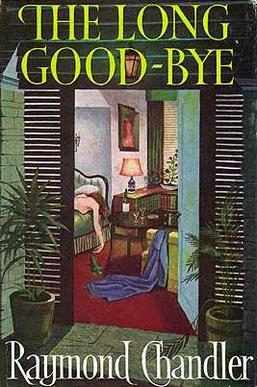
The Long Goodbye


Published in 1953, Raymond Chandler’s classic crime novel continues the adventures of private detective Philip Marlowe. Here, Marlowe befriends Terry Lennox, an emotionally and physically scarred drunk with a crumbling marriage. Lennox calls on him for a ride to the airport one night and Marlowe soon finds himself in the thick of a murder investigation. Not one to stay out of trouble for long, he soon becomes entangled with another alcoholic – the writer Roger Wade – and his attractive wife. It isn’t long before Marlowe suspects Lennox and Wade had more in common than a drinking problem.


Hardboiled detective fiction, of which Chandler was a chief purveyor, is a veritable minefield of tropes, types and clichés. Femme fatales, crooked cops, menacing gangsters, caricatured ethnic sidekicks and gratuitous cigarette smoke are but a few staples and they all show up in The Long Goodbye. The familiarity of these elements begs a question: is a mystery with so little mystery still worth reading?


The answer, in the case of The Long Goodbye, is a resounding “yes.” Though crime novels are by necessity plot driven, Chandler does a great job with characterization. You can see the stock origins of a lot of the minor players (the servant Candy in particular), but the main characters are fairly well-developed. Unlike his contemporary Sam Spade (unbelievably and effortlessly slick), Marlowe is complex and thoroughly human. He talks and acts tough, but he is also subject to injury, inadequacy and doubt. Similarly, Lennox and both Wades walk a morally ambiguous line in that they are devoid of neither sympathy nor malice.


Chandler also succeeds at sustaining tension. The Long Goodbye weighs in at 316 pages, but is remarkably taut with very little filler. It takes several pages to establish its narrative footing and it ends on a rather abrupt note, but everything in between is expertly paced. The prose is surprisingly crisp too – descriptions are neither purple nor threadbare.


Though sex-and-murder laden, The Long Goodbye is not the literary equivalent of a popcorn movie. Chandler uses Marlowe and Co. to explore the nature of power, truth and corruption and he does it without making us feel like we’re being lectured. There are a few places where Marlowe comes off as annoyingly self-righteous in his quest to defend Lennox’s good name, but if he didn’t believe so thoroughly in what he was doing, we probably wouldn’t care enough to read about it.


In the 50-plus years since its publication, The Long Goodbye has been the subject of parody, reinvention and critical acclaim (or, in the case of Robert Altman’s 1973 film adaptation, all three at once). It is, however, a book which can stand ably on its own two feet regardless of the printing date or the mythic reputation of the author.


8/10