Showing posts with label Historical Novels. Show all posts

Thursday, June 22, 2023

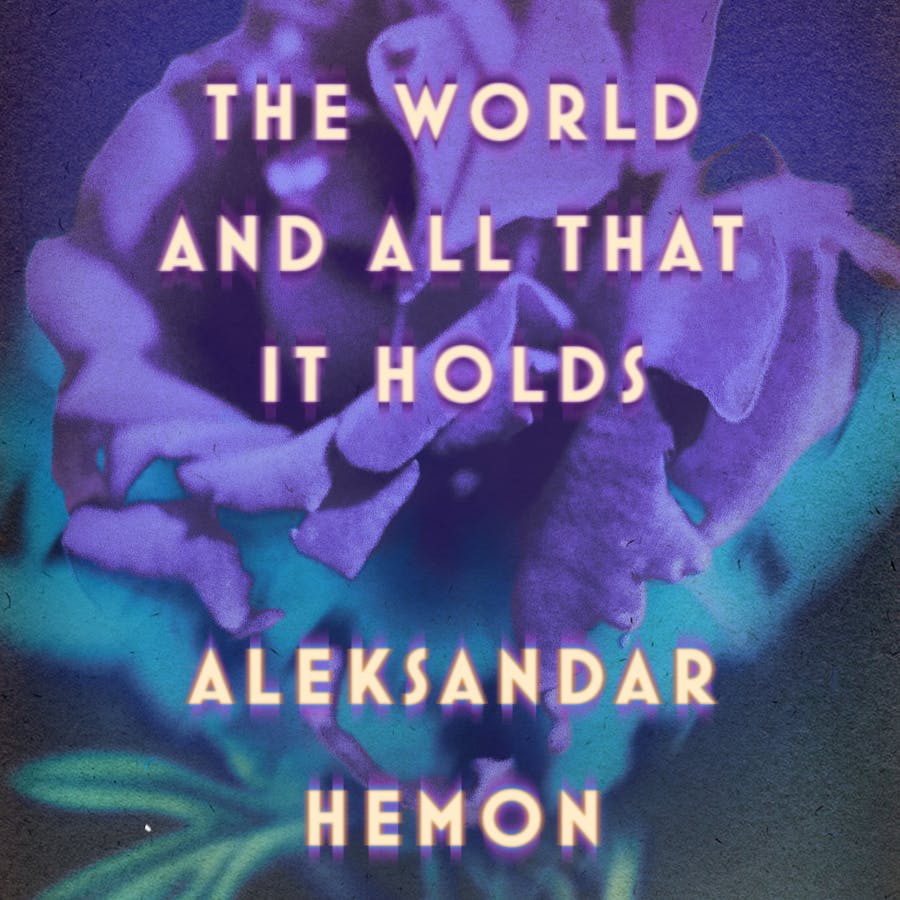
The World and All That It Holds


Rafael Pinto, a young Bosnian Sephardic Jewish doctor, steps away from his father’s pharmacy to see Archduke Franz Ferdinand shot and the world irrevocably altered. Plunged headfirst into the horrors of war, Pinto ends up finding the love of his life in a fellow soldier, Osman. Though enemy soldiers and political intrigue threatens them at every turn, together they fight for survival and a shared future.


Aleksandar Hemon’s latest novel is among his most ambitious, spanning not only decades and continents but languages as well. Though written primarily in English, The World and All That It Holds mixes in untranslated Bosnian, German, and even Ladino (“Spanjol”). To further complicate matters, Pinto is also a habitual opium user, and the line between the story’s reality and fever dream/hallucination can be tenuous.


All of this makes for a challenging read, but for the patient, there are rewards: the tenderness of Pinto and Osman’s relationship (and, later, that of Pinto and his adopted daughter Rahela’s) amid the savagery of their circumstances, their striking contrasts (Pinto is introspective, soulful, and sensitive but also downbeat while Osman is brave and bold, and whether in the flesh or in imagined memory, constantly an encouraging presence), richly rendered settings (from the Sarajevo of a century ago to Shanghai on the cusp of a Japanese invasion), and Hemon’s distinctively lyrical prose.


There are, however, frustrations as well, the biggest one of which is the intrusion of an author-narrator commenting on the historicity of Pinto’s tale. Granted, The World and All That It Holds is steeped in the telling of folktales, and so adding a meta layer makes sense, but it also makes for a somewhat incongruous presence, especially in the epilogue. A further disruption comes courtesy of a British spy who crosses paths with Pinto and seems imported from a Graham Greene novel, an amusingly larger-than-life character who nevertheless seems tonally out-of-place here.


The World and All That It Holds is far from an ideal entry point to Hemon’s work, and those well versed in it may miss some of his more constrained earlier efforts, but there is still plenty to appreciate in the spectacle he’s created here.

Wednesday, November 6, 2019

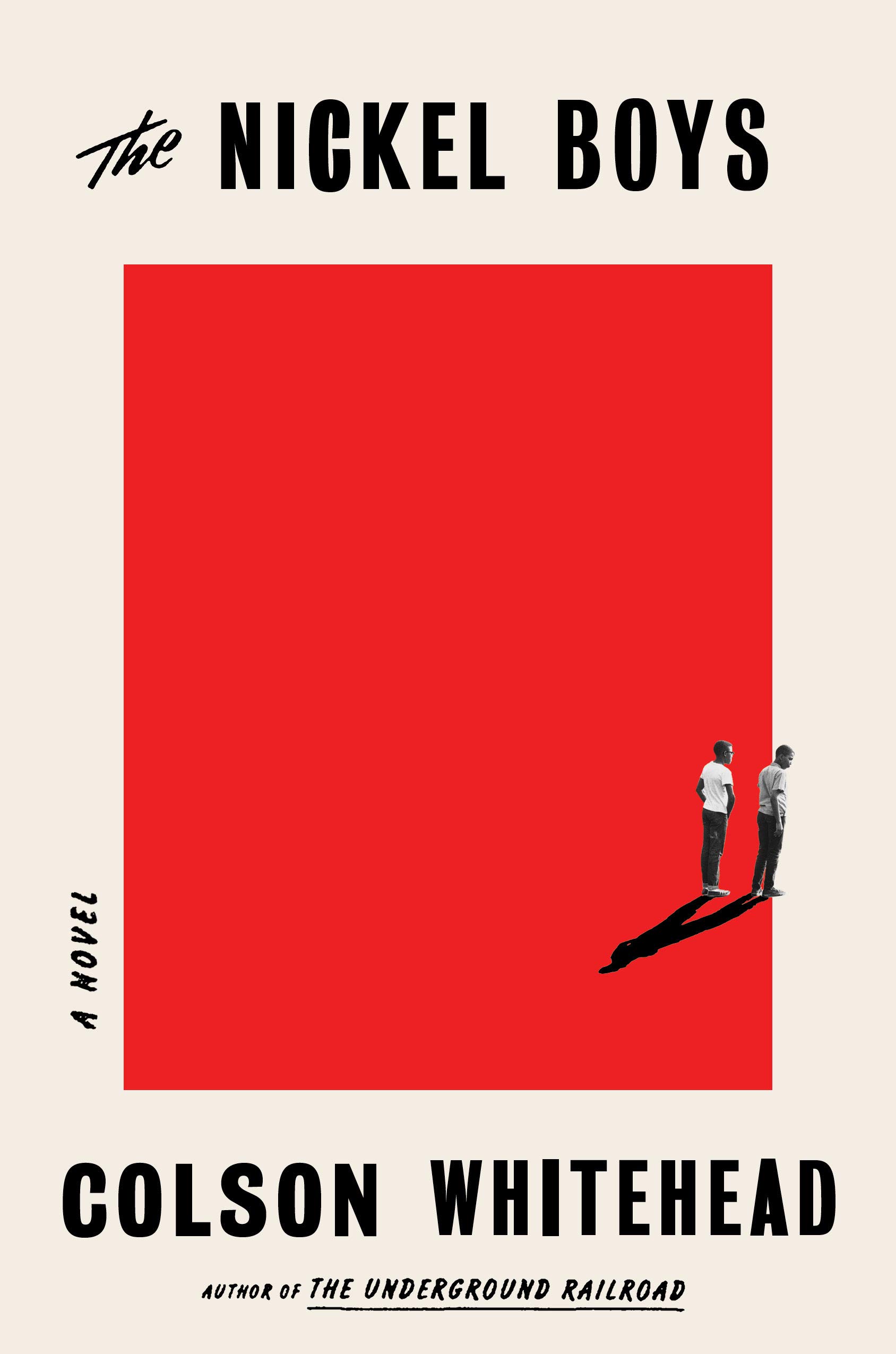
The Nickel Boys


In the 1960s, bright but troubled teen Elwood Curtis is sentenced to the Nickel Academy, a notorious Florida reform school where survival is not guaranteed. Amid the brutality of institutional life, he befriends the cynical Turner, who sees Elwood’s idealism as a source of trouble. But as conditions worsen, both boys find their outlooks – and their loyalties – put to the test.

Fresh off the alt-history heels of the Underground Railroad, Colson Whitehead did a 180 to craft The Nickel Boys, a fictionalized take on the real-life Dozier School for Boys that reads as all too painfully real. A frank and unflinching look at institutional violence (beatings, rapes, and covered-up murders), the novel delivers shock without sensationalism. Whitehead’s straightforward approach and efficient prose create a matter-of-factness that lets the book’s horrors speak for themselves. At the same time, however, he also finds room to explore an ideological conflict between allies: Elwood, a steadfast believer in the power of truth and goodness and Turner, who is committed to doing what is necessary for survival. The complexity of their friendship builds toward an ending that would amount to a cheap twist in lesser hands but is played deftly here.

The Nickel Boys is not for the faint of stomach, and it takes a careful eye to catch everything going on beneath the surface gloss of casual violence, but for those up to the task, it is a book not easily forgotten.

Wednesday, January 17, 2018

The Last Ballad

In 1929, Ella May Wiggins is a poor white single mother living in a black community in Gaston County, North Carolina. Tired of putting in twelve-hour days at a local textile mill while her children grew sick without her, she quits and becomes both an organizer and a singer for a labor union, which she hopes to integrate. As Ella Mae’s songs become more popular, she wins more recognition within the labor movement and more scorn from mill owners and the local police, and her fate becomes intertwined with those of several.

In recent years, Wiley Cash has emerged as one of North Carolina’s best storytellers. He captures the sense-of-place of the state’s western rural communities and the hardnosed sensibility of its inhabitants as well as anyone this side of Ron Rash. The Last Ballad, Cash’s third novel, sees him wed these skills to an exploration of local history. Ella Mae Wiggins and the Loray Mill Strike may be little remembered these days, but Cash gives them their due and then some in a powerful and evocative novel.

Though Ella Mae is the book’s central character, The Last Ballad does not read like a fictionalized biography. It alternates tales of her trials and tribulations with explorations of those in her orbit: the hapless drunk Verchel Parks, the young black organizer Hampton Haywood, the privileged but socially conscious McAdam family, and Ella Mae’s own daughter, who narrates periodically from a much later date. These shifts in focus allow Ella Mae to retain a mythical quality (for if the novel stayed with her the whole time, such a saintly depiction would invite incredulity) and also show how the injustices that Ella Mae fought against reached across lines of geography, gender, race, and class.

In this way, The Last Ballad is something of a Southern cousin to Dennis Lehane’s brilliant The Given Day, an equally broad-ranging look at the 1919 Boston Police Strike. But whereas Lehane’s book built toward a crescendo of violence, Cash’s keeps its tension at a steady low boil, erupting in devastating moments without fully spilling over. This ensures that The Last Ballad’s losses still sting even when readers know they are coming.

While some readers won’t cotton (pun not intended) to the book’s abundance of perspectives and the contrivance of their connectivity, others may be put off by its perceived schilling for a Communist-affiliated union. This is a shallow criticism if there ever was one. Readers needn’t sing Soviet praises to sympathize with Ella Mae, and in truth, the book isn’t particularly flattering toward union leadership. A more worthwhile source of disappointment is the abundance of sentimentality in the book’s final chapters. So much sorrow arises organically that it makes little sense for Cash to consciously (and clumsily) ratchet it up, yet he did so anyway.

Richly immersive and teeming with personal struggles and crises of conscience, The Last Ballad is a book not easily forgotten.


8.25/10