Sunday, February 24, 2013

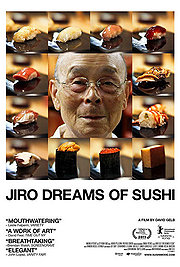
Jiro Dreams of Sushi


Eighty-five-year-old Jiro Ono is the world’s foremost sushi chef. Despite his age and years of experience, Jiro remains steadfastly dedicated to his craft. This ethic has rubbed off on his apprentices and children. Younger son Takashi has successfully opened his own restaurant while older son Yoshikazu waits patiently to take up his father’s mantle.

Directed by David Gelb, this 2011 documentary is a study in obsession. There is no better word to describe its subject: a man who started working as a child and vows to continue as long as he is physically able to. By his own admission, this has made Jiro a stern master and an absent father. It has allowed his dream – sushi perfection – to consume not only his life but, tragically, that of his children as well.

Despite this, the film never brands Jiro as a villain. He is shown to be an excellent teacher who inspires success in others (one apprentice could barely suppress his joy at winning Jiro’s praise). And for all of his apparent traditionalism, he also has a nonconformist streak. At one point, he finds himself questioning what advice he could give to future generations when his own path to success was long on years and short on education.

Knowing that there is more than meets the eye to Jiro helps explain the odd phenomenon that is his restaurant. A small establishment tucked off a Tokyo street, it seats only ten and offers absolutely no frills (not even appetizers). Despite this, it offers the exclusivity one would expect from a Michelin-rated three-star eatery: reservations must be made at least a month in advance, and meals start at an exorbitant 30,000 yen (about $260). This makes the proprietors’ frequent claims that “It’s not about the money” a little difficult to take.

With such a captivating subject at its core, Jiro Dreams of Sushi didn’t need a lot of cinematic embellishment, and Gelb wisely avoided an elaborate production. A Philip Glass soundtrack and English subtitles are the only reminders that you are even watching a professionally made film. The focus here is on the documented, not the documenter.

For those with no knowledge of or affinity for Japanese cuisine, Jiro Dreams of Sushi may seem inaccessible, despite the magnetism of its star. But anyone who has ever had a good piece of toro or unagi will appreciate (and perhaps pity) Jiro’s relentless quest for perfection.

8/10

Friday, February 22, 2013

This Is How You Lose Her


Dominican born, New Jersey raised Yunior grows up under the thumb of his mother and in the shadow of is older brother Rafa, a shameless ladies’ man. As Yunior gets older, he tries to avoid becoming a “sucio” (pig) like his brother and their absent, philandering father. But a string of failed relationships suggests that it may be his destiny.

Junot Diaz first made a name for himself with his debut story collection Drown. That was also the book that introduced Yunior, his autobiographical proxy. After branching out into novel territory, 2012’s This Is How You Lose Her marks a return to his short story roots. But those who enjoyed The Brief Wondrous Life of Oscar Wao’s sprawling narrative and copious (and often hilarious) footnotes needn’t fear: there’s plenty to love in this anthology.

Diaz’s calling card has always been his idiosyncratic style: an odd mixture of lyrical erudition, naturalistic dialogue, and English and Spanish slang that seizes readers by the throat and forces them to pay attention. You might suspect that at 44, the author has mellowed with age, but you’d be wrong. The prose in his latest work is as fresh as ever, and though the patois will confound non-Spanish speakers at time, it creates an air of absolute authorial authenticity. This isn’t the second-hand posturing of a middle-aged academic; this is real, son.

Diaz extends this no holds barred honesty to his characterization, even (or perhaps especially) those characters based on his family members. He refuses to pull any punches in depicting his older brother as a reckless, skirt-chasing, misogynistic asshole despite the fact that Rafa is a.) dying through much of the narrative and b.) probably sorely missed. Likewise, though Yunior is engendered with a certain amount of sympathy, he is still a cheater and something of an opportunist.

Like any story collection, This Is How You Lose Her fluctuates in quality, but there are no duds here. Even the weakest pieces – one written in the second person, one written with a female narrator – are still worthwhile as changes of pace. The strongest offering is arguably the last story, The Cheater’s Guide to Love, in which several years of relationship agonies are played out across the page.

Despite all its high points, This Is How You Lose Her is still not the author’s best work. It lacks the sympathy of Drown and the weightiness of Wao. But those who get caught up in the superficiality of the plot (a character based on the author tries to pick up chicks) or the novelty of the style and dismiss it as self-indulgent naval-gazing are missing a lot that is working beneath the surface here. Assimilation, masculinity, family dynamics, cultural norms, and faith are all explored incisively. Not bad for a book whose title only suggests lost love.

8.5/10

Sunday, February 17, 2013

Thief


Frank (James Caan) is a veteran jewel thief who fronts as a car dealer. After his fence unexpectedly dies, he is recruited by mob boss Leo (Robert Prosky) to perform a difficult, high-value heist. Though Frank is hesitant, he sees the take as a way to retire with his girlfriend Jesse (Tuesday Weld) in peace. However, it isn’t long before he’s attracted unwanted attention from corrupt police officers and his plans are put in jeopardy.

This 1981 adaptation of jewel thief Frank Hohimer’s Confessions of a Cat Burglar served as Michael Mann’s directorial debut, and while he would go on to bigger and better things, Thief serves as the genesis for Mann’s trademark style. Like much of his later work (Heat in particular), Thief is steeped in gritty realism and visually striking. Hohimer and other real-life thieves served as technical advisors, and Dennis Farina (then still a Chicago police detective) plays a small supporting role. The result is that everything from Frank’s cagey demeanor to the tools he uses seems authentic.

Mann also debuts some signature touches (an important, character-establishing conversation in a coffee shop, police tracking a vehicle on a highway at night, etc.) that will be familiar to fans of his work. Even the synth-heavy soundtrack (courtesy of Tangerine Dream) serves as a prelude of sorts to Jan Hammer’s successful Miami Vice theme. From a production standpoint, you would have a hard time telling this is a debut film: everything is masterfully handled.

But while Mann’s style is still easy to appreciate 30+ years later, other aspects of the film fall flat. The plot is nothing if not predictable, and there are no likeable characters here. We are supposed to take Frank (who longs for retirement and family) as an antihero, but even in this morally ambiguous capacity, his volatility, bigotry, and selfishness make him hard to get behind.

The acting is likewise uneven. Caan fills Frank’s shoes with gusto and delivers a credible performance in the lead while Prosky brings both literal and figurative weight to the villainous Leo. The third-best performance may very well belong to Willie Nelson, who appears briefly as Frank’s ill, imprisoned compatriot. On the other hand, James Belushi is ineffectual and miscast as Frank’s sidekick, Barry. Weld, meanwhile, proves herself to be her generation’s Cameron Diaz, stumbling through an empty performance as the clueless Jessie. The rest of the supporting characters – be they cop or criminal – are clichéd and one-dimensional.

At its core, Thief is an 80s B movie elevated by the technical prowess of its makers. This makes it worth a look as both an artifact and a way to pass the time, but it lacks the complete package feel of Mann’s later works.

7/10

Friday, February 15, 2013

Live By Night


In Prohibition-era Boston, Joe Coughlin is a police commander’s son who has taken up armed robbery with his friends. A chance encounter with a gangster’s moll develops into a relentless obsession, and a heist gone wrong plunges Joe deep into underworld intrigue.

In this follow-up to The Given Day, Dennis Lehane picks up several years after that book left off. The Boston police strike is long over, and the focus has shifted from disillusioned police officer Danny to younger brother Joe. While Lehane continues to show a flair for capturing time and place, Live By Night lacks the grandeur and gravitas of its predecessor.

A lot of the letdown is rooted in perspective. The Given Day gave us a look at the historical landscape through the eyes of several characters (including, at times, Babe Ruth). In Live By Night, we briefly venture into the mind of Coughlin patriarch Thomas but are otherwise with Joe for the duration. He isn’t a weak character, thankfully: his smart mouth, determination, and aversion to bloodshed liken him to recurring Lehane narrator Patrick Kenzie, and his morally ambiguous quest to build a good life through wicked means is worth following. However, by focusing narrowly on Joe’s journey, the book loses its ability to cast a wider net. This is the story of a man, not of an age, and its simplicity is a bit disappointing.

Beyond that, there’s a certain slickness and neatness to the narrative that occasionally becomes grating. Joe is a little too lucky in his exploits, forgotten characters reappear a little too conveniently, and the dialogue is, at times, a little too poetic. Witnessing antagonistic Boston gangster Albert White talk about love and bemoan his own villainy is quite hard to swallow.

These lapses aside, Lehane continues to masterfully handle plot and setting. The first section of the book is taut and filled with danger. Shootouts, betrayal, and police brutality all figure prominently, and the violence reaches a dark crescendo in a prison attack. By the time the action moves to Tampa, the pace slackens considerably. This is not a liability, though: it gives Lehane time to introduce us to the diverse, sweltering Ybor City neighborhood, a haven for Cuban revolutionaries and northern gangsters alike. For as well as Lehane does Boston, the change of pace here is refreshing.

As a standalone adventure, Live By Night is a perfectly serviceable look at a crook who longs to be anything but. As a continuation of a saga, however, it fails to live up to the promise of its predecessor.

7.5/10

Tuesday, February 5, 2013

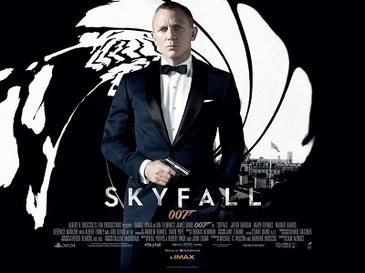
Skyfall


After being shot in the line of duty, MI6 agent James Bond (Daniel Craig) fakes his own death in order to enjoy retirement. But when MI6 is attacked by cyberterrorist Raoul Silva (Javier Bardem) and undercover agents are compromised, Bond jumps back into the fray. Meanwhile, MI6 director M (Judi Dench) faces political pressure from soldier-turned-bureaucrat Gareth Mallory (Ralph Fiennes), who urges her to retire with dignity. The ante is upped when Silva’s highly personal motivation is finally revealed.
            Skyfall marks the fiftieth year of the cinematic James Bond franchise, and in many ways, it’s the ultimate reflection on the 22 films that preceded it. Like any Bond movie, it offers the requisite tuxedoes, gunplay, Bond girls, car chases, and quips. It also offers some overt visual cues – think shaken martinis and a well-preserved Aston-Martin – that evoke the franchise’s history. But what truly makes Sam Mendes’ film more than just another entry in the series is the way it synthesizes past and present while offering a vision for the future.
            Skyfall finds both Bond and MI6 at a crossroads. Both are damaged physically (Bond by gunfire, the agency headquarters by explosion) and both face tough questions regarding their necessity in the 21st century. M is dragged before a committee that views her as a Cold War relic while a young new Q (Ben Whishaw) haughtily informs Bond that he can accomplish more from his computer than 007 can in the field. This sense of pending obsolescence is compounded by a villain who brings technological savvy to a dangerous new level. And yet the film continually reminds us – through both gratuitous catchphrase dropping and the characters’ fortitude – that sometimes, the old ways are best.
            However, to reduce Skyfall to a mere glorification of the past would be to ignore its other thematic lesson: past decisions often breed future consequences. Whether it be M’s protect-the-greater-good approach to her operatives’ safety or Bond subjecting himself to tons of physical and psychological harm or a former agent’s botch suicide via cyanide pill, the effects are on full display here, and they are far from pretty.
            Nevertheless, the quest for depth and relevancy does not render Skyfall a boring film. From the opening pursuit to the (literally) explosive finale, there are places when the film slows, but it never stalls out. The action is aided by one of the best Bond casts in years. Craig, whose casting I once found objectionable, has clearly grown into the role, and his weary, cynical, but ruthlessly effective take on the character is a good fit for the plot. M is given considerably more screen time here, something that both fleshes out the character and allows Dench to shine. As the antagonist, Bardem pulls out a performance that no one else (save for maybe Christoph Waltz) can match. The bleach-blond Silva is a refreshing break from the stale megalomania of villains’ past. Here, he uses innuendo-laden frivolity as a mask for bloodlust and psychosis, and he does so disturbingly well.
            By the end of the proceedings, an era has ended and a new guard has been ushered in. This includes resurrecting certain legacy characters, a move that would have been regarded as cheap in lesser hands. But Mendes and his collaborators ultimately show that a key component of Bond’s refusal to die is his – and the franchise’s – ability to change.

8.5/10

Sunday, January 27, 2013

Zero Dark Thirty


In 2003, CIA officers Maya (Jessica Chastain) and Dan (Jason Clarke) interrogate a detainee in an effort to gather intelligence and thwart future terrorist attacks. The detainee identifies the previously unknown Abu Ahmed as Osama bin Laden’s trusted courier. Maya then spends the next several years trying to identify and track down Ahmed and, ultimately, bin Laden.

Director Kathryn Bigelow and writer Mark Boal scored a major hit with 2008’s The Hurt Locker, but this most recent dip into the well of Middle Eastern intrigue is a different type of beast. Originally conceived as the story of the CIA’s failure to find bin Laden, real life events necessitated a major reimagining. The results are a success, albeit a qualified one.

Throughout Zero Dark Thirty, several CIA characters drop the word tradecraft: skill in plying one’s trade. And while it is synonymous with espionage, it can also be applied to the film itself. Zero Dark Thirty is impressively shot in a gritty, realistic style. It isn’t always eye-pleasing – unless grainy video footage and shaky night vision are your thing – but it adds a considerable amount of verisimilitude.

The acting is similarly polished. Though her character takes on arguably too big a role (see below), Chastain imbues Maya with passion and strength. We see her evolve from relative novice to relentless crusader, galvanized by loss and, sadly, devoid of any other purpose in life. Her CIA compatriots, all too often portrayed on the screen as either needlessly obstructive bureaucrats or ruthlessly amoral rogues, depicted realistically and humanely here. We see Maya’s bosses (led by James Gandolfini as CIA Director Leon Panetta) grapple with difficult decisions in light of a changing political reality. Even Clarke’s somewhat bombastic character is given some depth: he’s torturing detainees one moment and feeding ice cream to pet monkeys the next.

Though they are well-portrayed, the characters are done a disservice by Boal’s script. In one scene, a CIA officer allows a known Al-Qaeda member to bypass security on a military base on the rumor that he will work as a mole. In another, a white character on a surveillance mission walks into the middle of a crowded Pakistani city after being warned that whites are unwelcome. And then there’s Maya. While it makes sense to have someone for the viewer to identify with for narrative purposes, one can’t help feel that she gets too much credit here, especially in light of how the men who actually killed bin Laden are deemphasized. We meet the Navy SEALs toward the end of the movie, and even then, they are shown to be a bunch of dubious, eccentric yokels who only demonstrate competence once the raid on the Abbottabad compound commences.

In addition, the film appears to be suffering from an identity crisis. Sometimes, it plays like a political drama, at other times, it plays like a police procedural, and by the end, it’s an action film. This schizophrenia extends itself to the film’s pacing as well. Zero Dark Thirty often lags and sputters along sluggishly, but when it does leap into action, it does so with the unyielding tension that made The Hurt Locker such an adrenaline rush. As a final aside, the extensive use of chapter headings may be designed to evoke a “nonfiction” feel, but they are distracting and unnecessary.

Since its release (and probably even before), Zero Dark Thirty has been assailed by some for compromising intelligence and by others for promoting torture. Both claims are groundless (it’s worth noting that the initial informant only gives information after he is treated civilly), and they distract from what is otherwise a worthwhile film. It may not be worthy of its numerous Oscar nominations, and it almost certainly could have been more tightly edited, but its frank depiction of intelligence work in a dangerous and rapidly changing world makes Zero Dark Thirty a memorable and commendable effort.

7.75/10

Friday, January 18, 2013

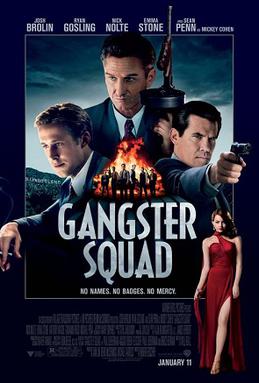
Gangster Squad


In postwar Los Angeles, New York-born Jewish gangster Mickey Cohen (Sean Penn) looks to solidify his grip over the city’s underworld. His ruthless methods lead police chief Bill Parker (Nick Nolte) to retaliate with some ruthlessness of his own. Parker tabs World War II vet Sgt. John O’Mara (Josh Brolin) to recruit an off-the-books squad to take Cohen down. Among the recruits are knife expert Coleman Harris (Anthony Mackie), gunslinger Max Kennard (Robert Patrick) and his protégé Navidad (Michael Pena), and surveillance man Con Keeler (Giovanni Ribisi). O’Mara’s friend and fellow veteran Jerry Wooters (Ryan Gosling) joins the mix later, but he brings a complication: he’s involved with Cohen’s moll Grace Farraday (Emma Stone).

I wanted to like this movie. I really did. James Ellroy’s L.A. Confidential is one of my favorite books and movies and L.A. Noire is one of my favorite video games. Combine that creatively fertile Los Angeles gangster milieu with an A-list cast, and Gangster Squad should have been a sure thing. Instead, the lackluster results are almost as much of a crime as anything you see on the screen.

Comedy director Ruben Fleischer makes for an easy scapegoat, but from a technical standpoint, he doesn’t disappoint. His cinematic L.A. is both ritzy and sordid, and it’s loaded with convincing period detail. While the film is quite violent, Fleischer avoids Tarantinoesque overkill and gives us some fairly suspenseful shootouts and car chases.

No, the real culprit here is Will Beal’s screenplay. Like The Untouchables, this film is ahistorical and overly simplified, but it lacks the former’s class. Most of the characters here are one-dimensional and thinly developed, the opening and closing narration is laughably bad, and the ending is downright inane (if also predictable). Such formulaic fluff might be acceptable for a network TV show, but it’s utterly disappointing to see in a big-budget movie.

Given the constraints, the cast at least tries. Penn in particular imbues Cohen with seemingly limitless ambition, avarice, and savagery. Kudos also go to Gosling, who is able to change from frivolous playboy to deadly avenger in the blink of an eye. Brolin comes across as wooden in the lead role though, and Stone’s talents are egregiously wasted.

On its own merits, Gangster Squad is watchable and occasionally even entertaining. But it’s a mere shadow of what it could have been.

7/10