Sunday, June 12, 2022

Queso Monster


A Durham-based food truck, Queso Monster serves up Mexican fare including tacos, nachos, and quesadillas. An accompanying trailer, Elote monster, offers elote on the cob or in a bowl as well as lemonades.


Queso Monster and Elote Monster usually draw fairly long lines at events, and so when I happened upon them without an extensive queue at a food truck rodeo, I decided to give them a try. The menu offers a good deal of flexibility, boasting choices in proteins (traditional meats, shrimp, or veggies), spiciness levels, and styles. Unexpectedly, they also offered red/juicy and quesobirria quesadillas. The “elote” side of the business offers the titular street corn, with or without a dusting of tortilla or red hot chips. Lemonades range from single flavors such as peach or strawberry to multi-berry bonanzas, and a few are available as horchatas instead.


I ended up with a birria quesadilla, tortilla chip-dusted esquites (elote bowl), and a mojito lemonade. The folks running the trucks were friendly, and, even by food truck standards, very fast. The quesadilla, which included broth, chips, salsa, and, of course, queso, offered quite a bit of food for $14. Less justifiable was the $5.50 charged for a regular-sized lemonade.


The food was, by and large, satisfying. The quesadilla offered tender meat and a tasty — if cilantro-heavy — broth. The tortillas were a bit greasy, however, and will have you missing La Sinaloense’s version. The torti esquites were thoroughly addictive. It may be just corn, sour cream and spices, but damn if the execution wasn’t spot-on. The confusingly-named mojito lemonade had about as much in common with a mojito as a sea horse does with a stallion, but aside from being very sweet, it was still a refreshing drink on a June day. I appreciated the amount of fresh fruit (berries, pineapple, and kiwi) included.


Had I been standing in long lines eagerly anticipating what awaited me, I likely would have walked away from Queso Monster and Elote Monster slightly disappointed. But thanks to fortuitous timing, I was able to enjoy it for what it was: good though not flawless Mexican food and drink.

Thursday, June 9, 2022

Winning Time: The Rise of the Lakers


In 1979, the National Basketball Association’s revenue and attendance are dwindling. Dr. Jerry Buss (John C. Reilly), a chemist turned real estate tycoon, overextends himself to buy the once-proud Los Angeles Lakers with an eye on returning the team to its former glory. To do so, he plans on drafting Earvin “Magic” Johnson (Quincy Isaiah), a flashy 6’9” point guard coming off a college championship season, despite the presence of incumbent guard Norm Nixon (played by Nixon’s son Devaughn) and the reservations of the team’s coach, franchise legend Jerry West (Jason Clarke). Buss, never one to accept limits, has his bookkeeper mother Jessie (Sally Field) use a few accounting tricks to stay ahead of creditors and taps overlooked and underappreciated Claire Rothman (Gabby Hoffman) to increase stadium revenue. But will Buss’s pluck and Johnson’s talent be enough to overcome trouble on and off the court?


Adapted by Max Borenstein and Adam McKay from Jeff Pearlman’s nonfiction book Showtime, Winning Time (named such since it aired on HBO) is both wildly entertaining and wildly inaccurate. Take its abuse of dramatic license and occasionally uneven pacing out of the equation, and it’s a stylishly watchable production full of both humor and heart.


Admittedly, that style isn’t for everyone. McKay, who directed the pilot episode, took the fourth wall breaks and asides to the audience that he used in the Big Short and made them a staple of Dr. Buss’s character. However, this bit of comedic gimmickry does not wipe out the show’s dramatic stakes, which often extend far beyond a mere game. Characters battle addictions, self-doubt, and even death itself. It helps that the show’s production values are high, offering a period music/fashion/palette combination that seems Scorsesian at times.


Winning Time was made without the participation of the actual Lakers, several of whom were miffed at their portrayals. In some cases, it isn’t hard to see why. Several characters are exaggerated to cartoonish proportions. Those that are written as three-dimensional, on the other hand, are generally well-acted. Reilly is magnetic as Buss, playing him as half visionary, half sleazy hustler. Field adds a touch of vulnerability to a sharp-tongued granny role. Hadley Robinson as young Jeanie Buss (currently, the Lakers owner) functions as the family’s moral center. Isaiah captures both Johnson’s almost-perpetual smile as well as the drive and the doubts that lay beyond it. Solomon Hughes, a college basketball player turned academic in his first acting role, faced an unenviable task in portraying Lakers captain Kareem Abdul-Jabbar. He comes across as one-dimensionally aloof in the early episodes, but Hughes is adept at capturing his leadership, intelligence, and competitive fire later on. Perhaps the best supporting turn, however, belongs to Wood Harris as bruising veteran forward Spencer Haywood. Harris, who was pushing thirty when he played a high schooler in Remember the Titans, is again far too old for the part, but he does such a good job of capturing the addiction-addled Haywood’s inner demons that you hardly notice.


That said, there are plenty of things in Winning Time that you do notice that you wish you hadn’t. West is introduced as drunk, angry, profane, and full of self-loathing over his championship losses. While he eventually mellows out as he transitions from the bench to the front office, it’s still a far cry from the more cordial mentor figure that many of his real-life colleagues describe. The Nixon-Johnson rivalry is transparently inflated only for them to have an equally transparent “come together and win” moment later on. The same cheap dramatization goes for the team’s coaching carousel. In short, West recruited unheralded Portland Trailblazers assistant Jack McKinney (Tracy Letts) as his replacement, and McKinney in turn recruits his friend, Shakespeare-quoting Paul Westhead (Jason Segel) from the college ranks. McKinney installs an up-tempo offense, the team takes off, McKinney gets hurt, a panicked Westhead tabs floundering color commentator/former Laker Pat Riley (Adrien Brody) as his assistant, McKinney recovers, and suddenly, there’s a bitter rivalry for the coaching job. The contention may make for a good television conflict, but they also serve to make McKinney look spiteful and Westhead weak. At least Brody captures Riley’s famous intensity.


Winning Time is primed for a second season, which makes sense as there are plenty more stories left to tell. What follows has the potential to be as entertaining as what has aired so far, but a little bit of nuance and grounding can go a long way toward winning over skeptics.

Wednesday, June 1, 2022

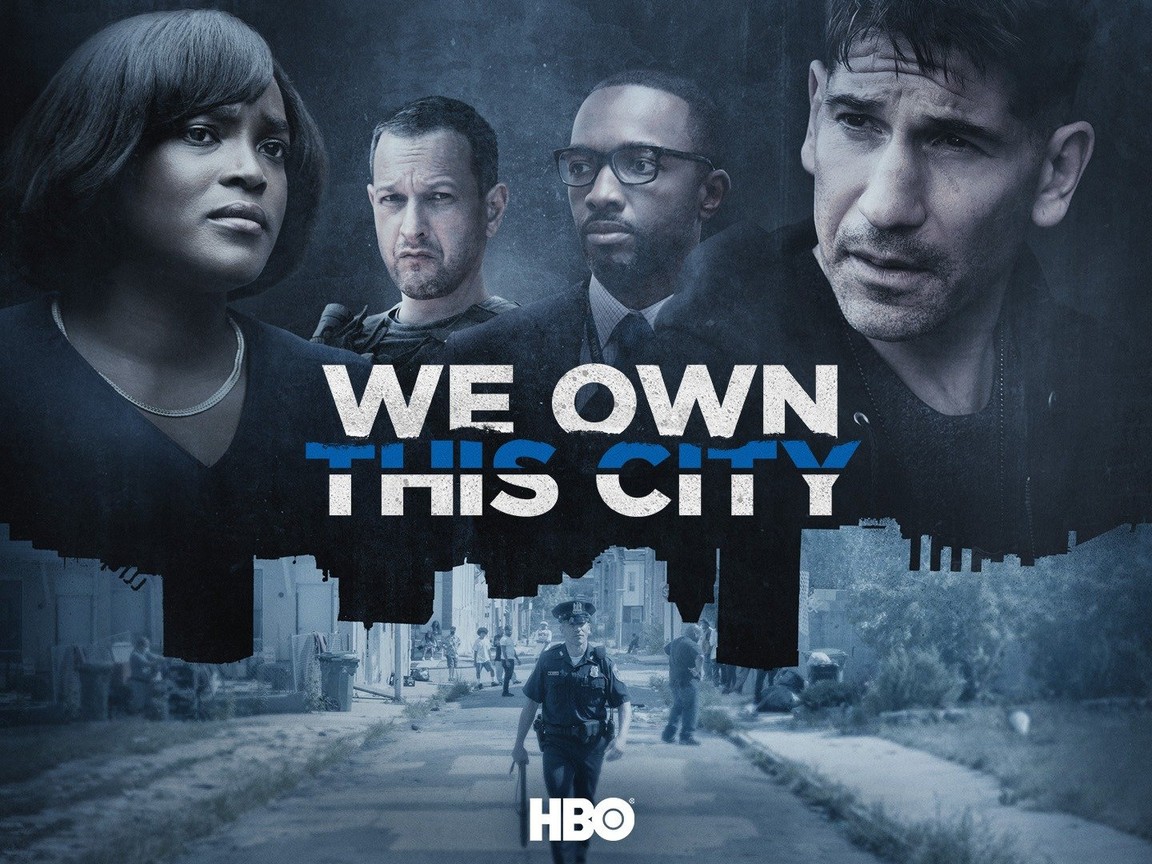
We Own This City


 The Baltimore Police Gun Trace Task Force, a plainclothes squad led by hard-charging Sgt. Wayne Jenkins (Jon Bernthal) is given broad powers to get guns and drugs off the city streets. However, the task force becomes a haven for corrupt and brutal cops as Daniel Hersl (Josh Charles) batters civilians, Momodu “G Money” Gondo (McKinley Belcher III) covers for a drug dealer, and the entire squad illegally lines their pockets with confiscated money (and, in Jenkins’ case, drugs). Justice Department civil rights attorney Nicole Steele (Wunmi Mosaku) attempts to investigate the department but is stonewalled while police commissioner Kevin Davis (Delaney Williams) lacks the clout to implement the changes he knows are necessary. Told as a series of flashbacks through the recollections of indicted GTTF officers in custody, We Own This City explores how things went so wrong for so long.


A spiritual successor to The Wire, this miniseries adaptation of Justin Fenton’s nonfiction book brings back some of the same talent behind (writer-producers David Simon and George Pelecanos created the show) and in front (Williams and Jamie Hector play significant roles while Tray Chaney, Domenick Lombardozzi, Jermaine Crawford, and Chris Clanton appear in smaller parts) of the camera. But whereas The Wire was already a fairly cynical show, We Own This City manages to paint an even bleaker picture of institutional rot.  


From the ominous drums (interspersed with sirens and gunfire) of the theme song to the update text that displays during the final episode, We Own This City pulls no punches and offers no quarter. The corrupt cops end up in jail after turning on each other, but that comes far too late to help anyone they’ve hurt. Davis is made the scandal’s scapegoat and ousted, only to be followed out the door later by his replacement and the mayor who fired him (both on tax evasion/corruption charges). Steele is pushed to the point of resignation when she suspects that the incoming Trump administration will sideline her investigative efforts. Sean Suiter, a former GTTF member turned homicide detective, dies under mysterious circumstances (officially, suicide made to resemble being killed in the line of duty) before he can testify. Don’t expect a “Bubbles comes up from the basement” moment here.


While this overwhelming sense of futility can make the show hard to invest in, We Own This City is undoubtedly well-crafted. Bernthal, the erstwhile Punisher, as a violent hothead does not strain the imagination, but he does an excellent job of giving Jenkins layers. From the Baltimore accent to the faux-affability to the pettiness, insecurity, and delusional narcissism, it’s a fully fleshed out portrayal of a deplorable human being. No less impressive is Hector’s work as Suiter. His guilt-ridden performance is a night-and-day contrast to his earlier turn as The Wire’s lead antagonist (icy druglord Marlo Stanfield).


The unrelenting bleakness and nonlinear structure can make We Own This City a challenge, but its sobering look at wide-ranging systemic failure (from Black political leadership to white supervising officers on down) makes it vital.


Wednesday, May 18, 2022

Honeygirl Meadery


Located at 105 Hood Street in downtown Durham, Honeygirl Meadery offers homemade meads by the glass as well as bottles to go. Tasting flights, outdoor seating, and curbside pickup are available. The tasting room is open from noon to six on Fridays and Saturdays and noon to five on Sundays.


I don’t think I’d had but a small sip of mead previously, and Honeygirl made for a fine introduction. The tasting room is small but bright and clean. Combined with a friendly and knowledgeable staff, it makes for an inviting space.


Honeygirl offers more than a dozen meads from basic to barrel aged and semi-sweet to dry. The ingredients are sourced locally (and, in one case, foraged by the manager) and incorporate a variety of apples and herbs. 


Hard-pressed (pun semi-intended) to make a decision, my wife and I settled on a flight consisting of spiced apple cyser, farmhouse wildflower, hibiscus lemonthyme, and tri-berry. The wildflower was all that I expected mead to be: a smooth honey wine. The cyser boasted some nice spice notes, but it also made me realize that I strongly prefer cider to its wine-based cousin. The tri-berry, on the other hand, was outstanding. A seasonal offering, it brings together mulberries, blackberries, blueberries, and black currant juice. The resulting concoction offered complex flavors and was not too sweet. We liked it so much that we ended up getting a bottle to take home.


Honeygirl isn’t cheap – a flight of four is $15 and most glasses are in the $8-$12 range – but it’s a great way to try something different.

Sunday, May 8, 2022

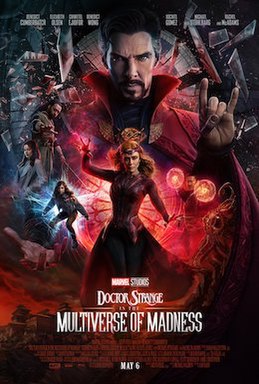
Doctor Strange in the Multiverse of Madness


Dimension-hopping teenager America Chavez (Xochitl Gomez) arrives in New York pursued by demonic creatures, drawing sorcerer Stephen Strange (Benedict Cumberbatch) away from his colleague/former girlfriend Christine Palmer’s (Rachel McAdams) wedding. Sensing witchcraft at play, Strange calls upon his friend Wanda Maximoff (Elizabeth Olsen), only to find that she has been corrupted by the Darkhold, a grimoire that convinces her that she can have the family she has been dreaming about…by taking America’s power (killing her in the process) and relocating to another dimension. To stop her, Strange, America, and Wong (Benedict Wong), will seek allies in whichever dimension they can find them.


With directors as distinctive and diverse as James Gunn, Taika Waititi, and Chloe Zhao helming entries, one would think that criticisms of the Marvel Cinematic Universe as cookie-cutter cinema would have waned by now. The addition of Sam Raimi (replacing previous Doctor Strange director Scott Derrickson) suggests a further corrective to that narrative. However, like Zhao’s Eternals, Raimi’s stab at an MCU film is an awkward fit that shows a talented director not quite hitting the mark.


On paper, Doctor Strange in the Multiverse of Madness should have been a dream project. After all, Raimi is beloved for the first two Spider-Man films, and he cut his teeth as a horror director well before then. A project that combines both seems like a no-brainer. Moreover, writer Michael Waldron experienced more recent Marvel success with last year's Loki series. Add a Danny Elfman score and lots of returning faces, and what could go wrong?


The answer, sadly, is a lot. Pointing out the MCU’s interconnectedness and reliance on prior familiarity is beating a dead horse, but despite drawing from that shared history, Doctor Strange in the Multiverse of Madness doesn’t seem to understand it. In WandaVision (which ended with the character using the Darkhold), Wanda committed heinous and destructive acts, but Olsen delivered a complex, anguished performance. Here, the character is more powerful yet feels cheapened and one-dimensional, a dark magic-empowered Terminator with T2 Sarah Connor’s motives. This character neglect extends to Strange as well. The character is once again chided as being an arrogant risk-taker, the one who always has to be holding the knife. For most of the movie, he justifies that reputation rather than challenging it, only breaking from it in the form of a cliched late-game pep talk. Neither Olsen nor Cumberbatch are mailing it in here and embody the characters as best as they are able; they just don’t have a ton to work with. The Illuminati – a well-intentioned but secretive and ethically dubious council featuring some of Marvel’s heavy hitters – shows up in one of the film’s visited dimensions, but don’t get too attached. Their brief appearances are part fan service, part Marvel bragging about the character film rights they have reacquired, part inflating the danger an out-of-control Wanda poses, and part Raimi utilizing his penchant for shockingly violent slapstick. Undoubtedly, some of these faults can be pinned on a script that seemed to change by the day during production, but even with a more solid plan from the get-go, Raimi’s type of conspicuously comic booky superhero film would have been a better fit for audiences fifteen years ago than audiences today.


While the film arguably wastes its characters, one can still see where the money went. Even as MCU films become more and more visually audacious, Raimi’s work here stands out. It captures some of the exhilaration of his Spider-Man films, but its also fluid, getting weird and wacky or darkly terrifying as the occasion demands. Elfman’s score is serviceable and perhaps a good complement to Raimi’s throwback approach, but it isn’t particularly memorable.


To borrow the film’s central conceit, in a dimension where the Marvel Cinematic Universe didn’t exist, Doctor Strange in the Multiverse of Madness would be a thoroughly entertaining if weird and wonky two hours. But in our reality, it doesn’t measure up to the expectations created by what came before, rendering it a frustrating – if also at times thrilling and daring – outing. At the very least, however, it leaves the door open for further adventures featuring these characters, hopefully by a creative team that will better utilize them.

Moon Knight


Awkward British museum gift shop worker Steven Grant (Oscar Isaac) and hardnosed American former mercenary Marc Spector (Isaac again) have a dilemma: they are two personalities vying for control over one body. Spector has been working off a debt to the Egyptian moon god Khonshu (voiced by F. Murray Abraham), donning his ceremonial armor and serving as his vengeful, evil-punishing avatar Moon Knight. He’s fled to England to keep his archaeologist wife Layla El-Faouly (May Calamawy) out of harm’s way, but she won’t be deterred that easily. Meanwhile, it is Steven who seems to have gotten the pair in the most trouble, stumbling across a plot by charismatic cult leader Arthur Harrow (Ethan Hawke) to release the goddess Ammit and exact terrible judgment upon humanity.


Though he has graced comic books pages for decades, insofar as Moon Knight is known at all, it is as an Internet meme or Marvel’s Batman equivalent with multiple personalities and a mystical flair. The character’s obscurity actually played to writer Jeremy Slater and director Mohamed Diab’s advantage as it gave them considerable latitude in developing a short-run Disney Plus adaptation. Their vision is an eclectic one, and though the resulting show’s tonal whiplash may disorient some viewers, it makes for a refreshingly fun ride.


A broad-strokes distillation, Moon Knight makes a number of changes to the source material that are ultimately for the best. Comic book Steven was a suave, rich Bruce Wayne/Lamont Cranston type, but show Steven is a working-class blunderer. This quality, in the face of pending doom, gives the show a good bit of humor, especially when contrasted with Mark’s cool competence. It’s to Isaac’s credit that he handles both personas – and accents – with conviction. Layla is also a stronger and better-developed character than her comic equivalent, Marlene. While her status as an Egyptian heroine is obnoxiously trumpeted as Representation with a capital R (ironic given the casting of a non-Jewish actor as the definitely Jewish Marc), Calamawy nevertheless shows both toughness and heart. Hawke’s Harrow is an amalgamation of several different villains, and he exudes a creepy soft-spoken empathy despite his fanaticism.


From the streets of London to the streets of Cairo and from an Egyptian tomb to a mental hospital to the afterlife, the show’s settings change quickly. While these episode-to-episode shifts can be disorienting (albeit not to the extent of Legion), Diab’s direction is surefooted and energetic, and Slater, whose Fantastic Four (2015) script was largely butchered by Josh Trank, gains a measure of redemption here. Between Diab’s inclusion of modern Cairo and Hesham Nazi’s score, Moon Knight serves as an aesthetic corrective to a popular conception of Egypt rooted thousands of years in the past.


Moon Knight is, like previous Disney Plus Marvel series WandaVision, a show whose quirkiness masks powerful acting and an exploration of the extremes that grief and loss can push us toward. The pull of individual episodes may vary, but the series as a whole is more often than not compelling.

Thursday, May 5, 2022

Tokyo Vice


In the late 1990s, Jake Adelstein (Ansel Elgort), a young American, arrives in Tokyo and begins working as a crime reporter for a major newspaper. He chafes at the paper’s conservative deference to authority and rude editor (Kosuke Toyohara) but finds cautious support among his colleagues, including his direct supervisor Maruyama (Rinko Kikuchi). When an indebted man’s very public suicide catches his attention, Jake makes it his mission to expose the yakuza scheme that led to the debtor’s demise. To do so, Jake forges alliances with police – the vice squad detective Miyamoto (Hideaki Ito) and the organized crime investigator Kitagiri (Ken Watanabe), the local yakuza – young enforcer Sato (Show Kasamatsu) and his boss Ishida (Shun Sugata), and nightclub hostesses/fellow foreigners Samantha (Rachel Keller) and Polina (Ella Rumpf). While Jake works his way to the truth, Sato is forced to step up, Sam must avoid a threat from her past, Katagiri navigates underworld tensions, and Tozawa (Ayumi Tanida) – a ruthless out-of-town yakuza – threatens them all.


An adaptation of Adelstein’s engaging-but-disputed memoir had been rumored for years before making its HBO Max debut last month. While its creator J.T. Rogers is better known as a playwright, his television debut has plenty of polish: it helps that Michael Mann directed the first episode. What it lacks in consistency and, in the early episodes, pacing, it makes up for in the breadth of its narrative, its deft use of setting, and its later-episode tension.


Despite playing the nominal lead, Elgort is the weak link among the cast. He remains a talented actor, but he’s a poor Jake, matching neither the perception created by the real Adelstein’s authorial voice nor the interest generated by the other characters. Fortunately, Tokyo Vice’s Wire-like crosscut means that Jake-san is rarely relied on to carry an episode. Watanabe delivers low-key brilliance as Katagiri, a warm and jovial father one moment and an unflappable, incorruptible, cagey cop the next. Sato, who sings American pop songs and seems to have genuine feelings for Sam (herself torn between empathy and self-interest), is increasingly unnerved by the violence he is forced to commit, hanging onto his humanity despite his unsavory business. In somewhat predictable fashion, Rogers sways our sympathies toward the Ishida-gumi by making Tozawa (based on real-life yakuza head/Adelstein nemesis Tadamasa Goto) that much worse.


Though the cacophony of the club scenes wears thin after a while (this following a dizzyingly impressive depiction in the Mann-helmed debut episode), Tokyo Vice otherwise makes excellent use of its setting. Just as the glitz and allure of Tokyo’s nightlife contrast with the small offices and small apartments shown in the cold light of day, so too do we get a sense of the contradictions and complexities that Jake, despite his strong linguistic fluency, often misreads or struggles to grasp.


Some of its narrative beats may be familiar, and its lead is more liability than lure, but all in all, Tokyo Vice’s visual panache and multilayered storytelling can pull you in if you let it. Here’s hoping that a second season follows as there are plenty of stories left to tell.