Thursday, May 2, 2019

Avengers: Endgame


After intergalactic despot Thanos (Josh Brolin) uses the immensely powerful Infinity Stones to eradicate half of all life in the universe, the surviving Avengers cope with the aftermath. Some, such as Natasha Romanoff/Black Widow (Scarlett Johansson), Steve Rogers/Captain America (Chris Evans), James Rhodes/War Machine (Don Cheadle), and Carol Danvers/Captain Marvel (Brie Larson) continue to operate as heroes while others like Tony Stark/Iron Man (Robert Downey Jr.), Thor (Chris Hemsworth), and Clint Barton/Hawkeye (Jeremy Renner) choose different paths. But when Scott Lang/Ant Man (Paul Rudd) arrives from the quantum realm where time operates differently, a chance to undo Thanos’s destruction presents itself. Will the past hold the key to a better future?

To an even greater extent than its already insular predecessor (2018’s Avengers: Infinity War), Avengers: Endgame is less a standalone movie and more of a final chapter to a long running cinematic saga. For the uninitiated and uninvested, sitting through three hours of callbacks, references, and allusions is torturous. But for those who have kept faith with Marvel movies, Endgame’s rewards are rich and varied.

A product of the same team responsible for Infinity War (the Russo brothers directing, Christopher Markus and Stephen McFeely writing), Endgame delivers a mix of action and humor that befits its creators. However, its first half also seems to owe a spiritual debt to Christopher and Johnathan Nolan as the few brave souls banding together to utilize risky technology to save a disaster-plagued planet felt very reminiscent of Interstellar. Indeed, the first hour – slower-paced and character-driven – does a fine job of establishing stakes and exploring the vulnerabilities and doubts that even the powerful and empowered harbor.

In doing so, the film allows previously underutilized actors to shine. As with Infinity War, Endgame boasts an absolutely massive cast, and some roles are inevitably reduced to little more than cameos. But here we see Renner give master archer Barton – absent from Infinity War and long mocked by the fandom for perceived uselessness – the rage and pain of a grieving husband and father. We see also Cheadle’s Rhodes step out from the role of Stark’s sidekick and act as a pop culture-versed voice of reason, forming an amusing odd couple with Nebula (Thanos’s augmented, resentful adopted daughter, played by Karen Gillan). On the other hand, the more comedic takes on Thor and the Hulk offered by Hemsworth and Mark Ruffalo, while definitely entertaining, tone down the power of both characters to an insulting degree for plot-convenient reasons.

Speaking of plot, Endgame has one though it at times seems like little more than a pretext to revisit and relive former glories and turning points. Expect flashbacks galore, inspirational appearances by previously-killed characters, and one final, posthumous Stan Lee sighting. Endgame’s mechanics are best not left to scrutiny lest contrivance and implausibility overwhelm enjoyment. Look past that, however, and you will be rewarded with a final battle for the ages: tense, awe-inspiring, and beautifully choreographed.

The 22nd film of a cinematic universe that began more than a decade ago, Endgame is not truly the end (more Spiderman, Guardians of the Galaxy, and Black Panther films are in the works) but it does present several major, disruptive changes to a status quo and provides a cathartic sense of closure. You’ll feel drained after watching it, but if you have any affinity for the MCU, you’ll be glad that you did.

Saturday, April 13, 2019

Shazam!


Troubled teen Billy Batson (Asher Angel) repeatedly runs off from foster families to try to track down his birth mother. His decision to stick up for his newest foster brother, Freddy Freeman (Jack Dylan Grazier), catches the attention of the wizard Shazam (Djimon Hounsou). Severely weakened and in need of a good person to champion his cause, the wizard transfers his powers to Batson, who, upon speaking the wizard’s name, transforms into a might adult superhero (Zachary Levi). Though Billy and Freddy at first exploit the former’s newfound powers for amusement and personal gain, they face a threat in the form of Doctor Thaddeus Sivana (Mark Strong), a scientist and rejected would-be champion who has been corrupted and empowered by the Seven Deadly Sins.

The character now known as Shazam has a long and troubled history. Debuting all the way back in 1939 as Captain Marvel, the character was enough like Superman to prompt a lawsuit that buried its publisher. DC, who published Superman, then acquired the character, only to come into conflict with Marvel Comics over the latter’s own Captain Marvel. As if that wasn’t enough, Billy Batson was given a major overhaul during the past few years, chucking decades of characterization to make him edgier and more contemporary. All of this adds up to a property that should have been unfilmable, but that didn’t stop Warner Brothers from trying, and, surprisingly, succeeding.

What makes Shazam! both a solid film in its own right and a welcome change-of-pace from Zack Snyder’s dark pseudo-realism is its lighter tone, self-awareness, and infectious sense of fun. In his classic incarnation, Billy was the embodiment of pure good, making his superhero form a hopelessly naïve bore. Here, he’s got more baggage while still retaining a moral core. Credit Angel for being able to convincingly portray both the façade and the vulnerability that it conceals. Levi, for his part, channels Tom Hanks in Big (there’s even a shout-out to that film’s giant keyboard), playing Shazam as immature and selfish yet also well-intentioned (sometimes) and giddy. As a kid in an adult’s body, he screws up a lot, and much of the film’s humor derives from watching him try to play hero in a superhero-aware, social media-driven era. Levi’s timing and penchant for slapstick are assets here.

The film’s sensibility is a head-scratcher given that its director, David Sandberg, is best known for horror fare. Then again, amid all the hijinks, Shazam! still touches on the weighty theme of parental neglect, a trait common to both Batson and Sivanna. Speaking of Sivanna, his reimagining is questionable to say the least. In the comics, he’s a diminutive, quintessential cackling mad scientist. Here, he is played by the aptly-named Strong, who is much more of a physical threat and whose cool, dry menace does more to channel Lex Luthor. Beefing up his powers will make it hard for the next nemesis Shazam faces (set to be Dwayne Johnson as Black Adam) to seem as impressive in comparison. Hounsou’s casting is equally suspect as Shazam! is his third superhero outing of the year: he played a fish king in Aquaman and reprised his role as Korath in, ironically, Captain Marvel. Hounsou is a talented actor (as anyone who remembers Amistad can attest), and had a Black Panther movie gotten off the ground twenty years ago, he would have been a strong candidate for the lead role. It is somewhat disheartening to watch him slum it in bit parts under heavy makeup and/or ridiculous costuming.

These gripes – and a lack of an empowered tiger (it makes sense if you read the source material) – aside, Shazam! remains a competent action-comedy with a heart. It doesn’t do anything genre defining/redefining, but its lack of pretension and embrace of its own goofiness is an achievement in and of itself.

Indu Convenient Store


Located at 4925 West Market Street in Greensboro’s FantaCity International Shopping Center, Indu Convenient Store is an Indian grocery (with a halal butcher on-site) that also sells baked goods and hot meals. It is open from 10 a.m. to 9 p.m. daily.

Tucked into the Market-facing side of FantaCity, Indu offers a treasure trove of spices, rices, frozen meals, and more. Like Carniceria El Mercadito down the street, it also offers a small food counter and limited seating that belie the quality of the offerings.

For our first visit, my wife and I split two vegetarian thalis with naan and samosas. The thalis allowed us to sample two kinds of lentils, paneer, aloo, and more. While most had a thinner-than-average consistency, the flavors were on-point. An accompanying spicy relish (those are peppers, not green beans!) let us crank up the heat to our heart’s content.

Service proved to be patient and accommodating as we tried to work our way through the surprisingly varied menu. This isn’t sit-down entrée fare, but there were plenty of snacks, drinks, sides, breads, and parathas to choose from. The pricing, for the quantity offered, is unbeatable. Two thalis, two samosas and naan fed two hungry adults and yielded leftovers for under $20, and one person can eat well here for under $10.

If you want quick, cheap, flavorful eats, can do without meat, and don’t mind taking your food to go (seating, as mentioned, is very limited, and there isn’t much ambiance to speak of), Indu is definitely worth a visit. That holds doubly true if you want to cook Indian dishes using authentic ingredients.

Thursday, March 28, 2019

Rice Paper


Located at 906 Greensboro Road in High Point, Rice Paper offers Vietnamese cuisine for lunch and dinner (10 a.m. to 10 p.m.) daily. Outdoor seating is available, and there is a drive-thru (which may not yet be in operation).

Rice Paper doesn’t do anything exceptionally, but it does a number of things well. There is plenty of parking, and though the building seems small from the outside, plenty of seating as well. The interior is tastefully appointed with dark woods and hanging lights. The establishment was mostly empty when my wife and I visited, but we went during an off-hour (Sunday mid-afternoon). Lunchtime on a weekday may paint a different picture.

The menu here is appreciably extensive. Banh mi, bubble teas, pho, and vermicelli bowls share the stage with dishes less common to the area such as hu tieu or pressed noodles (banh hoi). With the ability to go large or small, vegetarian or carnivorous, Rice Paper has something for everyone.

For our first visit, my wife and I split a fresh roll and each took on a banh mi (grilled pork and the classic Vietnamese ham/pork/vegetable respectively). A Vietnamese coffee and a Thai tea rounded out our meal. The roll was lettuce-heavy but tasted fresh, and the accompanying peanut sauce delivered the expected flavor. The grilled pork banh mi was seasoned well, but both sandwiches were quite a departure from what we were used to. The bread was soft rather than crisp, and the mayo lacked tang. Perhaps Saigon Bakery has spoiled us. On a more positive note, the Thai tea seems like a future re-order, and the coffee was appreciably strong.


As mentioned above, Rice Paper’s offerings run the gamut from small bites to full meals, and the prices vary accordingly. Banh mi are a perfectly reasonable $5 each, and our app (sized for two people) was $7. Some of the rice and noodle dishes run into the teens, and nothing seemed like too much of a reach. Though servers were not always easy to understand, they were attentive and accommodating, and our food came out quickly.


Were Rice Paper situated in the heart of Greensboro, it would be subject to stiffer competition and would rate an occasional visit for some of its less ubiquitous menu items. But in the eastern High Point/Jamestown area, it serves a much bigger need and is a must for anyone in the vicinity with an appreciation for Asian cuisines.

The Birth of Loud

Music journalist Ian Port traces the development and evolution of the electric guitar primarily through the stories of two of its pioneering figures. Leo Fender was a self-taught radio repairman with a love of tinkering. Les Paul was an innovative musician looking for a way to make himself known. As contemporaries, uneasy friends, and occasional rivals, they kicked off a competition that revolutionized the mid-20th-century music industry.

Contrary to what the title suggests, this book is not really about a rivalry. Yes, Fender and Paul were opposites: the former was a reserved perfectionist, the latter a gregarious showman. And yes, the products for which they are best known – the Fender Stratocaster (and Telecaster before it) and Gibson Les Paul took turns jockeying for popularity. But those expecting juicy tales of vendettas and sabotage might be disappointed to learn that Fender and Paul shared quite a bit in common. Both were initially mocked by instrument makers when they suggested solid body electric guitars, and both were also renowned inventors. Fender may fit the mold more closely, but Paul practically invented multitracking (which he called “sound on sound”).

While The Birth of Loud offers some insights into what propelled both men toward their achievements, it also tracks the lineage of artists that their inventions made possible. Muddy Waters’ electric blues found a following in England after his popularity faded in the U.S., and the blues-revering English youth of the early 1960s grew into some of rock’s biggest names by the end of the decade. Perhaps no moment showcases the transient nature of acclaim more than an unknown Jimi Hendrix being given a chance to jam with Cream and upstaging Eric Clapton (then in his “Clapton is God” heyday).


These historical narratives are fascinating, and the book’s even pace can help sustain interest even among non-guitar players. However, Port’s descriptions of musicianship are often given to hyperbole, which cheapens them. Some may also take issue with Port’s chosen emphases: Fender and Paul and Clapton but only sparing mentions of Doc Kaufman, Paul Bigsby, and Jimmy Page. Still, distilling years worth of material into a coherent story is a challenge, and on the whole, Port acquits himself soundly (pun somewhat intended).

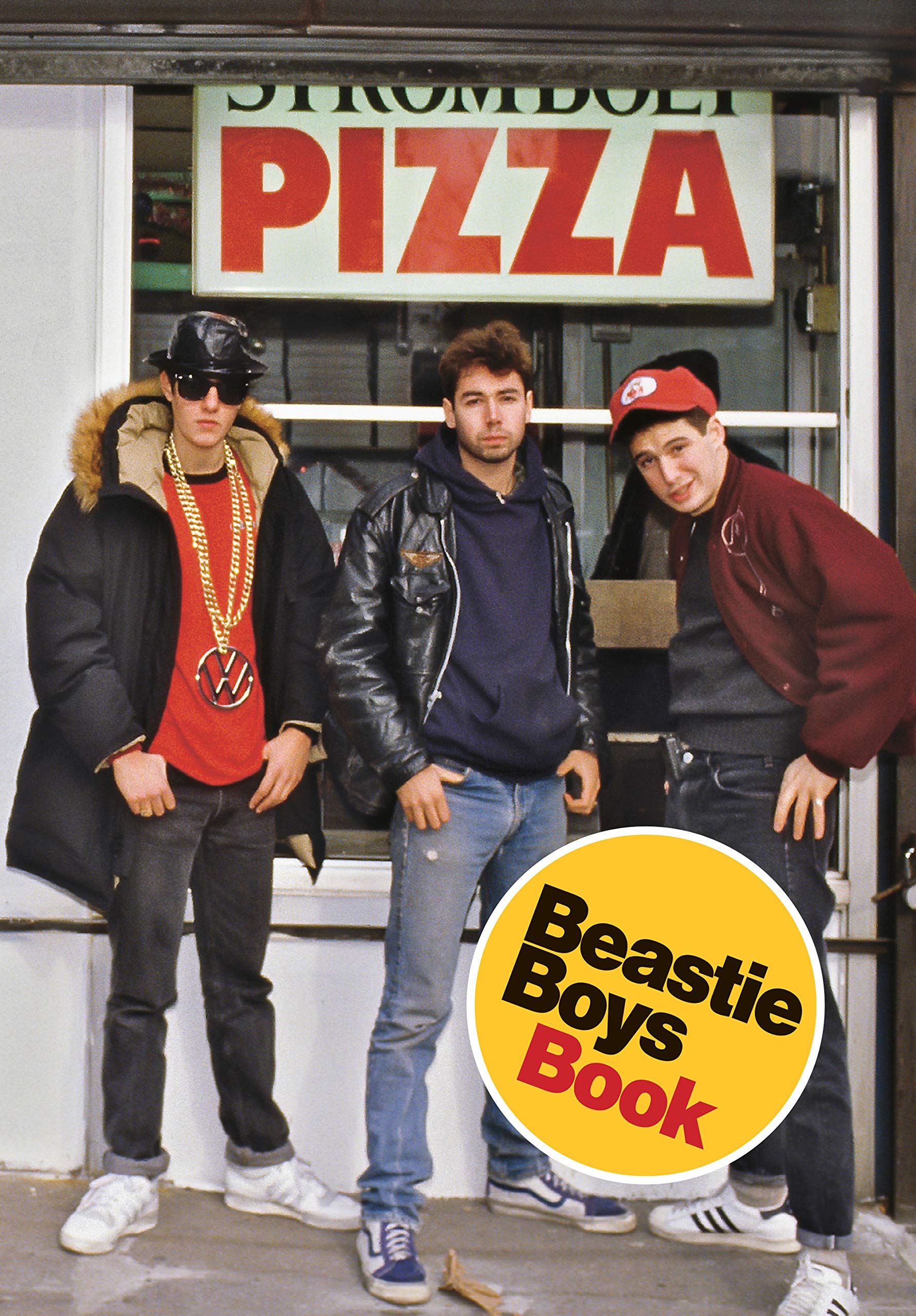
Beastie Boys Book

Written by surviving band members Adam “Ad-Rock” Horowitz and Michael “Mike D” Diamond with contributions from key collaborators, Beastie Boys Book charts the group’s evolution over its three-decade history. Three teenage middle-class Jewish outcasts meet in New York City’s club scene in the late 70s/early 80s and form a hardcore punk band before shifting their focus to rap. Under the auspices of Russell Simmons and Rick Rubin, they become the first commercially successful white rappers until falling out with their benefactors. This break, coupled with a move to the west coast, proves to be a blessing in disguise as the Beasties branch out musically, becoming innovative samplers and cementing an enduring legacy. They mature both artistically and personally, renouncing their prior misogyny and addressing more sophisticated lyrical themes, before disbanding when Adam “MCA” Yauch dies of cancer in 2012.

Once derided as a novelty act (white Jewish rappers!) or shallow party fiends, the Beastie Boys always had a lot more going on than their image suggests, and this book confirms that. For instance, their breakout hit, “(You Gotta) Fight for Your Right (to Party),” celebrated as a frat bro anthem, was actually a parody whose satirical intent was lost on many of its admirers. And while the Beasties rose on the strength of their sampling prowess, they could actually play instruments competently (or, in Yauch’s case, well). However, this book is less a vindication and more an exploration not only of the good, but the bad and the weird as well. Crazed managers, sketchy venues, and bizarre encounters all dot the landscape, and Horovitz doesn’t shy away from copping to despicable past behavior (such as kicking founding drummer Kate Schellenbach out of the band because a female member didn’t fit their image). Beyond that, the book is also a touching tribute to Yauch: a visionary iconoclast with an engineer’s mind.

Some of Beastie Boys Book’s best moments, however, come not from Horowitz or Diamond but from others who set scenes and fill in context around their escapades. Luc Sante nails the atmosphere of late 1970s New York nightlife with clarity and verve while celebrated chef Roy Choi draws parallels between passion for music and passion for food. Of course, much like the Beastie Boys’ music, nonsense filler pops up every now and then, as if the audience is being excluded from a prolonged inside joke. But just as those tracks can be skipped, so too can those pages.

While prior Beastie Boys fandom is a likely prerequisite to get through the book’s 500-plus pages, those with any interest in the group’s music will not be disappointed.


TIP: Get the audiobook version. It is read by Horovitz, Diamond, and an insane amount of celebrity guests: LL Cool J, Chuck D, Jarvis Cocker, Elvis Costello, Will Ferrell, Wanda Sykes, Maya Rudolph, and more.

Monday, March 11, 2019

Captain Marvel

Vers (Brie Larson) is a human who fights for the intergalactic Kree empire. After waking up on the Kree planet Hala without any memories, she is given enhanced ability by the Kree and assigned to their elite Starforce under the leadership of her trainer, Yon-Rogg (Jude Law). During a mission to extract intelligence on the Skrulls, a race of enemy shapeshifters, Vers is captured by Talos (Ben Mendehlson), the Skrull leader. Her memories are examined for a trace of Dr. Wendy Lawson (Annette Benning), a scientist from her forgotten past. Fighting her way out of Skrull custody, Vers crash lands on Earth, where she attracts the attention of veteran SHIELD agent Nick Fury (Samuel L. Jackson) and rookie Phil Coulson (Clark Gregg). Enlisting a curious Fury’s help, Vers tries to find Lawson and discover her own true identity while evading the Skrulls, who have begun to infiltrate Earth.

As Marvel Studios’ first female-led film, Captain Marvel attracted both a disproportionate amount of pre-release hype as well as a disproportionate amount of backlash from trolls. This polarized reaction does the film a disservice as it is neither as momentous nor as insufferable as either response suggests it should be. Instead, it’s a largely entertaining origin story replete with fun nostalgic flourishes as well as a sense that (ironic, given its 90s setting) it came along a decade too late.

Writers/directors Anna Fleck and Ryan Bolden, best known for character-driven dramas like the underrated Half Nelson, may seem an odd team to helm a superhero blockbuster, but their low-key sensibility rescues Captain Marvel from the pitfalls of excess. The 1990s setting, for example, is established via a Blockbuster Video appearance and period-appropriate music, and while there are a few well-timed jokes regarding the era’s (comparatively) slow computers, its never cranked up to the point of overshadowing other aspects of the film. The movie’s “don’t let anyone hold you back” message, in contrast, is far from subtle, but thematic obviousness and superhero movies go hand-in-hand.

Though their roles are varying degrees of rewarding, Captain Marvel’s cast is a good fit. Larson, in the title role, turns in a deceptively complex performance. As with Chris Evans’s early outings as Captain America, the apparent woodenness that comes with being a virtuous soldier-type belies a more conflicted core, something we see when Vers struggles with coming to terms with her identity. Both Jackson and Gregg are digitally de-aged about twenty-five years, and watching them play younger versions of much-loved characters is a blast. Mendelsohn is practically the go-to guy these days for slimy yet overmatched villains, and while Talos starts that way, as befitting a shapeshifter, there is more to the character than initial perceptions let on. The same can also be said for Goose, who is by all appearances a cat that once belonged to Lawson and joins up with the heroes. Unfortunately, several other roles are poorly written, and antagonistic characters often come across as blandly one-note. It would spoil the film to name them all, but a younger version of Ronan the Accuser (Lee Pace, returning from Guardians of the Galaxy) shows up, and he continues to lack his comic book equivalent’s complexity (think less genocidal maniac and more uptight hardass judge).

Aesthetically, Captain Marvel is a victim of timing. It is by no means a bad-looking film, but it lacks a lot of the visual oomph it would have delivered had it been released before other movies beat it to the punch. Guardians of the Galaxy already made its mark using upbeat pop songs from an earlier decade in action sequences, and several Marvel movies have made use of fast-paced space chases. Add to that the unfair-but-inevitable comparisons to DC’s Wonder Woman, and Captain Marvel simply loses a lot of the impact it may have had otherwise.


Though it may not be a revelation, Captain Marvel is far from a flop. An engaging change of pace, it fits nicely into Marvel’s cinematic universe rather than redefining it.