Saturday, February 16, 2019

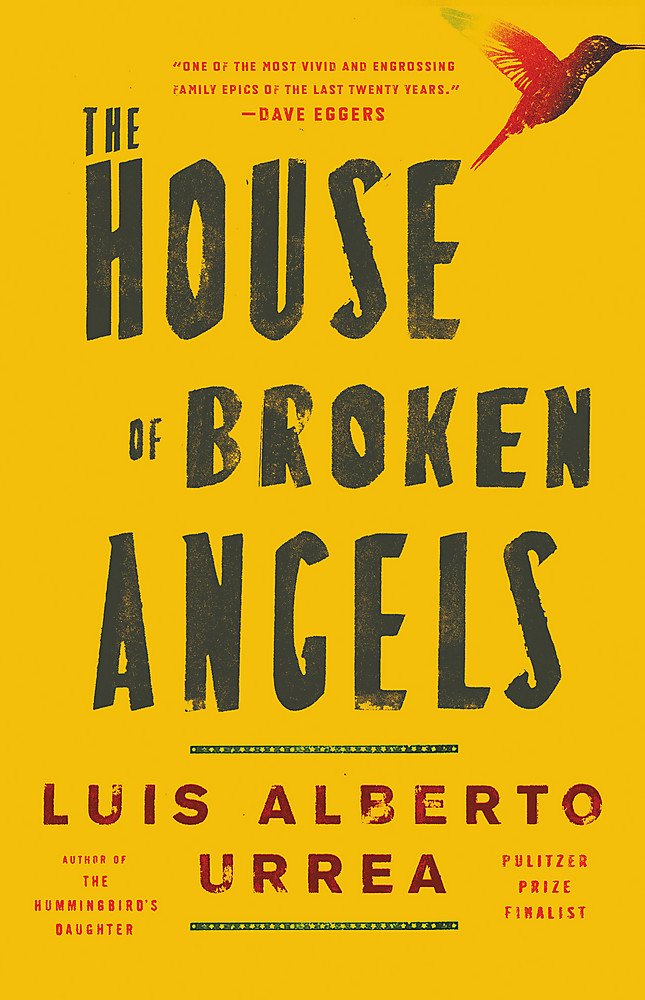
The House of Broken Angels

Not long after burying his own mother, Big Angel de La Cruz, the revered, terminally ill patriarch of a large Mexican-American family gathers his kin for one final celebration before he says goodbye. Attending him are his wife, Perla, his daughter Minerva/”La Minnie,” his son Lalo, and his half-American half-brother and namesake Little Angel, among others. Past and present converge as Big Angel’s memories illuminate his final days.

Luis Alberto Urrea’s 2018 novel comes from what is likely a place of pain. Like Little Angel, Urrea has had to juggle Mexican and American identities, and also like Little Angel, the author recently lost an older brother. But despite this inherently sorrowful premise, The House of Broken Angels is far from being simply a sad read. Urrea tempers the novel with vivid writing and equal parts humor and pathos.

Though Big Angel is arguably the focal point, The House of Broken Angels tells a multigenerational story from a variety of perspectives. The sheer number of characters is a chore to keep up with though few, if any, are dull. Perla, outwardly the doting wife, still bitterly recalls being scorned by her in-laws as a dark-skinned peasant. Lalo, a weary military veteran, lives in the shadow of his murdered brother, whom his own son presses him to avenge. The relationship between the two Angels is also fraught with tension as the two live in different worlds despite sharing mutual respect as well as a name. There’s also a benevolent priest, a tyrannical boat captain uncle, and a grand-nephew who plays in a metal band as The Satanic Hispanic.

The novel’s tones are every bit as rich and diverse as its cast. Urrea pokes gentle fun at border Spanglish and the Mexican preoccupation with impractically large American cars. However, he also offers sincere critiques of stereotyping, machismo, and classism.

All of this makes for a rewarding read, but it would have to be given the book’s nearly fatal flaw: an at-times stultifying lack of momentum. The House of Broken Angels dispenses with a conventional plot in favor of a series of character sketches, and not since Mrs Dalloway has a book, in its worst moments, felt so listless and stalled. The saving grace here is that there are enough humorous, humanizing, shocking, or otherwise compelling beats in both the past (a brazen attempt to smuggle a green parrot across the border) and present (Big Angel stubbornly trying to act on his attraction to his wife despite the limits imposed by his failing health) to compensate for its structural incoherence and bouts of tedium.

The House of Broken Angels has as much capacity to alienate as it does to captivate, but for those who are willing to look past its inconsistencies and character bloat, it is meaningful, impassioned, and warm. For a book ostensibly about dying, it is remarkably full of life.


NOTE: Urrea narrates the audiobook version himself and does a fantastic job.

Thursday, February 7, 2019

The Death of Stalin

In 1953, after Soviet leader Joseph Stalin (Adrian McLoughlin) suffers a cerebral hemorrhage, his inner circle vies to replace him. Interior minister Lavrentiy Beria (Simon Russell Beale), the brutal head of the secret police, vies to consolidate power with deputy premier Georgy Malenkov (Jeffrey Tambor) as his pliable puppet. They are opposed by ambitious reformer Nikita Krushchev (Steve Buscemi) while foreign minister Vycheslav Molotov (Michael Palin), Stalin’s beloved daughter Svetlana (Andrea Riseborough), drunken buffoon son Vasily (Rupert Friend), and others are caught in the middle.

Written and directed by Armando Iannucci, The Death of Stalin has a divisive premise: Soviet atrocities as black comedy and nary an attempted Russian accent to be found. Some will see this as a tasteless and inaccurate attempt to make light of atrocities. However, a truer-to-history take may very well have been unbearably depressing. For those who can stomach Iannucci’s idiosyncratic approach, The Death of Stalin offers an equal amount of amusement and discomfort delivered by a capable cast.

Performances here are deceptive: many characters initially come across as exaggerated caricatures only to later reveal a more genuine (for better or worse) core. Buscemi plays Krushchev as mercurial and power-hungry yet also human enough to be disgusted by his more barbarous foes: essentially, this is his Boardwalk Empire character born again in Moscow. Tambor is hilariously ineffectual as the pliable, indecisive Malenkov, who nevertheless recognizes the impossibility of his position. Beale’s Beria makes for an inviting target for the enmity of political opponents and the audience alike: a scheming sadist and rapist who was somehow even worse in real life. Among the supporting roles, Jason Isaacs stands out as the medal-chested Marshal Zhukov, whose defeat of the Nazis emboldens him to troll everyone with aplomb while Olga Kurylenko lends steely defiance to Maria Yudina, a dissident musician.

This cast is given no shortage of quality material to work with, some invented and some only seeming as if it was. There’s Stalin commanding his cronies to join him in watching a Western, a room full of the political elite bumbling to decipher his dying gesture of pointing to a painting, Zhukov punching a drunk and ranting Vasily, and rival factions trying to literally outrun each other to appear at Svetlana’s side. The comedy is tempered by the realization that people were killed for the “crimes” of being in the general vicinity when Stalin expired, something the film acknowledges but relegates to a background event.


In keeping with history, the end of the movie finds Krushchev triumphant and his opponents vanquished albeit with an up-and-coming Leonid Brezhnev looking over his shoulder, ready to start the cycle of scheming and betrayal anew. This futility helps imbue the The Death of Stalin with a biting, fatalistic edge. Ultimately, it makes for questionable history but a darkly amusing look at ruthless politicians trying to out-bastard one another to victory.

Bad Blood: Secrets and Lies in a Silicon Valley Startup

In the early 2000s, charismatic Stanford dropout Elizabeth Holmes starts the medical technology company Theranos. She raises millions of dollars on a promise to be able to conduct numerous medical tests from a single drop of blood. Theranos’s reputation grows as Holmes attracts more investors, befriends the political elite, and forges a partnership with Walgreens. Amid all the hype, however, the company’s proprietary technology proves unreliable, a fact that Holmes and her COO (and secret boyfriend) Ramesh “Sunni” Balwani conceal by maintaining a cloud of secrecy and either firing employees who raise ethical concerns or intimidating them to remain silent. As Theranos ramps up its promises, veteran lab director Alan Beam and junior employees Tyler Schultz and Erika Chueng can’t abide by the idea of gambling with patients’ health and decide to blow the whistle, only to find themselves under surveillance and facing litigation.

Wall Street Journal reporter John Carreyrou’s book-length examination of Theranos’s rise and fall is an engrossing look at the extent to which smart people will delude themselves rather than admit that they were wrong. This is true not only of Holmes, a black turtleneck-clad figure with an artificially deep voice who models herself after Steve Jobs, but also of those who believed in her and took up Theranos’s cause despite the seemingly obvious need for skepticism. Said dupes include the esteemed likes of former secretary of state George Schultz (Tyler’s grandfather, awkwardly) and future secretary of defense James Mattis.

Bad Blood reveals not only truths that its principal actors were loath to confront but also those that a segment of its audience may shy away from as well. Those expecting to encounter older white conservative men behind acts of corporate malfeasance will have to reckon with a cast of villains that includes a manipulative young woman (Holmes), a Pakistani bully (Balwani), and an aggressive Democratic lawyer (David Boies), all of whom were complicit in years of fraud, deceit, and intimidation. Meanwhile, the heroes include a young white man from a privileged family (Tyler Schultz, who risked both litigation and estrangement from his powerful grandfather), a Rupert Murdoch-owned newspaper that refused to back down, and even Murdoch himself in a way (for refusing to kill the Journal’s story despite his own investment in Theranos and a personal appeal by Holmes). Yes, Carreyrou comes across as annoyingly self-congratulatory at times, and his summation of Holmes’s character is nothing if not vindictive, but then again, maintaining objectivity would prove a chore after being denounced, surveilled, and threatened with frivolous lawsuits.

To his credit, Carreyrou balances intrigue – Balwani’s outbursts, cloak-and-dagger secrecy, legal chicanery, and his own quest to get ahold of a regulatory report that Theranos tried to bury – with workmanlike explanations of blood draws and testing procedures. Bad Blood is quite accessible to readers who lack a background or even an interest in medicine or biotechnology though some of the examples given (surprise, the Edison machine failed again!) may come across as repetitive.


A fascinating read that fits the “truth is stranger than fiction” maxim, Bad Blood is a sobering exposé that reminds us that the appropriate response to “We can do it” should not be a pat on the back but a “Can you really?”

Saturday, February 2, 2019

Little Ari's Japanese Kitchen


Located at 4129 Spring Garden St. in Greensboro, Little Ari’s Japanese Kitchen serves Japanese cuisine for lunch and dinner. The establishment is open from 11-9 Monday-Saturday and 11:30-9 on Sunday.

Greensboro is home to several hibachi restaurants that serve largely interchangeable meat/veggie/rice plates for under $10. Little Ari’s has them too, but this casual offshoot of the more upscale Arigato’s Japanese Steak and Seafood House offers more than a few novel touches as well. It’s an ambitious attempt to bridge the gap between hole-in-the-wall hibachi joints and full-on Japanese restaurants albeit not an entirely successful one.

Outside and in, Little Ari’s is deceptively spacious. The large lot offers plenty of parking, and the clean, modern interior plenty of seating. Little Ari’s operates on counter service: place your order at the register, receive a pager, and pick up when it buzzes. There were plenty of orange-shirted staff on hand at the time of our visit, and they seemed accommodating and concerned with diner satisfaction, a definite plus.

Little Ari’s menu both encompasses and transcends hibachi norms. The requisite hibachi bowls are accounted for, featuring your choice of chicken, shrimp, salmon, steak, tofu, or different combinations thereof as well as a few katsu (breaded) options. You can then choose between steamed or fried rice and pick from among four different sauces. While edamame and gyoza are expected finds, Little Ari also boasts ramen (chicken, soy, or tonkotsu/pork), onigiri (rice balls), and beef curry, options that help distinguish it from other establishments of this type.

For our first visit, my wife and I opted for a chicken katsu hibachi, a pork tonkatsu ramen, and an onigiri (tuna mayo and shrimp katsu) apiece. We didn’t have too long to wait before our pager started buzzing though not everything was ready all at once. The food had both hits and misses. On the plus side, the katsu chicken was cooked well - it held its breading without being dried out – and there was plenty of it. The ramen was a generous portion as well, and the broth, though understated (next time, I’ll opt for spicy), had the right flavor profile. Both onigiri were satisfying too. Though billed as rice balls, they are more akin to hot sushi pockets, seaweed-wrapped envelopes of tastiness that proved the highlights of the meal. On the other hand, the hibachi vegetables, listed as zucchini and onions, contained far more of the latter than the former, the ramen was a bit light on meat, and the katsu’s tonkatsu sauce lacked the expected hints of sweetness.


Little Ari’s pricing is similarly a mixed bag. $10 for a heaping bowl of ramen is a good deal even if it isn’t up to Tampopo’s standards. Hibachi entrees range from $8.50 to the teens for a regular/full portion depending on the proteins, and while it isn’t a meager portion, it is also priced slightly higher than what hibachi places usually charge. Two sauces are free with a hibachi purchase while any additional are $1.25 each for a small cup thereof. I understand the need to cut down on wastefulness, but this comes across as unduly stingy.


Ultimately, Little Ari represents both the best and the worst of the two worlds it inhabits. It offers more customization and more options than the typical hibachi joint and lets patrons get their ramen fix in a convenient fast casual environment, but it is also a bit pricier than said hibachi joints without matching the quality of a Tampopo or a Don. Friendly service and the presence of onigiri, however, make it worth at least a try.
Little Ari's Japanese Kitchen Menu, Reviews, Photos, Location and Info - Zomato

Sunday, January 20, 2019

Gods of Howl Mountain

In the mountains of 1950s North Carolina, injured Korean War veteran Rory Docherty lives with his grandmother, Maybelline. She is a former prostitute turned renowned medicine woman, both revered and scorned by the locals; he runs whiskey for a legendary bootlegger in a modified hotrod. The link between them, Rory’s mother has institutionalized, the attack that rendered her mute long ago unspoken of. Rory’s already difficult life gets more complicated when he pursues a preacher’s daughter as both a rival runner and encroaching federal agents threaten to do him in.

Taylor Brown’s hard-bitten Appalachian prose will seem familiar to those well-versed in this genre. His descriptions are rich with atmospheric detail, and his dialogue captures the region’s cadence. While he is not unique in that regard, he has nevertheless carved an identity apart from the region’s well-known voices. Gods of Howl Mountain is less spiritual and contemplative than the works of Ron Rash and Wiley Cash, less emotionally stunted than those of Chris Offutt, and more carnal than all of them.

However, there is more to this book than scenery, sex, and blood. Rory and especially Granny Mae are memorable characters who embody a range of contradictions: vulnerable (a one-legged man and an aging widow) yet strong, right-minded yet on the wrong side of the law, clever yet seemingly outfoxed. The book teases out its central mystery (who attacked Rory’s mother) slowly and throws a few red herrings the audience’s way. This will frustrate those expecting a more straightforward mystery, but for those with greater patience, there is more than enough going on, and the aftereffects of some of Granny’s herbal concoctions even add a splash of dark humor.


Gods of Howl Mountain has more than a whiff of the familiar about it, but it is competently crafted and engaging more times than not.

Sunday, January 13, 2019

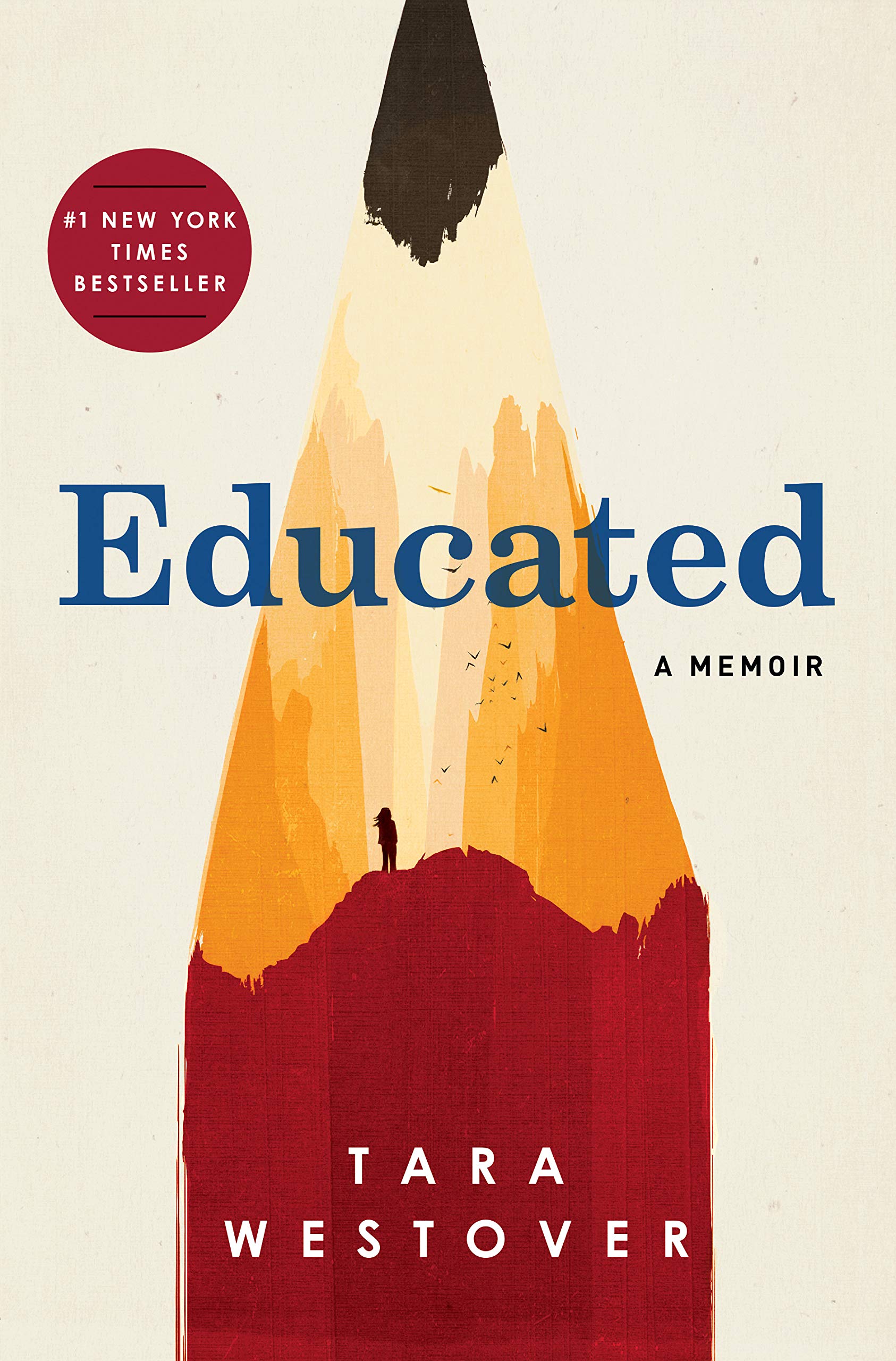
Educated: A Memoir

In this 2018 account, Tara Westover explores her childhood as the youngest of seven siblings in a Mormon survivalist family in rural Idaho. Public schools and doctors were considered the tools of the devil, and Westover spent the first nine years of her life without a birth certificate. After her older brother, Tyler, left home to go to college, he encouraged Tara to do the same. But even as she worked toward independence by acting in local theater productions and studying for the ACT, family stood in her way: her father did not support her ambitions, and another older brother, “Shawn,” violently bullied and abused her. Against long odds, Westover won a scholarship from Brigham Young University, a fellowship from Harvard, and, finally, a doctorate in history from Cambridge, a process of ongoing education that gave – and cost – her much.

Since its release last year, Educated has garnered praise from the likes of Barack Obama and Bill Gates. It isn’t hard to see why. A raw, messy, yet ultimately inspirational tale, it is at once astonishing and relatable. Not going to the hospital after suffering life-threatening injuries or making it to college without ever having learned what the Holocaust is may seem unfathomable to the great majority of us who did not share Westover’s upbringing. At the same time, balancing affection for family with the need for space, standing up to abuse, battling self-doubt, and trying to find your place in the world are hurdles that many have had to cross, and Westover captures the difficulty of doing so as well has her own often conflicted feelings with clarity and poise. She shows both steel resolve and paralyzing uncertainty as well as a thirst for knowledge and exploration tempered by the lure of the past.

That being said, it is possible that Educated has taken some measure of dramatic license. Westover’s parents have disputed the account, but that can easily be read as living in denial or trying to save face. However, even Tyler, though generally supportive of the memoir, has challenged the depiction of their parents as anti-education (as opposed to merely homeschoolers who disdained public schools). Add to that a 2009 photo of their father that shows none of the facial deformities the book makes clear that he has as well as the author’s admitted haziness regarding some of her own memories, and it is fair to ask what may have been altered to tell the best story.


These concerns do not invalidate the book or make it any less worth reading, nor should it be read for the wrong reasons. Educated is not an indictment of Mormonism or of homeschooling, but rather of the sort of warped mindset that regards rolling up one’s sleeves while working outside in the summer heat as a scandalous affront, BYU as a hotbed of worldly, godless socialism, and being in excruciating pain after narrowly surviving an explosion a divine gift that should be warmly welcomed. The book – and the “Dr.” that now precedes Westover’s name – also affirm that adversity is not destiny, and it is this latter message that is needed now more than ever.

Friday, January 4, 2019

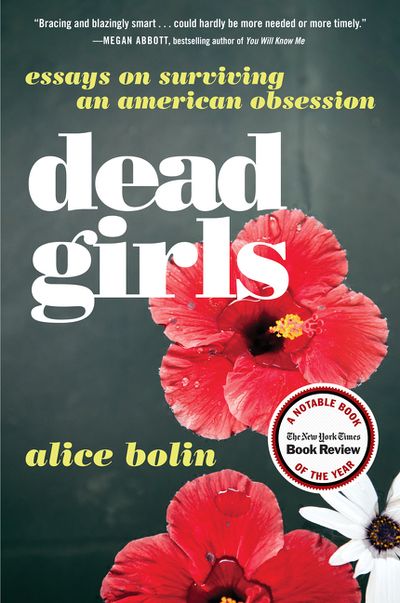
Dead Girls

In her debut essay collection, Alice Bolin examines both America’s cultural preoccupation with dead girls as well as its ongoing mistreatment of living women. In addition to dissecting dead girls as a longstanding literary trope, she casts a critical eye on the narratives surrounding several cultural phenomena. An admirer of Joan Didion, she also traces her own journey from the remote Idaho to bustling Los Angeles and reflects on the path she’s taken.

The relationship between author and subject is sometimes complex and sometimes messy. Some authors eschew the personal while others confront it head-on. Handled artfully, autobiographical digressions can enrich and contextualize a work of nonfiction: Michell McNamara’s excellent I’ll Be Gone in the Dark is a good example thereof. But rather than use personal anecdotes to advance her central point, Bolin seems torn between unpacking the implications “dead girls” and telling her story, and the thematic connections that she attempts to draw between the two seem strained. Part memoir and part cultural criticism, Dead Girls suffers from an identity crisis.

Then again, while hewing more closely to a premise may have resulted in a more coherent book, it would not necessarily have been a more insightful one. That premise is that dead girls in noir fiction serve as male fantasies. Stripped of agency, identity, and life itself, they become little more than a means of ennobling avenging male protagonists. Bolin, who is both well-read and culturally well-versed, finds plenty of supporting examples for this idea in everything from the classic noir of Raymond Chandler (whose femme fatales, like his dead girls, were exaggerated forms of male wish fulfillment) to the contemporary drama of True Detective. She also sees right through the performative faux-feminism of Stieg Larsson (who originally titled The Girl with the Dragon Tattoo “Men who Hate Women”) and calls out the Millennium Trilogy for its cringeworthy sexualization of its heroine and reliance on dated tropes.

Problems arise, however, when Bolin attempts to extend this connection to examples that don’t support it. For instance, she miscasts Gone Girl’s Nick Dunne as a “classic male victim” and thus a successor to the misogynistic male leads of yore even though the novel depicts him as culpable and compromised in ways that his forebears were not. Even when discussing the potential for toxicity in close relationships between women, Bolin can’t help but dip into the same well, framing the hurt that women inflict upon one another as a product of a sexist society. Given that Bolin discusses her own such mistreatment of a former close friend, this comes across as all too conveniently exculpatory. And given how many straws Bolin is grasping it in some cases (puzzling, as there are many more relevant examples that would have fit), it is perhaps for the best that the book did not stay on-point the entire way through.

The book’s off-topic segments range from insightful to insufferable. Bolin successfully draws attention to the gaps between perception in reality in everything from Britney Spears’ artistry and breakdown to the Bling Ring case. She also captures the desolation of her home state and the violence (in this case, the Ruby Ridge standoff). And while she lays on her Didion-worship a bit too thick, she does a reasonably imitation, presenting a young life in flux in L.A.. On the other hand, Bolin sometimes comes across as unbearably selfish, whether it is her condescending speculation about where her father fits on the autistic spectrum or her decision to steal a date’s hat and cut off contact because she enjoyed the feeling of finality. Annoyingly, Bolin writes of the privileged place afforded to white women yet never gets around to realizing her own (relative to the larger issues the rest of the book addresses) lack of importance.


As cultural criticism, Dead Girls offers both hits and misses, pointing to a troubling trend while also painting with too wide a brush. As a memoir, it is occasionally evocative though often vapid and alienating. Bolin shows flashes of intelligent, perceptive writing, but that ability begs to be liberated from her self-aggrandizing focus.