Friday, June 1, 2018

Property: Stories Between Two Novellas

In this collection of ten stories sandwiched between two novellas, Shriver explores what it means to own and not own everything from belongings to housing to even one’s self. In “The Standing Chandelier,” an artist’s quarter-century close friendship with a former lover irks his insecure fiancĂ©e. In “Domestic Terrorism,” a thirty-something son steadfastly refuses to get a job and leave his parents’ home. In “Kilifi Creek,” a carefree young woman abuses her hosts’ hospitality while vacationing until a close call forces her to reconsider her perspective. And in “The Subletter,” a pair of American expat writers in Belfast feud over who has more right to live in and write about the city while uncomfortably sharing a flat.

Far too often, short story collections are marred by both maddening inconsistencies from one story to the next as well as an annoying tendency for stories to peter out toward the end. In Property, Shriver deftly avoids both of these pitfalls. While some pieces stand out more than others, there is a unity of theme and purpose here. Her endings are also resolute and often appropriately flavored with a cruelly ironic twist.

This is not to say that the collection grows repetitive. The stories vary considerably in setting, transporting readers everywhere from London to New York to North Carolina and Kenya, all with a reasonable degree of verisimilitude. Similarly, Shriver deploys narrators both young and old, male and female. What unites them all is a sense of being dispossessed: of the comforts of home, of parental authority, of common courtesy, and more. Shriver uses her savage wit to lampoon lazy and self-involved millennials, the permissive generation that preceded them, pretentious would-be artists, and all other manner of rootless wanderers through life. Her blunt critiques come across as excessively mean-spirited at times and the absence of likable characters can prove exhausting in large doses, but on balance, there is enough dark humor and insight to render Property a worthwhile read.


8/10

Monday, May 28, 2018

BBQ Nation Indian Grill


Located at 3928 Sedgebrook Street in High Point, BBQ Nation serves Indian cuisine for lunch and dinner seven days per week. There is a lunch buffet, and food specials change regularly. Online ordering and catering are available.

When BBQ Nation opened a few months ago, High Point went from having not a single Indian restaurant to joining the conversation for best Indian cuisine in the Triad. This is in many ways a departure from a typical Indian restaurant though, and there are a few quirks to eating here. However, the good definitely outweighs the bad.

Housed in a former KFC, BBQ Nation is bright and clean though not as well-appointed as the likes of Saffron or Taaza Bistro. It’s a somewhat compact space, but it’s laid out (via pushed-together tables in the front and middle) to handle large groups, and the buffet is logically placed in the back.

The menu here is impressive in its breadth and ability to accommodate various diets. The offerings are 100% Halal and includes the expected apps, breads, and chicken dishes. To that, BBQ Nation adds an array of biryanis, vegetarian dishes, Indo-Chinese dishes (think fried rice and hakka noodles), and South Indian dishes (crepe-like dosas and thicker pancake-like uthappams). And then there are the grilled offerings that give the restaurant its name. Each table has a well in the middle into which a grill that holds four skewers may be inserted, a feature unseen in other local Indian establishments.

I got my first taste of BBQ Nation during a Yelp event, which offered a chance to sample multiple dishes via the buffet. The Golbi Manchurian (Indo Chinese spiced fried cauliflower) and Chicken 555 (sauced fried chicken with cashews) were standouts, and I was impressed enough to take a small group back a few days later. The Chicken 555 was a re-order, and our party also split the Saag Paneer (Indian creamed spinach), Malabar vegetable curry (carrots, potatoes, and peas in a coconut/green curry/mint sauce), and a vegetarian BBQ with paneer (cheese), potato, pineapple, and watermelon (!!).


Between the two visits, there was not a single dish that I did not enjoy. Everything was seasoned well and spiced to the desired medium, the cheese was firm without being rubbery, the chicken was not too dry, the curry had just the right amount of mint, and the grilled watermelon was a perfect combination of sweet and smoky. Portions were also rather generous, and the pricing represents a good value relative to other Indian restaurants. The two vegetarian entrees ran $12 apiece, and the buffet is $10 during weekdays.

The BBQ Nation staff that I interacted with were friendly, patient, helpful, and accommodating. That said, service can be a bit chaotic. We dealt with several staff members throughout the meal rather than one primary server, and dishes arrived at different times, giving the experience a haphazard quality. Another caveat: you might find yourself pressed for table space, especially if you order any grilled items.

If these issues are not deal-breakers for you, then BBQ Nation has much to offer. An abundance of well-prepared tasty food and a unique take on familiar cuisine make BBQ Nation well worth a visit.


8/10 

Sunday, May 27, 2018

Solo: A Star Wars Story

A young Han Solo (Alden Ehrenreich) finally escapes the service of gang leader Lady Proxima (voiced by Bonnie Hunt) on the backwater planet of Corellia, but his lover Q’ira (Emilia Clarke) is left behind. After being kicked out of the Imperial Flight Academy and deserting from the Imperial Army, Han meets his future partner, the Wookie Chewbacca, and joins up with a group of thieves led by Tobias Beckett (Woody Harrelson). Beckett is in debt to the Crimson Dawn syndicate, and its ruthless leader, Dryden Vos (Paul Bettany) will kill them all unless they complete a daring and difficult heist of the valuable and volatile fuel coaxium. To oversee the mission, Vos sends along Q’ira, who has entered his service. But first, they will need a ship, which leads the group to try to obtain one from veteran smuggler Lando Calrissian (Donald Glover).

Depending on whom you ask, this movie’s cardinal sin ranges from not featuring a digitally de-aged Harrison Ford to deposing original directors Phil Lord and Christopher Miller (The Lego Movie) to even existing. Replacement director Ron Howard inherited a project brimming with both baggage and backlash, and though Solo is no one’s idea of an instant classic, it could have turned out far worse.

Despite the eyebrows raised by his casting, Ehrenreich does a fairly decent job as young Han (one that, in fact, comes Harrison Ford approved). He has the moral flexibility, the overconfident swagger, and the banter with Chewie down though this version is a good deal more idealistic than audiences are accustomed to. Presumably, that trait will be lost in the years between Solo and A New Hope.

The supporting cast is competent though characterization is somewhat limited (a curious blunder by successful Star Wars scribe Lawrence Kasdan). When Han is reintroduced to Q’ira, she is presented as a changed woman with a murky past, and though the film does not explore said past, Clarke’s performance gives her a conflicted quality. Phoebe Waller-Bridge does standout voicework as L3, Lando’s stubborn, irreverent droid co-pilot, and she gets some of the film’s funniest lines. Lando himself, however, is a bit of a disappointment. Glover has exactly the right screen presence, but the screenplay never treats the character as anything more than a joke. Meanwhile, Harrelson makes for a cynical, opportunistic mentor, but given the losses he suffers, one would expect more emotional range.

Solo’s plotting and presentation are similarly uneven. Howard is a competent director though not a particularly imaginative one, and this is a film that doesn’t stray terribly far from formula. An early attempted train heist plays like something that has done before, and if you predicted a certain character wasn’t going to make it past a certain point, you were probably right. That said, the stakes do get raised in the latter half as does the visual oomph. Watching the Millennium Falcon zip across dangerous skyscape with even more dangerous cargo is legitimately thrilling. Despite the absence of any Jedi, the film also foreshadows parts of A New Hope and establishes ties to the more familiar Star Wars mythos though your mileage may vary on how well this film integrates into the larger canon.

All told, Solo is an enjoyably exciting albeit shallow and not terribly memorable flick, lesser not only than a proper Star Wars film but also fellow spinoff Rogue One.


7.5/10

Tuesday, May 22, 2018

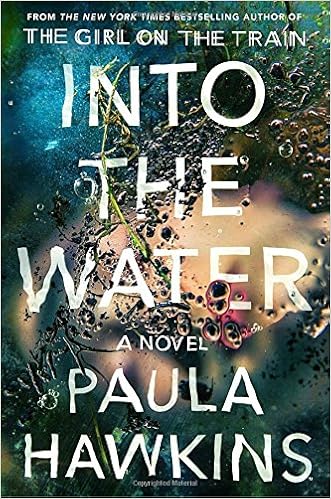
Into the Water

The town of Beckford in rural England has seen more than its fair share of drowning deaths. The latest victims, both presumed suicides, are teenager Katie Whitaker and, a few weeks later, muckraking writer Nel Abbott. Now, Nel’s daughter Lena (the late Katie’s friend) and Nel’s estranged sister Julia are left to pick up the pieces. Though the two surviving Abbotts don’t know, like, or trust one another, asking around leads them both to the same uncomfortable conclusion: Nel’s death was neither suicide nor accident. But trying to unearth a culprit in a town that likes its secrets proves to be a dangerous game to play at.

When Paula Hawkins followed up her successful debut The Girl on the Train with this 2017 novel, there was reason to be optimistic. First novels are often glimpses at potential yet to be realized. Unfortunately, Into the Water is a step backward rather than forward.

First, the good: Hawkins excels at communicating a sense of place. Beckford’s provincialism rings true, and the town’s everybody-knows-everybody quality contributes to the novel’s tension. After all, it is far more troubling to consider that you have been wronged by someone you have known all your life than it is to know you have been victimized by a random stranger.

Speaking of tension, Into the Water’s central mystery – the suspicious drowning deaths of several women – is fairly engrossing. The first drowning described is the centuries-old public execution of a woman wrongfully accused of witchcraft, and that death hangs over the novel. But as with The Girl on the Train, Hawkins complicates the resolution through misdirection, some of it successful, some of it decidedly not.

As with the previous book, Hawkins employs multiple alternating narrators. While the perspective changes may frustrate some readers, if done correctly, they can also shade characters and lead to a more nuanced understanding of them. Unfortunately, however, this technique is abused rather than used wisely. We have chapters told not only from Lena’s and Julia’s points of view, but also from those of Sean (the policeman investigating Nel’s murder), his father Patrick, his schoolmarm wife Helen, and his junior partner Erin, among others. As a result, the narrative focus is stretched too thin, and these different voices aren’t given enough depth. It says something about a book when the character who grows the most – via changing perceptions of her – is one who has been dead from the beginning.

Then again, in some cases, this is just as well: Hawkins continues to struggle to write male characters. As with The Girl on the Train, abusive and devious men function as red herrings, competing for the role of perpetrator. But whereas the previous book gave these characters some definition beyond their malice, here Hawkins instead traffics largely in one-dimensional stereotypes, from Sean’s reactionary patriarch of a father to a pathetic, insecure ephebophile teacher. If a male writer in 2017 wrote every female character as a femme fatale (without parodic intent), he would rightly be dragged for it. So too should Hawkins for her shallow misandry.

Ultimately, Into the Water squanders its deft use of setting and promising premise on too untenable a structure and too little character exploration. Here’s hoping the next novel rights the course.


6.75/10 

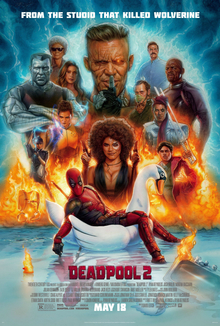
Deadpool 2

After an experimental cancer treatment leaves Special Forces veteran Wade Wilson (Ryan Reynolds) deformed, insane, and capable of healing from any injury, he becomes the costumed mercenary Deadpool. But when personal tragedy strikes, a despondent Wade finds himself searching for purpose. He reluctantly forges a friendship with Russell (Julian Dennison), a troubled teenage mutant with pyrokinetic abilities. Meanwhile, Cable (Josh Brolin), a cybernetic soldier from the future, has lost his wife and daughter to an older Russell’s wrath. He travels back in time to kill Russell before the teen turns murderous, leading Wade to recruit a team to protect his young friend.

2016’s Deadpool pulled a coup of sorts, transforming an absurdist, self-referential comic book into a successful R-rated action-comedy. In this follow-up, the novelty of seeing The Merc with the Mouth on the screen has worn off, but it’s still a highly entertaining outing.

As with the previous film, Deadpool 2 is not for the young or squeamish. There is plenty of violent slapstick and crude humor to go around, and several characters bite the dust in morbidly amusing ways. However, this irreverence is tempered by a surprising amount of sentimentality. Wade’s love for Vanessa (Morena Baccarin), suicidal despair, and eventual concern for Russell are all played straight, and the franchise’s friendly rivalry with the Wolverine films sees Deadpool try to consciously eclipse Logan’s more poignant moments.

Reynolds continues to do excellent work in the title role, shifting from fourth wall-breaking wisecracks to inventive threats to heartfelt declarations, all with equal conviction. It helps that he is given plenty of great lines courtesy of writers Rhett Reese and Paul Wernick. The duo directed this film as well, and though they replaced a special effects pro in Tim Miller, Deadpool 2’s aesthetics don’t seem to suffer much for it. The action sequences remain fast and fluid.

The supporting cast features exactly the right mix of personalities for Reynolds to play off of. Among the returning allies, Brianna Hildebrand’s Negasonic Teenage Warhead continues to cast a disapproving side-eye, Stefan Kapcic’s Colossus continues to try to make a hero out of Wade (though even he has limits), and formerly timid taxi driver Dopinder (Karan Soni) seems eager to get in on the action. Newcomer Zazie Beetz brings both snark and competence to her role as luck-manipulating mutant Domino. Brolin’s casting as Cable was somewhat controversial given the other rumored candidates, his lack of towering height, and the fact that he is already voicing another Marvel character (which Wade, of course, lampshades – “Zip it, Thanos” indeed). Though arguably not the best possible choice, Brolin still does the character justice, and his grim gravitas makes Cable an effective foil for Wade’s antics.

Deadpool 2’s plot, however, seems like little more than a contrivance to bring these characters together. Derivative and creatively barren, it shamelessly samples The Terminator, Looper, and other sci-fi action fare. Granted, Deadpool fans likely didn’t pick this flick for its story, but even by those low standards, this is a weak link.

Funny and filthy, thrilling and touching, Deadpool 2 packs a lot of entertainment into its two hours. A rumored follow-up – X-Force – may have trouble meeting expectations when the bar has already been set this high.


8/10

Monday, April 30, 2018

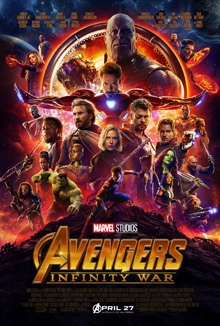
Avengers: Infinity War

Thanos the Mad Titan (Josh Brolin) seeks six Infinity Stones, artifacts of immense power that will allow him to kill half of the life in the universe, a move he believes will allow the surviving half to thrive. After he lays waste to the surviving Asgardians, their former prince Thor (Chris Hemsworth) seeks refuge with the spacefaring mercenaries the Guardians of the Galaxy while Bruce Banner (Mark Ruffalo), having reverted from his Hulk persona, returns to earth to warn the mystic Dr. Steven Strange (Benedict Cumberbatch) and Tony “Iron Man” Stark (Robert Downey Jr.) of Thanos’s impending arrival. Though Stark clashes with both Strange and remains on poor terms with former Avengers teammate Steve Rogers (Chris Evans), a common threat unites them as well as the forces of Wakanda.

Infinity War might be the single most insular film ever made. Those unfamiliar with the Marvel Cinematic Universe will find it incomprehensible. Those without much affinity for the MCU will likely find it a shiny overlong bore. But for those fans who feel invested and have kept up with these characters through all or most of the preceding eighteen films, the payoff is immense, and Infinity War lives up to its considerable hype.

Even the indifferent would have a hard time knocking this film on its aesthetic merits. From New York City to Wakanda to the depths of space to the ravaged planet Titan, the film juggles multiple settings and renders each in distinctive visual detail. Directors Joe and Anthony Russo, who previously demonstrated a penchant for exhilarating hand-to-hand combat in the Captain America films, have proved themselves capable of handling action on a much larger scale. The mingling of new characters and the raw power of Thanos means that you will be entreated to far more than just punching and guns. Even the massive Lord of the Ringsesque battle scene across the plains of Wakanda, which calls to mind a better scene in Black Panther, is not poorly done, merely derivative.

Though Infinity War relies on previous MCU films to establish characterization, it is not a style-over-substance affair. Pathos runs high here. Infinity Stone-powered android The Vision (Paul Bettany) asks his partner Scarlet Witch (Elizabeth Olson) to destroy him along with the stone if it cannot be removed and safeguarded, a singularly anguishing decision. Thor grieves his recent losses, Banner loses patience with his other half, and Strange cautions Stark about the need for greater-good sacrifices. Oddly, even Thanos, he of grandiose boasts and genocidal destruction, is given a quasi-sympathetic touch. His motivation is changed from that of a crazed death fetishist to one who sees his as a necessary and inevitable mission. Even if the character’s helmetless and armorless look is a bit ridiculous (Chris Pratt, as Starlord, mockingly calls him Grimace), Brolin turns in an unexpectedly nuanced performance, and Zoe Saldana, as Thanos's forcibly adopted daughter Gamora, does some of her best work opposite him.

Despite its show of soul and gut-punch of an ending (ameliorated for those who are familiar with the source material), Infinity War is not an entirely somber affair. Downey’s snark and rapid-fire insults, Pratt’s conversational bumbling, and Dave Bautista’s deadpan literalism all return from previous films, and they are joined by a typically amusing Stan Lee cameo and Thor’s repeated mistaking of Rocket Raccoon for a rabbit. Though the stakes are high, this movie did not forget to have fun.

So what’s not to like? As mentioned above, the ending is tough to take yet necessary to set up the next Avenger’s film (and perhaps cheapened by that film’s cast list). Beyond that, Infinity War’s problem is one of excess. It makes the most of its two and a half hour run time, but there are so many characters to account for that some are cut (Hawkeye and Ant-Man) while others are given short shrift. Steve Rogers and T’Challa, the leads of Captain America and Black Panther, are bit players here, a randomly blonde Black Widow (Scarlet Johansson) does little aside from fight, and Spider-Man (Tom Holland) is literally the tag-along kid. Meanwhile, the Red Skull (last seen on screen seven years ago returns in an awkward new context.

Given the complexity inherent in trying to tie together so many different strands of a shared universe, Infinity War could have easily collapsed under the weight of its ambitions. Instead, it makes for an exciting and impactful film. This isn’t the best Marvel movie, but it does stave off fears of imminent decline.


8.5/10

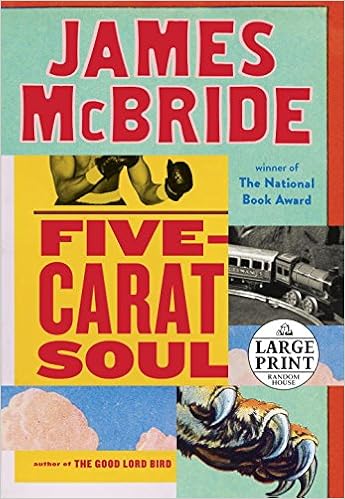
Five-Carat Soul

James McBride’s 2017 short story collection offers tales that transcend the boundaries of place, time, and even species. In “The Under Graham Railroad,” a shrewd toy collector becomes obsessed with buying a rare train set from a hardworking minister who could seemingly care less about it. In “Mr. P and the Wind,” a zookeeper learns to speak to animals telepathically with disastrous results. And the Five Carat Soul Bottom Bone Band links a series of stories featuring troubled young musicians in Uniontown, Pennsylvania.

A veteran journalist by training, McBride must have had countless interactions with and observations of people from all walks of life. Such is the only explanation for this book’s verisimilitude and versatility. The stories contained herein change from humorous to heartbreaking on a dime while avoiding the tonal schizophrenia that this eclecticism often invites. In “Blub,” the title character’s affections for the narrator’s sister come across as laughably awkward at first only to be reappraised as crushingly sincere when later reciprocated. “Mr. P and the Wind” begins with an intriguingly absurd premise – a condescending lion narrates his contempt for humanity whilst confined to a zoo – but evolves into an astute commentary on human nature. Some stories are more gripping than others – and “Mr. P” arguably runs too long while others feel truncated – but there really isn’t a dud in the bunch.

McBride’s mingling of the magical and the crushingly realistic definitely has the potential to test some readers’ patience, but there is no denying his knack for storytelling.


8/10