Thursday, June 26, 2014

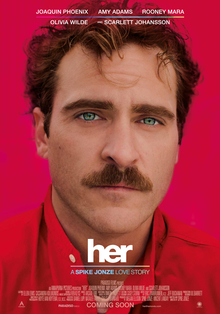
Her

Sad-sack writer Theodore Twombley (Joaquin Phoenix), emotionally devastated by his pending divorce, purchases an advanced artificial intelligence operating system (Scarlett Johansson) to help him manage his life. The OS, which dubs itself Samantha, is programmed with the ability to learn and grow. It isn’t long before she and Theodore form a deep attachment to one another, but can they make it work?

“Lonely man falls for iPhone” would be one way to synopsize this bizarre, intriguing, deeply flawed film. “Spike Jonze wears too many hats” would be another. Jonze, primarily a director, experienced his greatest success partnering with writer Charlie Kaufman on Being John Malkovich and Adaptation. But just as Kaufman’s directorial debut (Synecdoche, New York) collapsed under its own weight, Her (which Jonze wrote and produced as well as directed) goes off the rails.

Characterization is the biggest culprit here. It is fine to have a protagonist that isn’t especially likeable – see Walter White – but he has to at least be interesting. While Twombley’s creepy mustache and terrible fashion sense leave a distinct visual impression, the character himself is rather one-dimensional. We get that he is longing for an emotional connection in the wake of his break-up, but he’s chasing fulfillment the way that a teenager in a bad sex comedy chases a chance to score. We don’t really get to see what else makes him tick – or what drew anyone to him in the first place. Meanwhile, his ex (Rooney Mara) is positioned as something of an antagonist, despite raising perfectly valid criticisms of Twombley and his life choices. The film also manages to waste Amy Adams, who does a deglamorized turn as Twombley’s supportive friend/confidant. From the moment she makes an appearance, her role in the story is preordained. Ironically, the best performance here belongs to Johansson, who has more limitations (both in terms of acting chops and her character being voice-only) than anyone else in the cast. While Samantha begins as little more than a digitized male fantasy, by the film’s end, she’s easily the film’s best-developed character: self-aware, conflicted, and, ultimately, driven to make a difficult choice.

Pacing is another problem. At 126 minutes, Her is hardly an epic, but it drags. Supposedly, Steven Soderbergh had the film edited down to 90 minutes, but Jonze opted for a longer cut. This is a pity: with less time to wallow and bloviate, Her could have better sustained the intrigue of its premise.

And despite its other shortcomings, Her does offer quite an intriguing premise. With a near-future setting and a conceivable plot device (advanced AI), Jonze is able to probe the nature of relationships and what it means to be human in a way that is fresh. Certain elements of the plot may not be novel, but the way in which the film plays with those elements – and audience expectations – certainly is. Add in a distinctive look (a bright, color-saturated world) and an idiosyncratic sound (courtesy of Arcade Fire), and Her is far from a total loss.

With its creative approach and talented pedigree, Her created high expectations that its wasteful characterization and bloated runtime ultimately betray. Disappointment or not, however, it is still worth a look. You’ll want to put your phone down when watching though.


7.5/10

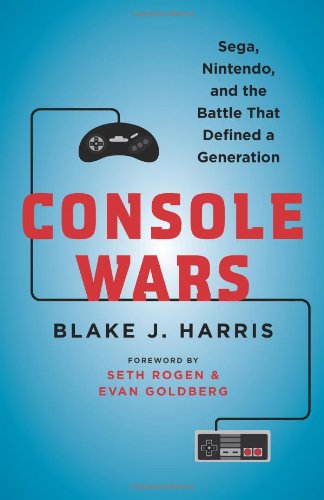
Console Wars

At the dawn of the 1990s, Nintendo enjoys virtually monopolistic control of the video game industry thanks to the success of its wildly popular 8-bit NES system. Looking to shake up the status quo, competitor Sega hires former Mattel executive Tom Kalinske to make its new 16-bit system, the Genesis, a success. Kalinske’s willingness to embrace outside-the-box thinking and edgy advertising allows Sega to challenge Nintendo’s hegemony. But as the 90s progress, strained relations between Kalinske’s branch and his Japanese parent company as well as the debut of Nintendo’s own 16-bit console turn a quest for relevance into an all-out war.

I became a Genesis owner later in the console’s lifecycle, several years after Nintendo supposedly won the console war. For that reason, Blake J. Harris’ blow-by-blow account doesn’t evoke quite the same sense of nostalgia as it would in other readers. However, it is still irresistibly interesting, both for its behind-the-scenes trivia and for the snapshot it provides of early 90s culture.

Readability is Console Wars’ biggest asset. Though diligently researched – Harris extensively interviewed several key players at both Sega and Nintendo – the book is not a dense insiders-only tract. Instead, it’s structured as a narrative with well-defined characters. There is a definite new guard-old guard dichotomy between Sega and Nintendo, but neither Kalinske nor his counterparts at Nintendo (which include former VP and current Seattle Mariners owner Howard Lincoln) are portrayed one-dimensionally.

Moreover, despite spanning over 500 pages, the book rarely drags. While it does getting bogged down in marketing minutiae at times, it sustains its momentum by alternating perspectives, granting pivotal insight into how each “side” (Sega, Nintendo, and, eventually, Sony) operated. It also rewards the reader’s patience by bringing to light a wealth of little-known or long-forgotten lore. For instance, had it not been for his untimely legal trouble, Michael Jackson would have contributed a soundtrack to a Sonic the Hedgehog game (!!).

The biggest complaint that can be lodged against Console Wars is that Harris is an uneven stylist. Some of the reconstructed dialog is hokey and not very enthralling but convincing for the 40-something executives that were supposed to have uttered it. In other places, the snark is laid on conspicuously thick.

Perhaps the strongest parallel that Console Wars draws isn’t to anything in the video game world but rather to Michael Lewis’s Moneyball. Just as you didn’t have to be a baseball fan to find that book’s narrative, characters, and underlying philosophy appealing, you don’t have to be a gamer to enjoy this one (though it certainly helps). And just like Moneyball, Console Wars will be headed to the big screen (fitting, given that Seth Rogen and Evan Goldberg wrote the hilarious introduction). Until it gets there, the book will serve anyone who is at least vaguely curious how a blue hedgehog and a fat plumber came to define a generation.


8.25/10

Saturday, June 14, 2014

Big Burger Spot

Located at 3750-A Battleground Ave. and at 510A Nicholas Rd. in Greensboro, Big Burger Spot specializes in burgers. Hot dogs, sandwiches, salads, and apps are also available. The Battleground location offers outdoor seating.

Being unabashedly unironic is a calculated risk in today’s world, but Big Burger Spot shows that every once in a while, you can get by with being what you say you are. True to the name, you can get big burgers here (exactly how big depends on the limitations of your wallet and your appetite), but variety and execution, rather than size, are the main drawing points.

Though limited compared to the cornucopian likes of Hop’s, Big Burger Spot offers quite a decent selection. You can get Angus beef, turkey, veggie, or (for an upcharge) bison patties on brioche or multigrain buns in third-pound (Almost Big) or half-pound (Big) iterations, with double the meat and toppings (Colossal) if you are feeling truly glutinous. The offerings range from the classic cheeseburger to regional offerings (Carolina pork BBQ, Texas beef brisket, Mediterranean hummus and yogurt, etc.), and you can always build your own. The fry selection is similarly rewarding and encompasses everything from the traditional (regular or sweet potato) to the decadent (white truffle Parmesan) to the heartburn-inducing (fully loaded nacho fries). You would be hard pressed NOT to find something that catches your eye here.

The execution had a few hiccups, but the results were still better than most burger joint offerings. I went with a Lonestar burger (brisket/pepperjack/crispy onions) and declined the optional jalapeno relish; BBQ sauce made for a better fit. My companion opted for a mushroom Swiss burger, and we split an order of pesto garlic aioli fries. Both burgers were ordered medium and came out juicy and covered with flavorful toppings – the mushrooms in particular were above-par. However, my companion questioned the lack of a sesame bun and found the croissant-like brioche somewhat offputting. The fries certainly weren’t lacking in seasoning but weren’t as strong as expected: they fell into the “infused” rather than the “slathered” category. Still, they made for a good pairing.

Big Burger Spot’s pricing is fair for the quality of ingredients used. The “Almost” burgers ranged from $5 to $7 without any sides and fries were in the $2 to $4.69 range. If you’re accustomed to fast food burger pricing, that will seem steep, but it compares quite favorably to “boutique” burgers around town.

In another place or another time, Big Burger Spot would clearly stand out as THE burger destination. But this being Greensboro, Hop’s has that distinction locked down for the foreseeable future. Nevertheless, Big Burger Spot – faster, more casual, and slightly cheaper – makes for a compelling alternative.


8/10

Big Burger Spot on Urbanspoon

The Monuments Men

In 1943, art conservator Lt. Frank Stokes (George Clooney) organizes a group of Monuments Men to safeguard Europe’s artistic and cultural treasures from the ravages of war. Working with the French resistance, the group must thwart the Nazi effort to first horde and later destroy priceless works of art.

History is full of untold and undertold stories, and the Monuments, Fine Arts, and Archives program is one such tale. But Clooney, who also directed, wrote, and produced, does a disservice to the subject here. From a sloppy script with inept pacing and underwritten characters to a bewildering tone, The Monuments Men is also Hollywood history at its worst.

This disappointment doubles in light of the supremely talented cast. Matt Damon, Bill Murray, and John Goodman are all part of Stokes’ team while Cate Blanchett plays a fictionalized Rose Valland, a curator working behind the Nazis’ backs in occupied France. No one does a particularly bad job here, but the actors fail to elevate these characters above the level of mere functionaries. The only one with any complexity is Donald Jefferies (Hugh Bonneville), a formerly alcoholic British officer in search of redemption. It’s also telling that despite the comic credibility of the cast, the funniest lines go not to Goodman or Murray, but to Bob Balaban.

Characterization, however, is only one of several significant problems. The film has a hard time deciding what’s at stake. This is acknowledged in the narrative itself: the morality of risking lives for the sake of art and culture is debated several times. And while the film wants us to conclude that the sacrifices made were worthwhile, it doesn’t do nearly enough to win the audience over to that position. This shortcoming is abetted by the film’s often-goofy tone, which makes its more serious moments seem inauthentic and jarring. Imagine if the framing device from Saving Private Ryan was applied to a surviving member of The Dirty Dozen, and you’ll get a sense of why this doesn’t work.

With laggy pacing and wildly ahistorical Amerocentrism, The Monuments Men leaves a lot else to be desired. It isn’t a total loss – the cinematography is sharp, and the film does raise awareness of an overlooked subject – but for Clooney and everyone else involved, The Monuments Men is a monumental disappointment.


6.25/10

Wednesday, May 28, 2014

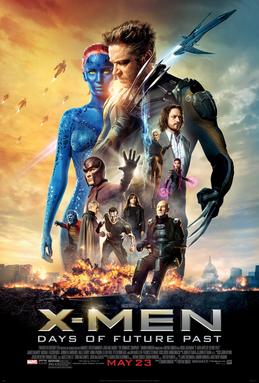
X-Men: Days of Future Past

In a dystopian future, the Sentinels – giant adaptive robots – hunt and exterminate mutants and oppress their human allies. A group of mutant survivors led by Professor Charles Xavier (Patrick Stewart) and Erik “Magneto” Lensherr (Ian McKellen) devise a plan to send Wolverine (Hugh Jackman) back to 1973 to prevent Mystique (Jennifer Lawrence) from assassinating Sentinel creator Bolivar Trask (Peter Dinklage) and making him an anti-mutant martyr. Upon arrival in the past, Wolverine must also recruit and reunite reluctant younger Xavier (James McAvoy) and a dangerous younger Magneto (Michael Fassbender), who have had an ugly falling out.

When Superman reversed time by flying rapidly around the Earth in 1978, he helped codify the superhero movie as escapist idealism, a genre where anything could happen with the thinnest of explanations. Later films would challenge that, of course: Christopher Nolan’s Batman trilogy achieved an unprecedented level of gritty realism while this year’s Captain America: The Winter Soldier was both cynical and topical. This latest entry into the X-Men film series feels like a marriage of those two competing visions, bringing together the fantastic and the fathomable, the big ideas and the personal struggles. In a less abstract sense, Days of Future Past also welds the storylines of the original X-Men trilogy and the First Class reboot. That a film can make any conceivable sense of all of these disparate influences is commendable; that it does so this well is remarkable.

It helps that nearly every aspect of Day of Future Past’s production is blessed with proven talent. Bryan Singer (who helmed the first two films in the aforementioned trilogy) is back as director, bringing with him X2 editor/composer John Ottman and much (look for Halle Berry’s Storm, Shawn Ashmore’s Iceman and several cameos) of that film’s cast. They join First Class’s Matthew Vaughn and Simon Kirnberg (writers/producers) and returning cast, minus a few inter-film casualties. The source material is a modified version of X-Men writer Chris Claremont’s well-received miniseries of the same name, and the newcomers include a Golden Globe winner (Dinklage) and a current TV star (American Horror Story’s Evan Peters). If you are going to cram too many characters and creative visions into a film, this is the way to do it.

But there is more to this movie’s appeal than a preponderance of big names. It delivers a healthy dose of introspection and character growth without sacrificing entertainment. In its lighter moments, it revels in Wolverine one-liners, gaudy 70s fashions, and carefully crafted allusions and in-jokes. Peters, in his brief role as Quicksilver, is hilariously flippant, using his character’s super speed to slow down time and cause foes to punch themselves in the face. On the other hand, this is no light-hearted romp. McAvoy’s Xavier is a broken, jaded alcoholic who must rediscover hope and empathy while Mystique must grapple with what evil she feels is necessary for the greater good. And then there is Fassbender’s young Magneto, the Holocaust survivor who completes his transformation into an utterly ruthless mutant supremacist without, astonishingly, sacrificing audience sympathy. Issues of identity and a prominent existentialist current run through this movie, lending substance to the comic book canard of using power responsibly.

Despite all it has going for it, Days of Future Past also harbors some significant flaws. The premise, which isn’t even time travel (Wolverine’s “consciousness” is sent back 50 years to his 1973 body) is ridiculously convoluted, even by comic book standards. Several prominent characters are shunted aside, including Ellen Page’s Kitty Pryde, protagonist of the comic book miniseries. And despite the chaos his creations unleash, Dinklage’s Trask isn’t a particularly threatening villain. Though unethical, he lacks the menace of X2’s fanatical William Stryker (ironically, a young Stryker is Trask’s subordinate here) or various incarnations of Magneto.

Purists will likely hate the changes to the storyline and non-fans may find the character count confusing, but for the vast viewership that lies in between, Days of Future Past stands several notches above standard superhero fare, even in this age of elevated expectations. Stylish, well-acted, thoughtful, and kinetic, it has the added bonus of erasing its much-loathed predecessors (The Last Stand and Origins: Wolverine) from continuity and establishing the next film (Apocalypse) in the still-vibrant series. Not bad for a patchwork composite.


8.5/10

Monday, May 19, 2014

August: Osage County

The suicide of alcoholic poet Beverly Weston (Sam Shepard) brings his family together for a funeral in rural Oklahoma. His widow, Violet (Meryl Streep), is a shamelessly sharp-tongued pill addict suffering from oral cancer. Oldest daughter Barbara (Julia Roberts) is as headstrong as her mother, bringing her into conflict with her husband (Ewan McGregor) and teenage daughter (Abigail Breslin) alike. Middle daughter Ivy (Julianne Nicholson), who stayed behind in Oklahoma, is viewed as a disappointment and is secretly in love with her cousin, Little Charles (Benedict Cumberbatch). Youngest daughter Karen (Juliette Lewis), who fled to Florida, is oblivious to the sleazy behavior of her new fiancé, Steve (Dermot Mulroney). Together, the family tries to pick up the pieces, but the secrets they have been keeping from one another frequently threaten to boil over.

Tracy Letts’ adaptation of his Pulitzer-winning play pushes the boundaries of how much misery a film can inflict upon an audience without losing its attention. Impeccably acted and darkly comedic with a mean streak a mile wide, August: Osage County is an emotionally wrenching melodrama whose staginess sometimes gets the better of it.

To put it simply, subtlety is not in Letts’ lexicon. His characterization verges toward universally toxic, and while this makes for bold and funny moments, it takes a stellar cast to turn the Westons from caricatures to characters. A few of them are clear in their alignment (Chris Cooper’s easygoing elder Charles is hard to dislike while Mulroney’s Steve has no redeeming qualities), but most reveal in their complexity. The always reliable Streep attacks her role with aplomb, showing Violet to be as much a victim of circumstance as a selfish manipulator. Roberts does some of her best dramatic work as the foul-mouthed Barbara, whose attempts to keep her family together fail despite the force of her personality. Cumberbatch is surprisingly effective going against type as Little Charles comes across as a good-natured ne’er do well, and Margo Martindale is solid as his cynical, disapproving mother. On the other hand, McGregor and Breslin feel underutilized, a shame given their talents.

If you can look past the strength of the acting – admittedly, no easy task – what remains is decidedly less impressive. August: Osage County is a decidedly talky film with little in the way of plot or inertia. Though there are a few shots of the desolate plains, the setting comes across as occasional window dressing rather than a significant part of the proceedings, and we can’t accept Osage as some kind of godforsaken place unless we see more of it. John Wells, a perfectly competent television director (ER and The West Wing), doesn’t dazzle anyone with technique here. The film feels small and a bit claustrophobic at times and could benefit from more texture.

August: Osage County is one of those films that resonates because it punishes. Watching it will leave you in awe of the cast and emotionally drained. It isn’t until after the fact that you will wonder what it all added up to.


7.75/10

Sunday, May 18, 2014

The Lego Movie

In the Lego universe, megalomaniacal Lord Business (Will Ferrell) seizes a weapon called the Kragle from the wizard Vitruvius (Morgan Freeman) and blinds him, but not before Vitruvius prophesizes that “the Special” will find a Piece of Resistance that will thwart Business’ plans. Eight years later, the Piece is accidently discovered by – and fused to – Emmet Brickowski (Chris Pratt), an ordinary city-dwelling construction worker who is swept up by Vitruvius’ disciple Wyldstyle (Elizabeth Banks) in a plot to fulfill the prophecy and prevent now-President Business from freezing the world. To the consternation of all involved, Emmet proves to be a thoroughly unimaginative, mediocre conformist. However, Vitruvius never gives up hope that Emmet can become something more.

Directed and written by Phil Lord and Chris Miller (the team behind Clone High and the 21 Jump Street reboot), The Lego Movie defies categorization. Though merchandise-driven, it satirizes the homogeneity of corporate America. While a kid-friendly animated feature, it contains humor and cultural allusions designed to appeal to adult viewers. Part comedy, part adventure, and part message movie, its disparate pieces (pun intended) produce plenty of inconsistencies, but it entertains more often than not.

The building blocks of The Lego Movie’s appeal are its clever script, top-notch voice cast, and skillful animation. At first, the story evokes another dip into the clichĂ©d “chosen one” well, but it isn’t long before it becomes apparent that the plot is ultimately a subversion of that trope. Emmet isn’t just a loveable loser: his inadequacy is an outright liability. Ironically, his blandness is his lone saving grace for much of the film as it keeps him under the radar. In a further deconstruction, the heroes, a presumptive ragtag bunch of misfits (including a cyborg-pirate of sorts and Batman!), are a deeply dysfunctional lot. While the conclusion that the film reaches is ultimately rather pat – any of us can be special if we tap into our potential – the plot takes enough interesting turns before dropping that anvil on us. Along the way, Legophiles, comic book fans, and other pop culture connoisseurs will revel in the number of in-jokes, stealth puns, and other shout-outs. Everything from Austin Powers (sharks with laser beams!) to Clash of the Titans (“Release the _______!”) gets some play here.

The cast includes a mixture of current TV stars (Pratt, Nick Offerman as the aforementioned cyborg pirate, and Allison Brie as an overly chipper unicorn-cat) and screen veterans (Freeman, Ferrell, Banks, and Liam Neeson as a morally conflicted corrupt police officer), all of whom do good work here. Among the smaller roles, big names make for amusing cameos. The Green Lantern shows up as an overly eager fanboy to a reluctant Superman, and they are played by 21 Jump Street partners Jonah Hill and Channing Tatum. Meanwhile, Cobie Smulders, fresh off of playing Marvel character Maria Hill, pops up as Wonder Woman, a live-action role she was previously considered for.

Purists may bemoan The Lego Movie’s lack of traditional animation, but the computer graphics mimic stop-motion somewhat convincingly. There is a certain amount of comforting fidelity in the way the Lego characters look and move, blockily, across the screen.

Undoubtedly, The Lego Movie’s biggest misstep – and it’s a significant one – is when it enters full-bore message mode toward the end. While this is necessary to an extent (it accompanies a major reveal and it gives the proceedings some thematic substance), the execution is saccharine, momentum-draining, and nearly kills the audience’s interest. That the movie is able to recover from this (and from a particularly grating theme song) is a testament to its overall capacity to entertain.

Toy-to-film adaptations should engender a certain amount of eye-rolling, but this irreverent, knowing take on the Lego phenomenon (as well as the state of entertainment in general these days) shows that they can be fun as well.


8/10