Showing posts with label Science Fiction Films. Show all posts

Tuesday, March 5, 2024

Dune: Part Two


Presumed dead, Paul (Timothee Chalamet) and his mother Lady Jessica (Rebecca Ferguson), survivors of the massacred House Atreides, have been hiding out on the desert planet Arrakis. Paul hopes to rally the native Fremen to strike back at their mutual enemy, House Harkonnen. But first, he must learn their ways. As he does so, tribal leader Stilgar (Javier Bardem) suspects that he might be their long-prophesized messiah. Chani (Zendaya) rejects the prophecy as a dangerous superstition even as she grows closer to Paul. Meanwhile, scheming Baron Harkonnen (Stellan Skarsgard) presses his nephew Rabban (Dave Bautista) to crush the Fremen, knowing that Rabban’s younger brother Feyd-Rautha (Austin Butler) waits in the wings as a potential replacement. The Emperor Corrino (Christopher Walken), having allied with the baron to depose Paul’s father, now fears an uprising while his daughter, Princess Irulan (Florence Pugh), seeks to learn the Reverend Mother Mohiam’s (Charlotte Rampling) plans for the future of the throne.


The follow-up to Denis Villeneuve’s successful 2021 adaptation of Frank Herbert’s sci-fi classic, Dune: Part Two manages, improbably, to surpass it. Aesthetically breathtaking and powerfully acted, it avoids the first film’s second-half lag. Though ten minutes longer, Part Two feels like a shorter film thanks to more even pacing and plenty to occupy the audience’s attention.


Advances in filmmaking technology have made what would have been revolutionary years ago seem commonplace today, but even by these jaded standards, Dune: Part Two is a visually impressive film. Whether showing an immense sandworm crashing through desert dunes or a gladiator duel in a crowded coliseum (in black and white, no less), Greig Fraser’s cinematography is striking. Hans Zimmer returns to provide another powerful score.


The story that accompanies this marvel is largely faithful to the source material albeit with a few pragmatic excisions and expansions. Notable in the book largely for being its narrator, Princess Irulan here takes on a greater role in trying to preserve her family’s standing. Chani here is far less supportive of Paul as his legend grows. This gives her more agency – and a chance for Zendaya to show off her acting chops – but though intended as a voice of reason amid religious fervor, she often comes across as just as much of a zealot (an atheist ethnonationalist rather than a religious one) as the fundamentalists she condemns.


Both Zendaya and Bardem felt like odd casting choices the last go-around: the Fremen are Bedouin-inspired, and neither actor is Arabic. However, both seem to have grown into their roles, and Stilgar in particular no longer seems like comic relief. Chalamet handles the lead role, capturing Paul’s virtuousness and rage alike, but he leans more adequate than excellent. Fortunately, he doesn’t have to do more with so many other strong performers around him. Ferguson continues to shine as a woman literally and metaphorically possessed, and Josh Brolin finally gets to do something besides scowl. A nearly unrecognizable Butler makes up for Feyd Rautha’s absence from the last film by stealing scenes in this one. He matches Skarsgard’s bald, pale appearance, gravelly voice, and violent cruelty albeit with a sense of honor in combat that the other Harkonnens lack.


Literary adaptations often walk a fine line between fidelity and innovation, and a step too far in either direction risks losing the audience. Exceptions as they may be, Dune: Part Two and its predecessor have shown that it is possible to have your cake and eat it too. 

Thursday, October 28, 2021

Dune: Part One


On the desert planet Arrakis, amid huge sandworms and hostile Fremen tribesmen, lies the spice mélange, a valuable substance that fuels interstellar travel. Emperor Corrino has transferred governorship of the planet from cruel and oppressive House Harkonnen to noble House Atreides, a gesture more trap than gift. Nevertheless, Duke Leto Atreides (Oscar Isaac) seeks to secure his position by allying with the Fremen. Meanwhile, his partner Lady Jessica (Rebecca Ferguson) has been training their son Paul (Timothee Chalemet) in the ways of the Bene Gesserit, the powerful and secretive order to which they belong. Paul has been haunted by vivid dreams of a Fremen girl and armies killing in his name. One way or another, the house will meet its fate in the desert.


Frank Herbert’s iconic sci-fi novel is no stranger to the screen, having birthed a bizarre proposed 1970s adaptation by Alejandro Jodorowsky, a bizarre and offputting realized 1980s adaptation by David Lynch, and a less bizarre but more forgettable television miniseries in 2000. Denis Villenueve’s 2021 epic, which spans the book’s first half (a sequel is in the works), is by far the most successful of the lot. A faithful adaptation that distills when it needs to, Dune is crafted with vision and care. It is exciting and atmospheric enough to draw in even those that haven’t read the book, yet its latter-half pacing may test the audience’s patience.


As with Blade Runner 2049, Villenueve shows a knack for capturing the essence of what came before while still leaving his own stamp. Dune doesn’t skimp on the visual spectacle, offering everything from the endless sands (and terrifyingly huge sandworms) of Arrakis to the dark, cold hellishness of Harkonnen homeworld Giedi Prime and all shades in between. A pivitol battle, downplayed in previous adaptations, is given the full battle scene treatment here. A Hans Zimmer score, one of his best in recent years, accentuates the majesty and tension.


The actors generally do commendable work though several casting and character decisions don’t sit quite right. Among those that do work are Isaac, Ferguson (especially), and Chalomet (as with previous Pauls, he’s older than the character, but he pulls it off). Skellan Skarsgard’s take on the evil Baron Harkonnen is appreciably toned down. He’s still sinister and dangerous, but he’s not over-the-top. On the other hand, the Baron’s advisor Piter (David Dastmalchian) loses the source material’s twisted personality, much like Atreides weaponsmaster Gurney Halleck (Josh Brolin) loses his musician side (the gruff warrior shtick calls to mind Brolin’s Deadpool 2 performance, but that was played for humor). Duncan Idaho is given an expanded role relative to previous adaptations, and while Jason Momoa is a fairly limited actor, he at least has the combat prowess down. Javier Bardem, on the other hand, is anything but limited, yet he feels slightly miscast here. The sequel will tell how Zendaya fares as Chani since her role here is small.


Despite a robust beginning, Dune lags about half to two-third of the way in. Paul and Jessica spend what seems like a long time wandering the desert, an indulgent choice on Villenueve’s part. Pacing recovers well enough toward the end to set up the film’s next installment, but Dune would have lost little were it fifteen minutes short.


For sci-fi fans and those who enjoyed the novel, Dune is a must: a grand spectacle that consistently impresses. For everyone else, the pull may not be quite as strong, but there’s still more engagement than slog.

Friday, April 2, 2021

Tenet


The unnamed Protagonist (John David Washington), a CIA agent, is recruited by an organization called Tenet to track the sale of “inverted” weapons that fire backward through time. Working alongside Neil (Robert Pattinson), the Protagonist traces inverted bullets to arms dealer Priya (Dimple Kapadia), who reveals that her weapons were sold to Russian oligarch Andrei Sator (Kenneth Branagh). To get close to Sator, the Protagonist approaches his estranged wife Kat (Elizabeth Debicki), a crooked art appraiser blackmailed and controlled by Sator. Though distrustful of one another, the CIA agent and the oligarch form an uneasy partnership to steal a shipment of plutonium, but threats from the future loom over everything.


Tenet is an apt showcase for the best and the worst of Christopher Nolan’s capabilities. Its action set pieces – an opera house extraction mission, a literal highway robbery and subsequent high-speed chase, and an airport fight, among others – are masterfully shot, tense and exhilarating. They pair perfectly with Ludwig Gonarsson’s score. Yet Tenet took one of the most audience-alienating aspects of Interstellar – time travel backed by theoretical physics – and made it integral to the film. What could have been time-hopping James Bond far too often feels like a confusing and self-indulgent attempt to contextualize the on-screen action.


If the audience seems bogged down by the film’s complexities and demands, the cast does not. Washington, the son of Denzel, may lack his father’s range, but he brings an unflappable presence and an ex-NFL player’s athleticism to the leading role. The ever-versatile Pattinson takes a break from playing tortured loners in a largely sympathetic turn. That same quality extends to Debicki’s Kat, impressive given that the character is also a bitter schemer. In lesser hands, Sator would be simply another hammy Russian megalomaniac, but Branagh’s fatalistic nihilism and utter ruthlessness elevate him into something more terrifying.


Refreshingly cerebral at the start and hopelessly convoluted by the end, what Tenet lacks in coherence it makes up for in solid performances and visual spectacle.


Sunday, December 22, 2019

Star Wars: The Rise of Skywalker


After assuming command of the First Order, Kylo Ren (Adam Driver) faces a threat to his power in the form of the still-alive Emperor Palpatine (Ian McDiarmid), who pledges him an empire to command if he eliminates Rey (Daisy Ridley), the Jedi-in-training with whom he shares a psychic bond. Though encouraged by Resistance leader General Leia Organa (Carrie Fisher), Rey continues to experience self-doubt. Meanwhile, her friends Poe Dameron (Oscar Isaac) and Finn (John Boyega) learn of a mole in the First Order. Together, they seek to ferret out Palpatine while trying to stay one step ahead of Ren’s forces.

As the much-anticipated final film in the 42-year-old Skywalker Saga, Star Wars Episode IX had the unenviable task of appealing to fans while still finding enough novelty to justify its existence. Its predecessor, The Last Jedi, did plenty of the latter arguably at the expense of the former. The Rise of Skywalker, in contrast, appears an overcorrection: a give-them-what-they-want retreat into familiarity that still manages to entertain even if it doesn’t inspire.

First, the good: the film does many of the “Star Wars things” fairly well. Lightsaber duels, starfighter assaults, and planets with extreme climates are all accounted for. J.J. Abrams may lack the aesthetic flair of Rian Johnson or the imagination of George Lucas, but he is still a competent action director. Fast-paced and fluid, The Rise of Skywalker feels shorter than its 142-minute run-time.

While the film’s writing is, once again, a mixed bag, there are some compelling performances to be found here. Ridley shows impressive range as Rey discovers the full extent of her origins and seizes control of her fate. Driver, who spent most of the previous two films alternating between creepy monotones and rage tantrums, finally has the room to do more with Kylo’s characterization. Poe and Finn do a great job of amusingly trolling and chiding each other (though the former’s inspirational speeches continue to sound wooden and forced). Since Fisher died in 2016, Leia’s appearance is achieved through unused footage from The Force Awakens. Those fearing an awkward Livia Soprano-like hack job needn’t worry: it’s tastefully done, all things considered.

Unfortunately, not all of the old guard – or the new – receive such respectful treatment. McDiarmid’s Palpatine is full of the same wonderfully hammy menace fans have come to expect, but a returning Billy Dee Williams is given very little to work with. He’s less roguish Lando and more generic elder statesman. Resistance mechanic Rose Tico (Kelly Marie Tran) and First Order General Hux (Domhnall Gleeson) both see their screen time reduced and their presences diminished from previous outings. Meanwhile, new characters are introduced and shoehorned into their former roles without much development of their own. First Order General Pryde (Richard Grant) is clearly meant to evoke Grand Moff Tarkin and is implied to be a loyalist holdover from the Empire, but he’s forgettably one-note, and neither Poe’s former criminal associate Zorii (Keri Russell) nor Resistance ally Jannah (Naomi Ackie), an ex-Stormtrooper just like Finn, fare much better.

A greater letdown, however, is the extent to which The Rise of Skywalker relies on contrivance. Several characters presumed dead turn up alive under the flimsiest of pretexts. Locations and visual elements from the original trilogy suddenly take on new significance to justify their reappearance. Because the film risks so little and hews so closely to what has been done before, it never is able to deliver the level of pathos that a grand finale demands.

Though it plays it safe to an annoying degree, The Rise of Skywalker will probably see its reputation improve with age. After all, Return of the Jedi was similarly scorned at one point, and there are hardly any Ewoks this time. Original and daring it is not, The Rise of Skywalker nevertheless provides brisk, breezily satisfying entertainment and uplift.

Sunday, May 27, 2018

Solo: A Star Wars Story

A young Han Solo (Alden Ehrenreich) finally escapes the service of gang leader Lady Proxima (voiced by Bonnie Hunt) on the backwater planet of Corellia, but his lover Q’ira (Emilia Clarke) is left behind. After being kicked out of the Imperial Flight Academy and deserting from the Imperial Army, Han meets his future partner, the Wookie Chewbacca, and joins up with a group of thieves led by Tobias Beckett (Woody Harrelson). Beckett is in debt to the Crimson Dawn syndicate, and its ruthless leader, Dryden Vos (Paul Bettany) will kill them all unless they complete a daring and difficult heist of the valuable and volatile fuel coaxium. To oversee the mission, Vos sends along Q’ira, who has entered his service. But first, they will need a ship, which leads the group to try to obtain one from veteran smuggler Lando Calrissian (Donald Glover).

Depending on whom you ask, this movie’s cardinal sin ranges from not featuring a digitally de-aged Harrison Ford to deposing original directors Phil Lord and Christopher Miller (The Lego Movie) to even existing. Replacement director Ron Howard inherited a project brimming with both baggage and backlash, and though Solo is no one’s idea of an instant classic, it could have turned out far worse.

Despite the eyebrows raised by his casting, Ehrenreich does a fairly decent job as young Han (one that, in fact, comes Harrison Ford approved). He has the moral flexibility, the overconfident swagger, and the banter with Chewie down though this version is a good deal more idealistic than audiences are accustomed to. Presumably, that trait will be lost in the years between Solo and A New Hope.

The supporting cast is competent though characterization is somewhat limited (a curious blunder by successful Star Wars scribe Lawrence Kasdan). When Han is reintroduced to Q’ira, she is presented as a changed woman with a murky past, and though the film does not explore said past, Clarke’s performance gives her a conflicted quality. Phoebe Waller-Bridge does standout voicework as L3, Lando’s stubborn, irreverent droid co-pilot, and she gets some of the film’s funniest lines. Lando himself, however, is a bit of a disappointment. Glover has exactly the right screen presence, but the screenplay never treats the character as anything more than a joke. Meanwhile, Harrelson makes for a cynical, opportunistic mentor, but given the losses he suffers, one would expect more emotional range.

Solo’s plotting and presentation are similarly uneven. Howard is a competent director though not a particularly imaginative one, and this is a film that doesn’t stray terribly far from formula. An early attempted train heist plays like something that has done before, and if you predicted a certain character wasn’t going to make it past a certain point, you were probably right. That said, the stakes do get raised in the latter half as does the visual oomph. Watching the Millennium Falcon zip across dangerous skyscape with even more dangerous cargo is legitimately thrilling. Despite the absence of any Jedi, the film also foreshadows parts of A New Hope and establishes ties to the more familiar Star Wars mythos though your mileage may vary on how well this film integrates into the larger canon.

All told, Solo is an enjoyably exciting albeit shallow and not terribly memorable flick, lesser not only than a proper Star Wars film but also fellow spinoff Rogue One.


7.5/10

Monday, December 18, 2017

Star Wars: The Last Jedi

Pursued through space by the nefarious First Order, the Resistance faces dwindling fuel and a leadership crisis. Former stormtrooper Finn (John Boyega), mechanic Rose Tico (Kelly Marie Tran), and droid BB8 travel to resort planet Canto Bright to recruit a master codebreaker who will allow the Resistance to disable the First Order’s tracking device. They are aided by ace pilot Poe Dameron (Oscar Isaac), whom General Leia Organa (Carrie Fisher) recently reprimanded for his recklessness. Meanwhile, former scavenger Rey (Daisy Ridley) has journeyed to remote Ahch-To to recruit Jedi master Luke Skywalker (Mark Hamill) to the Resistance’s cause and learn more about her burgeoning Jedi abilities. Luke, however, wants nothing more than to be left alone as he is still stung by the defection of his nephew Ben Solo (Adam Driver) to the dark side. Now, as the First Order operative Kylo Ren, Ben uses his psychic link to Rey to try to win her allegiance while she does the same to secure his.

For all of George Lucas’s half-baked ideas and for all of the valuable contributions made by others (his ex-wife/editor Marcia, screenwriter Lawrence Kasdan, and producer Gary Kurtz especially), Star Wars films have, for the most part, been a continuation of a story Lucas began telling forty years ago. Even 2015’s The Force Awakens, a Lucas-free affair helmed by J.J. Abrams – owed an obvious debt to 1977’s A New Hope. The eighth episode in the series sees not only a new writer/director (Rian Johnson, best known for Brick and Looper) but one who would dare take the franchise in a different direction. This, of course, raised the ire of longtime fans, for whom such deviations are heresy. Factor out such allegiances, however, and The Last Jedi is still a divisive film: beautifully shot and convincingly acted but poorly plotted and clumsy in its messaging.

At two-and-a-half hours, The Last Jedi is the longest Star Wars film to date, but it does not have the feel of a long movie. It’s a fluid film that maintains tension and excitement throughout. Spacecraft combat, chase sequences, and hand-to-hand fights make for lively viewing. From the creepy caves of Ahch-To to the blood red mineral deposits of the planet Crait, there are some striking visuals. Johnson complements this rich palette with a preference for practical effects and puppetry rather than conspicuous CGI. Were it not for a ridiculous shot of Leia using Force powers to twirl through space, this would easily be best-looking Star Wars film to date. John Williams’ music remains as fitting as ever.

While Johnson thrives as a director, his writing very nearly sinks this film. Not since Dawn of Justice has an otherwise credible big-budget affair been this badly plotted, and a large chunk of the problem boils down to misplaced priorities. The Finn/Rose sidequest to Canto Bright comes across as a waste of time when the codebreaker they retrieve (Benicio Del Toro in an underwritten role) proves not all that he cracked (pun intended) up to be. Instead, it not only pads the film but also plays as a flimsy pretext for tossing in broadsides against economic exploitation and animal cruelty. This is still more that can be said for the needless conflict between Poe and awkwardly introduced Resistance Vice Admiral Holdo (a purple-haired Laura Dern, who is given more to work with), a point of contention that could have easily been avoided had Holdo filled Poe in on her plan when he asked. Frustratingly, Johnson chose these threads as worthy of emphasis while deeming an explanation for the First Order’s sinister Supreme Leader Snoke (voiced by Andy Serkis) surplus to requirements.

Johnson also likely won few admirers by transforming Luke from a triumphant symbol of hope into a bitter and scared old man. However, this decision actually pays off: it adds an edge to Luke’s do-gooder character that was previously missing, and it gives Hamill a chance to do more actual acting. Though best known for his voicework these days, he proves up to the task. He’s in good company: with the exception of Del Toro (who, again, had very little to work with), most of the cast puts on a good showing. The late, much-missed Fisher gives one hell of a final performance as Leia, imbuing the ex-princess with both steely resolve and well-timed sarcasm. Isaac and Boyega continue to grow their characters as Poe learns some measure of restraint while Finn gains the willingness to lay his life on the line for a cause. The Rey-Kylo dynamic continues to fascinate, and both Ridley and Driver do a great job of projecting inner anguish.

Like its predecessors, The Last Jedi offers annoying kid-friendly critters. This time, they take the form of porgs, a type of big-eyed bird. The best that can be said is that the audience isn’t the only one suffering in their presence: they are a thorn in Chewie’s side throughout the film, something that is played for laughs. Speaking of humor, The Last Jedi consciously plays it up at times. It’s a great deal more conspicuous than the improvised Han Solo quips of yore. Sometimes, it works (Luke acknowledges that Rey’s home planet is pretty much nowhere); in other places, it feels forced.

At one point in The Last Jedi, Kylo comes to the conclusion that the only way for him and Rey to find a way forward is to destroy what remains of the past. At first glance, Johnson seems all too comfortable with that notion, but by the end, The Last Jedi has sewn hope for the future, both in story and out. It is unfortunate that getting there was such a contrived, if exhilarating, mess.


7.75/10

Friday, October 13, 2017

Blade Runner 2049

Synthetic human “replicants” are designed for slave labor, but after repeated uprisings, their production is banned. By 2049, Niander Wallace (Jared Leto) has circumvented the ban by creating a new series of (supposedly) completely obedient replicants. One of them, “K” (Ryan Gosling), works as an LAPD “blade runner” tasked with hunting down and “retiring” older models. But when K discovers evidence that replicants are capable of reproducing, his loyalties are tested. His commanding officer (Robin Wright) wants the evidence destroyed to prevent a civil war, Wallace wants to harness the reproductive abilities for his own purposes, and K wants to find out the truth.
Though it’s hard to fathom given its outsized influence, the original Blade Runner was not a well-received film when released thirty five years ago. This can be chalked up to a combination of studio interference (including a terrible voiceover and altered ending) and being ahead of its time. In contrast, 2017’s much-anticipated sequel has received both more creative liberty (as the nearly three-hour run time attests) and more immediate praise despite being, in many ways, a lesser film.
It should be noted, however, that “lesser” does not equate to “bad,” especially when given such an iconic measuring stick. For instance, 2049 is one of the more visually impressive films of recent memory, surpassing even the original. It retains the dark, crowded, neon-infused cityscapes and adds to it an exploration of the ruined world around Los Angeles. San Diego is a ruinous garbage dump, Las Vegas is a golden irradiated desert, and elsewhere, snow falls like ashes. Hans Zimmer’s score evokes the futuristic tones Vangelis used in the original film but with the tension ratcheted up at key moments of discovery (Zimmer has proved to be a master of this).
Though original director Ridley Scott gave up his chair for a producer’s role, his replacement, Denis Villenueve (known for Prisoners and Sicario) has proven himself more than capable. 2049 is a tightly controlled film that doesn’t feel its length due to an absence of lags and clutter. Returning screenwriter Hampton Fancher penned a script that makes a few of its turns predictable while still allowing for some misdirection and suspense (The emergence of a certain group toward the end is a blatant sequel hook but ultimately a forgivable one).
On the other side of the camera, Gosling gives a credible performance as the competent yet conflicted K, Sylvia Hoeks radiates unstable menace as Wallace’s enforcer Luv, and despite having far less screentime this go-around, a returning Harrison Ford gives arguable a better performance as Deckard, the now ex-blade runner touched by loss. In smaller roles, Leto gives another singularly creepy performance as Wallace, a ghoulish blind visionary while Dave Bautista continues to expand his acting range as a haggard yet still formidable replicant ex-combat medic-turned-farmer. The only character to really strike a false note was Joi, K’s holographic A.I. girlfriend, but that had less to do with Ana de Armas’s wide-eyed benevolence than it did with the way the character was written. Though she frames it has her own evolution/actualization, Joi’s role throughout the film is to continue to support K in various capacities, a rather sexist take on becoming more real.
Despite the richness of the scenery and (most) performances, 2049 lacks the depth and complexity that it deserves. The original film trafficked in moral ambiguity: Deckard was not a noble or particularly competent hero, rogue replicant Roy Batty had a conscience and a reasonable goal (survival) despite his violent tendencies, and replicant creator Dr. Tyrell, for all of his amorality, was an avuncular presence. In contrast, K is both more effective and more heroic, Luv is loyal yet psychopathic, and Wallace is an overtly sinister and megalomaniac. Beyond lacking complex characterization, 2049 also feels thematically underdone. The original asked some very pointed questions about what it means to be human; here, we’re entreated to explorations of “real” vs. “created,” but perhaps because so many conversations have taken place in the past thirty five years, it doesn’t feel nearly as profound.
Blade Runner 2049 is an aesthetically dazzling film with strong performances to match the high production values. However, it frustratingly never digs as deeply as it needs to.


8.25/10

Saturday, May 13, 2017

Guardians of the Galaxy Vol. 2

Months after saving the planet Xandar, the Guardians of the Galaxy have been hired on by the elitist Sovereign race to protect their merchandise from a monstrous creature. After offending the haughty Sovereign priestess Ayesha (Elizabeth Debicki), the team is forced to flee, only to be rescued by Ego (Kurt Russell), the human form of a god-like sentient planet and the long-lost father of Peter Quill (Chris Pratt). Ego promises Peter immortality and a sense of belonging, but Gamora (Zoe Saldana) is suspicious. Meanwhile, Gamora’s sister Nebula (Karen Gillan) is out to make her suffer for always besting her as a child, and the Sovereign have hired the pirate-like Ravagers, led by Quill’s mentor Yondu (Michael Rooker), to track the team down.

Despite the Marvel Cinematic Universe’s success up to that point, 2014’s Guardians of the Galaxy still proved to a surprise hit, as it featured lesser known characters, a director (James Gunn) with a checkered pedigree, and a zanier tone than any MCU film had employed up to that point. In this 2017 follow-up, the element of surprise is gone. Audiences are no longer wondering if a film like this can work; they are expecting it to. Fortunately, for the most part, it does.

As with its predecessor, Vol. 2 deftly blends action, humor, and cheesy 70s pop songs. Ego cites “Brandy” by Looking Glass as a metaphor as his time on Earth with Peter’s mother while the soundtrack ironically backs Yondu’s use of a whistle-controlled arrow to wreak untold mayhem. To this formula, the sequel adds a healthy dose of character and thematic development. Ego tries to convince Peter of his rightful place in the grand scheme of the universe, Gamora and Nebula examine their culpability for each other’s suffering (amid trying to repeatedly blow each other up with comically oversized weaponry), Yondu and perpetually angry genetically modified raccoon Rocket (voiced by Bradley Cooper) bond over being thought the worst of, and Drax (Dave Bautista, once again hilariously and obliviously brusque) assures Ego’s empath Mantis (Pom Klementieff) that her ugliness is a sign that she must be a good person.

While a deeper and more heartfelt movie than its predecessor, Vol. 2 does suffer from a loss of freshness and a bit of ending fatigue, both in terms of the CGI-heavy last battle and the mawkish, protracted finale that follows it. Thankfully, these missteps are mostly offset by joyfully insane credits (lots of random dancing and a David Hasselhoff song, of all things) and a slew of post-credits scenes that both set up future characters and lend more context to existing ones (such as Sylvester Stallone’s Ravager leader Stakar or Stan Lee’s various cameos).

Ultimately, whether or not Vol. 2 is better or worse than Vol. 1 or places expectations for Vol. 3 too high or too low is somewhat beside the point. The fact that there was a Vol. 2 is enough to appreciate in and of itself, and that it was as entertaining as it was is icing on the cake. Here’s to these cosmic misfits and the idea that superhero films don’t have to be formulaic to be successful.


8/10

Wednesday, December 21, 2016

Rogue One

After sending his daughter Jyn into hiding, scientist Galen Urso (Mads Mikkelsen) is forcibly recruited by Imperial weapons developer Krennic (Ben Mendelsohn) to work on the Death Star. Years later, Jyn (Felicity Jones) is freed from prison by Rebel Cpt. Cassian Andor (Diego Luna) and his droid K2SO (voice of Alan Tudyk), who need her to forge an alliance with Rebel extremist Saw Gerrera (Forrest Whitaker), who is holding an Imperial defector (Riz Ahmed) carrying a message from Galen. En route to Gerrera, the Rebels join up with Chirrut (Donnie Yuen), a pious blind warrior, and Baze (Jiang Wen), his cynical mercenary friend. Meanwhile, Krennic is facing increased pressure to prove the Death Star’s effectiveness in the face of skepticism from his rival, Grand Moff Tarkin.

Given the renewed interest in the Star Wars franchise stirred by the success of Episode VII, it is easy to see Rogue One, a side story, as an unnecessary attempt to keep milking the cash cow. However justified this cynicism may seem, for a placeholder (until Episode VIII arrives next year), Rogue One is a lot better than it needs to be. For Star Wars fans, it bridges the gap between Episode III and the original/Episode IV, adding context to the earlier stories while bringing back some familiar names and faces (such as Jimmy Smits as Bail Organa and, notably, James Earl Jones as Darth Vader). For those who typically find Star Wars silly or are simply not well-versed in its mythology, Rogue One works well enough as a stand-alone film featuring a darker tone and a lack of annoying kid-appeal characters.

Though it clocks in at over two hours, Rogue One moves briskly with no real lags. Director Gareth Edwards previously helmed 2014’s Gozilla reboot, and he seems to have ironed out the pacing problems that plagued that film. Edwards brings to Rogue One a sharp eye for stylized action, deftly blending martial arts, shootouts, and spacecraft battles. The latter remain a bit visually disorienting – too many objects on screen to keep track of at a time – but no moreso than previous Star Wars films, and the battle that takes up the last half-hour of the movie (during which dogfights play a key role) is executed impressively well. Edwards also helps bring to life new planets, and the changes of scenery are refreshing even if some of the locales are destined to be fodder for the Death Star’s devastating power.

While two hours of kinetic, aesthetically pleasing combat and mayhem would have been enough to satisfy some viewers, Rogue One also manages, as best it can, to add some complexity to the franchise’s central good vs. evil conflict. The forces of the Empire are as malevolent and foreboding as ever, but they are not a monolithic evil. Here we get a look at the political maneuvering and brinksmanship within the Imperial ranks. The Rebels, for their part, take on a more morally ambiguous role than in previous films: Andor is willing to straight-up assassinate Galen if he believes it will halt the Death Star, and the leadership council is fraught with bickering. Though we know, by virtue of Rogue One’s place in the Star Wars chronology, that the movie will end on a hopeful note, it doesn’t take the easy way in getting there.

Unfortunately, that fixed place in the chronology makes for some stilted character development. There are definitely exceptions to this shortcoming: Jyn transitions from cynical criminal to someone who is willing to take up a cause, Andor rediscovers a measure of idealism after making many coldly pragmatic decisions, and Galen shows that it is possible to serve (however unwillingly) the side of darkness and maintain a measure of humanity. Not surprisingly, these roles were the best-acted, and Mikkelsen’s sympathetic turn is a welcome break from the antagonists he usually plays. Credit too goes to Tudyk, whose K2 is the prissy C3PO’s opposite: a combat capable, brutally honest, and insolent (though ultimately loyal). Beyond that, however, the characters are either static, underdeveloped, or both. Cool as he is, Chirrut is a zatoichi caricature, Baze seems to be just along for the ride, it is never made clear what drove Ahmed’s character to ultimately defect, and Krennic is too much of a one-note career climber to be truly threatening. Lastly, a woefully miscast Whitaker gives a distractingly bad performance. He’s supposed to be the Star Wars equivalent of Che Guevara, but instead he comes across closer to a less sinister Robert Mugabe: an aged, deeply paranoid former revolutionary. The screenplay (by Chris Weitz and Tony Gilroy) is funny in places, but there is also a fair amount of clichéd/uninspired dialogue and a general lack of quotable lines.

Rogue One lacks the grandeur, memorable characters, and world-building of a “proper” Star Wars film, but in unencumbering itself and accepting its place in the larger scheme of things, it also loses grating sidekicks and plot bloat. It is by no means a vital film, but it is definitely an enjoyable one.


8/10

Sunday, January 3, 2016

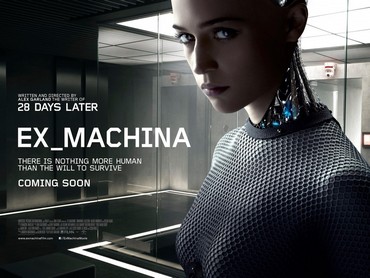
ex_machina

Programmer Caleb Smith (Domhnall Gleeson) is chosen by Nathan (Oscar Isaac), the CEO of the Bluebook software company, to spend a week at his isolated estate administering a Turing test to Ava (Alicia Vikander), an artificially intelligent robot that Nathan created. Though Caleb is at first excited by the opportunity, the more time he spends with Ava and Nathan, the more he comes to question the latter’s true motives, and he begins to wonder who is testing whom.

Written and directed by English sci-fi vet Alex Garland (28 Days Later), ex_machina is part paranoid thriller, part character study, and part philosophical reflection on the nature of humanity. It’s an intriguing film that keeps you guessing and leaves you thinking until the end, but it also leaves quite a bit of untapped potential on the table.

Aesthetically, ex_machina makes great use of both setting (the Norwegian landscape makes for some breathtaking exterior shots) and set design (the innards of Nathan’s multichambered estate give the film an appropriately claustrophobic feel). The electronica score by Geoff Barrow and Ben Salisbury makes for a fine accompaniment.

The real lure here, however, is the interplay between the characters. Aided by a talented cast, Garland is able to use ambiguity and misdirection to complicate an overly simple premise. As Nathan, a nearly unrecognizable Isaac hides his cunning behind a drunken jock façade, but even after the audience (and, eventually, Caleb) realizes there is more to him than meets the eye, his true motives leave viewers guessing. Is he a visionary who utilizes some shady tactics to everyone’s ultimate benefit, or is he a manipulative, selfish control freak who uses science to cloak his sociopathy? This uncertainty extends to his creation as well. Vikander convincingly portrays Ava as self-aware and worthy of Caleb’s (and the audience’s) empathy but enigmatic as well. How much of what she says and does reflects an autonomous will and how much is simply whatever Nathan programmed her to say and do? Of the three leads, Caleb is the least interesting. Though his requisite tragic backstory gives him something going on beneath the surface, he is, for most of the film, a nice guy who appears to be in over his head. Ordinarily, this would make for a disappointingly bland protagonist, but Caleb functions reasonably well as an audience surrogate. At any rate, contrast the characters played by Gleeson and Isaac here with their roles in Star Wars: The Force Awakens, and you’ll get a good idea of their impressive ranges.

The tensions between these characters build toward an ending that, while foreshadowed previously, still manages to catch viewers off-guard. It also leaves questions unanswered and fudges some continuity details. Despite this, ex machina is a film that lingers, not because of it indulges our appetite for the fantastic but because it grants an unsettling look toward a plausible future.


8/10

Monday, December 28, 2015

The Martian

In the not-too-distant future, a dust storm causes a manned mission to Mars to go awry. The crew of the Ares III is forced to evacuate, and astronaut Mark Watney (Matt Damon) is presumed dead and left behind. Watney, who turns out to be very much alive, must use his botany and engineering background to navigate a series of challenges that range from extending his food supply to establishing contact with Earth to eventually finding a way off of the planet. Meanwhile, news of Watney’s survival has created massive public pressure to bring the astronaut home, forcing NASA personnel to create a solution.

Many a time has a Matt Damon character been stranded somewhere, and billions of dollars and countless hours have gone toward retrieving him. In light of that, it’s tempting to forgo this latest outing and simply buy Damon a GPS. However, while The Martian evokes both previous space fare and Damon misadventures alike, it gets by on inspiration and astute craftsmanship far more than it does on déjà vu.

Given its writer (Daredevil creator Drew Goddard, adapting Andy Weir’s novel) and director (Ridley Scott), The Martian is a surprisingly optimistic film. Whereas Damon’s character in Interstellar faced a similar predicament and snapped from the isolation, Watney never gives up hope. Though he endures injuries and setbacks, he is determined to not die on Mars and desperately innovates as the situation dictates. In that way, he is a bit of a kindred spirit to Cast Away’s Chuck Noland albeit considerably more (understandably) profane and sarcastic. These latter qualities also help give the film a humorous edge and steer it away from hollow sentimentality.

The Martian also benefits from supporting roles that are both well-written and capably acted. These include Jessica Chastain as Lewis, the mission commander who must balance her concern for Mark with her responsibilities to the rest of the team and Donald Glover as Rich, a brilliant-but-scatterbrained astrodynamicist who comes up with a risky solution. A lesser film would have turned NASA director Teddy Sanders (a deadpan Jeff Daniels) into an obstructive bureaucrat or made Chinese space officials into antagonists, but The Martian realistically keeps these characters sympathetic even when they don’t see eye-to-eye with everyone else.

Speaking of realism, this film succeeds in making the implausible look possible. Whether a product of Weir’s copious research or NASA’s behind-the-scenes involvement (or both), The Martian takes something that sounds outlandish on paper (i.e. using duct tape to repair a breach) and presents it in a way is convincing. Moreover, this is a movie that is willing to show its work. For those tired of simplistic Hollywood magic, listening to Watney explain (via a video journal) how he was able to grow crops in space will be a welcome relief.

If there is one criticism to be made, it is that the film is at times almost too serene. This isn’t to say that it lacks tension – it doesn’t – but rather that characters from Watney to mission control to the Ares crew sometimes come across as a bit too at ease with the potentially catastrophic decisions that they make. Granted, this may come from them being trained professionals, but seeing everyone sign up for a risky rescue mission in a blink of an eye is disconcerting.

While there are more superlatives that can be offered – the red desert cinematography is striking, the intentionally lame 70s soundtrack is amusingly appropriate, etc. – you are best served seeing this one for yourself, preferably on a large screen. Even those who are sick of Damon’s habitual waywardness will be rooting for him to pull through this one.


8.5/10 

Monday, December 21, 2015

Star Wars: The Force Awakens

In the three decades following the defeat of the Galactic Empire, the First Order, led by the sinister Supreme Leader Snoke (Andy Serkis), has risen in its stead. It is opposed by The Resistance – the military wing of the Republic – led by princess-turned-general Leia Organa (Carrie Fisher). Leia’s brother Luke Skywalker (Mark Hamill), the last Jedi, has disappeared, prompting ace Resistance pilot Poe Dameron (Oscar Isaac) to obtain a map to his location. Poe is captured by the First Order, but not before passing the map off to his BB-8 droid for safekeeping. While he eventually receives aid from conflicted stormtrooper Finn (John Boyega), BB-8 joins up with Rey (Daisy Ridley), a desert scavenger. It isn’t long before they are all pursued by First Order forces under the auspices of the ruthless General Hux (Domhall Gleeson) and the dark warrior Kylo Ren (Adam Driver). However, an unexpected discovery brings some new allies into the fold.

As a cultural phenomenon and cross-media empire (pun not intended), Star Wars is nearly unparalleled in its ability to inspire fervor among its fans and generate lots and lots of money for its makers. Thus, from the moment this long-awaited sequel was confirmed, it became a virtual certainty that, win or lose, The Force Awakens would be a big deal. Fortunately, the timing could not have been better. This year already saw a successful revival of the Jurassic Park franchise, demonstrating that cinematic resurrection is sometimes more than wishful thinking. Add to that a director (J.J. Abrams, who also helmed the Star Trek reboot and its sequel) well-versed in both big-budget action and demanding fanbases, several credible new stars, and the return of many key contributors to the original series, and there was enough cause for a new hope (pun very much intended) despite gargantuan expectations.

The end product does its best to reward the faithful, but it’s also a satisfyingly entertaining film absent any philia or phobia toward the franchise. Those with no investment in Star Wars lore can still appreciate brisk pacing and exhilarating action – the aerial combat sequences in particular stand out – along with characters that are quite a bit more complex than they initially appear.

For those with any appreciation of the original films, however, the rewards multiply. For starters, The Force Awakens gets the look and feel down pat. Much of the action takes place on the dessert planet of Jakku, a gritty environ reminiscent of Tatooine. The returning cast members are older and grayer, but the essences of their characters remain intact. Harrison Ford’s Han Solo is still the quick-thinking rogue and Chewie is still….Chewie.

What elevates this film above mere nostalgic pandering, however, is the way in which old and new come together. The Force Awakens treats the leaders of the Resistance as near-mythical figures, and the newcomers must grapple accepting roles in a struggle that predates their own existence. Meanwhile, the antagonists look upon the Empire’s two most dreaded weapons – the Death Star and Darth Vader himself – as benchmarks to be surpassed. There is a sense of the changing of the guard here, but it’s done in such a way that does not dishonor the past but rather uses it to set up the future.

Despite this, there are those who will see this film as a little too derivative of the original. On a superficial level, it’s a valid charge, and that – plus a few too many contrived plotting coincidences – keeps The Force Awakens from being a perfect movie. It is, however, an immensely enjoyable one, and it’s a collective triumph for everyone involved.


8.75/10

Thursday, October 29, 2015

Jurassic World

In the years following John Hammond’s death, billionaire Simon Masrani (Irrfan Khan) has continued his vision by transforming Jurassic Park into Jurassic World, a highly successful theme park off the coast of Central America. The day-to-day operations are overseen by Claire (Bryce Dallas Howard), who is too preoccupied to spend much time with her visiting nephews Zach (Nick Robinson) and Gray (Ty Simpkins). Meanwhile, InGen security chief Hoskins (Vincent D’Onofrio) envisions a military application for the park’s raptors, an idea that Navy veteran-turned-raptor trainer Owen Grady (Chris Pratt) resists. When the park’s newest attraction, the genetically modified Indominus rex, shows high levels of aggression, Masrani brings Owen in to consult, much to the chagrin of Claire. However, it isn’t long before a security breach forces them to work together to save lives.

Reboots are all the rage these days, so the decision to follow up 2001’s dreadful Jurassic Park III with a sequel instead inspired nothing if not curiosity. That curiosity then turned to equal parts skepticism (indie film helmsman Colin Trevorrow was tapped to direct while almost none of the original cast returns) and promise (Planet of the Apes reboot veterans Rick Jaffa and Amanda Silver wrote the script and Pratt, fresh off his Guardians of the Galaxy momentum, took one of the leads). Add to that the long production cycle, the budget, and the inevitable tie-in/marketing blitz, and Jurassic World had a lot riding on it. While the end result has some noticeable weak spots, it is far from the Apatosaurus-sized disaster that it could have been.

By far, Jurassic World’s biggest strength is its dexterity. It capably balances knowingness and nostalgia and it appeals to a modern audience while still evoking the grand sense of adventure (think old-school Spielberg) of a prior era. The film is both a product of and a response to its own mythology. IT specialist Lowery (Jake Johnson) is blasted for insensitively wearing a Jurassic Park t-shirt, chief geneticist Henry Wu (BD Wong, the lone holdover from the previous films) admits to genetic tampering to explain away the dinosaurs’ lack of feathers and other inauthenticities, and there is a whole Asset Containment Unit trained to deal with the inevitable rampaging dinos on the loose. Despite this, Jurassic World still delivers plenty of audience-pleasing action. The visually-arresting set pieces (featuring both competent camerawork and fairly convincing effects) include vehicle chases, dino-on-dino combat, and plenty of people placed in precariously perilous situations. In short, this is a movie that acknowledges the grievances of the jaded among us and still gives reason to say “Hey, that was cool.”

On the other hand, the characterization very nearly kills whatever fun is to be had. Many of the roles are both underdeveloped and unoriginal. Pratt acquits himself as best he can, but his character, a cross between Alan Grant and Robert Muldoon, is dulled by a lack of major flaws. Benevolent boss Masrani all too easily evokes Hammond before him, fat and untrustworthy Hoskins channels fat and untrustworthy Nedry, and the kids once again nearly doom everyone with their impetuous stupidity only to gain some measure of usefulness much later on. The only character who comes across as both fully formed and not a mere rehash is Claire. Howard plays her as decent-but-harried and though she convincingly projects terror at the opportune time, she also keeps her wits under pressure. If someone in this film had to be more than just a type, it’s a good thing that it ended up being the true protagonist.

Some franchise films that have big shoes to fill try to sidestep comparisons by offering a clean break with the past. Jurassic World not only addresses its origins head-on; it makes acknowledging all that came before a central part of the experience. While this approach has its limits – and while the sequel hook here is cloyingly transparent – the fourth film in this series did more than enough to win back anyone put off by the prior two. If box office returns are anything to go by, it isn’t just the dinosaurs that are returning to theaters; it’s the fans.


8/10

Monday, June 1, 2015

Mad Max: Fury Road

In the future, nuclear wars have rendered the world a barren wasteland where fuel and water are scarce. Amid this backdrop, former police officer “Mad” Max Rockatansky (Tom Hardy) wanders the desert haunted by the memories of his dead loved ones. It isn’t long before Max is captured and put to use as a forced blood donor for the War Boys of the Citadel, a massive colony run by the tyrannical Immortan Joe (Hugh Keays-Byrne). Meanwhile, one of Joe’s trusted operatives, Imperator Furiosa (Charlize Theron), betrays him by attempting to take his harem of child-bearing wives to freedom. As they flee Joe’s forces, her journey and Max’s become intertwined.

In the three decades since the last Mad Max movie (the disappointing Beyond the Thunderdome), Mel Gibson aged out of the title role and director/series creator George Miller faded largely into obscurity, emerging to direct family fare such as Happy Feet. Given these circumstances, it’s a small miracle that a fourth Mad Max movie got made at all. It’s a considerably larger miracle that a movie with a recast lead, a threadbare plot, and minimal dialogue manages to be as successful as it is.

At first glance, Fury Road appears to be the quintessential big, dumb action movie. There’s merit to the charge: a good deal of the film is taken up by a car chase as Furiosa steers a massive war rig away from myriad wheeled pursuers. However, this is an action movie with style and heart. Visually, it takes its cues from The Road Warrior, but it turns the volume way up. The cars are stacked, spiked, and armed to amusingly implausible degrees. The War Boys are suicidal pale mutants, eager to huff chrome paint and seek the glory of the afterlife. Joe himself (who shares an actor with but is unrelated to the antagonist of the first Mad Max) is a scarred old man whose respirator mask makes him look like the nightmare child of Bane and the Joker. There are massive dust storms and creepy crows, guitars that shoot flames and motocross grenadiers. Frequent Hans Zimmer collaborator Junkie XL provides a score that lends operatic grandeur, and Miller’s preference for practical effects means there is an absence of conspicuous CGI.

Despite this insanity, Fury Road is more than just the sum of its explosions. There is some deft messaging at play here. The Citadel evokes remerging old society: efficient, yes, but hierarchal and brutal. In contrast, Furiosa’s mission – to live (and breed) safely and freely – smacks of naïve idealism but one can hardly fault its noble intent. There is probably much more to the mythology here, but so little is given on-screen (seriously, don’t expect long monologues or expository speeches) that it places the actors in the unenviable position of implying their characters’ backstories wholesale. In the case of the two leads, they pull it off quite well. Hardy neither looks nor sounds like Gibson, but the core of the character is still there: a once-moral man who has lost much of his humanity through tragedy and violence. Meanwhile, Theron is wholly believable as an iron-willed warrior determined to atone for past wrongs (even if we don’t know what those wrongs are). Unfortunately, the rest of the characters aren’t as compelling. Joe is a one-dimensional ham in a scary mask, his wives get little in the way of development, and War Boy defector Nux (Nicholas Hoult) plays too much like comic relief to empathize with.

Bombastic, frenzied, and flat-out strange, Fury Road reads like Twisted Metal meets Fallout meets rock opera, but don’t let the packaging fool you: there is enough substance here to sustain the crazy ride.


8.25/10

Monday, May 25, 2015

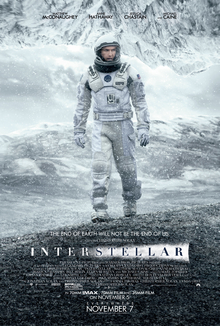
Interstellar

In the future, food shortages have turned the Earth into an agrarian society, and famine threatens to wipe out civilization. To prevent this, the covert remnants of NASA recruit former pilot/astronaut-turned-farmer Cooper (Matthew McConaughey) to lead a research team through a wormhole to find suitable planets for resettlement. Cooper’s decision to accept the mission puts him at odds with his daughter Murph, and a series of setbacks as well as time dilation keep him absent for most of his children’s lives. However, Cooper remains determined to both complete the mission and make it home.

Thanks to a (pun unintended) stellar track record, the success of a Christopher Nolan film is almost a given at this point, which is why the director deserves credit here for making his latest effort earn its plaudits. Overly long, ambitious, complex, and spiritually as well as intellectually challenging, Interstellar has its share of shortcomings as well as moments of brilliance.

As with other Nolan fare, Interstellar packs a formidable stylistic punch. Working with a new cinematographer (Wally Pfister was off directing his own far less successful sci-fi film), Nolan imparts a sense of wonder and majesty into everything from dust storms to frozen wastelands to the depths of space itself. Visually, the film pays homage to 2001: A Space Odyssey (among others) without wallowing in cliché (the robots aboard the ship, for instance, resemble neither HAL nor androids). Meanwhile, Hans Zimmer’s score is a departure from some of his previous work – don’t look for The Dark Knight’s scary strings here – that still oozes gravitas.

This weightiness suits Interstellar’s role as a Film of Ideas, a role it never lets you forget. Inspired by the work of theoretical physicist Kip Thorne (who served as a consultant), the movie aims to offer a grounded look at phenomena such as wormholes, black holes, and gravitational time dilation. The presentation is the antithesis of the breezily convenient space magic suggested by other sci-fi narratives as Nolan and Thorne try to show their work.. Less scholastically, the film also suggests that love is a universal force, but it’s an idea that comes across as laughably hokey and naïve.

As a consequence of this preoccupation with theory and theme, characterization takes a backseat for much of the voyage. Cooper is the kind of everyman reluctant hero that Tom Hanks would have portrayed ten years ago. Having McConaughey fill his shoes brings some emotional intensity, but this is still sedate and rather bland compared to the rest of the Texan’s recent work. Three different actresses portray Murph in different stages of her life, and each performance hits the right note. Mackenzie Foy is precocious, Jessica Chastain is bitter, and Ellen Burstyn is dignified. Beyond them, the other characters are given little depth. As Cooper’s mentor Dr. Brand, Michael Caine feebly and persistently quotes Dylan Thomas while Anne Hathaway portrays Brand’s daughter – and Cooper’s fellow voyager – with an inexplicable foolhardy streak. Both of the voyage’s robots (voiced by Bill Irwin and Josh Stewart), sarcastic, low-key, and helpful, were of more interest than many of the supporting characters.

Unsurprisingly given the lack of attention to character, dialogue is not a strong point here. Jonathan Nolan’s script has its moments. As mentioned previously, the robots are quite amusing, and Cooper gets to gloriously ream out some school administrators who treat the moon landings as a hoax. Far too often, however, the dialogue comes across as stilted and pedantic. This is especially true toward the film’s ending when Cooper monologues everything that is happening to him as if he has a classroom full of physics students watching his every move. Though done rather transparently for the audience’s benefit, this scene plays as confusing as it does false.

Imperfect as it is, Interstellar still manages to show that it is possible to emphasize the science side of science fiction without boring an audience to tears. Though it could have benefitted from a shorter running time and fuller characters, it still inspires a fair amount of reverence and awe. Much like the journey depicted on screen, you might not like what you see as you near the end, but it’s still a trip worth taking.


8.25/10

Saturday, January 3, 2015

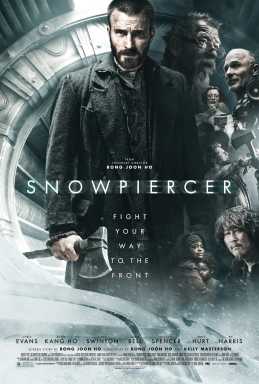
Snowpiercer

In the near future, a chemical released into the atmosphere to combat global warming plunges the planet into a deep freeze and kills most life on earth. The survivors live aboard the Snowpiercer, a state-of-the-art self-sustaining train that circles the earth. Poor passengers are crammed into the tail of the train and treated like second-class citizens while wealthy passengers live decadently in the forward cars, and the train’s brilliant designer, Wilford (Ed Harris), is worshipped as a god. Sick of the injustice, Curtis Everett (Chris Evans) leads his fellow tail passengers in a rebellion to capture the rest of the train, but his disruption of the status quo carries a terrible price.

Korean director Bong Joon-Ho’s English-language debut (a loose adaptation of an obscure French graphic novel) is a film that is both easy to be impressed by and easy to take to ask. An ambitious sci-fi allegory, it is at once tense, provocative, well-shot, solidly acted, overlong, ham-handed, and at times downright silly. But whether you love it or hate it, Snowpiercer at least makes an impression.

If nothing else, the film is beautifully shot and scored. From the industrial drudgery of the tail cars to the opulent refinement of the head, each section of the train has an appropriately distinct visual identity. Bong’s fight-scene choreography is as stylish as it is brutal, and there are aesthetic homages to everything from Bioshock to Terry Gilliam. Marco Beltrami’s score is hauntingly beautiful at times but foreboding and discordant when it needs to be.

Though characters here are developed to varying degrees (with varying success), the cast offers some laudatory performances. Evans previously established his action star credibility as Captain America, and here he showcases his range by playing Steve Rogers’ polar opposite. The beginning of the movie sees Curtis as a reluctant leader, bold but principled. When his friends fall by the wayside, however, he dirties his hands and doubles down on his resolve. His background-revealing breakdown toward the end makes for one of the film’s stronger moments. Korean stage vet Song Kang-Ho exudes surly mystique and detached cool as Curtis’ reluctant ally Minsu, a drug-addled security expert with his own agenda. Jamie Bell and Octavia Spencer are around for the ride, but they don’t get enough screen time to flesh out their characters. In opposition, the always-reliable Tilda Swinton seems to be having a blast doing a quasi-Margaret Thatcher impersonation as Wilford’s condescending minister. As the man himself, Harris is effective in a banality-of-evil sort of way, but his closing summation is disappointingly long-winded and contrived.

This speaks to one of the film’s chief flaws: the pacing is uneven and the runtime is padded. The first hour and a half or so are suspenseful and full of urgency, but the film then inexplicably tapers off and very nearly (pun intended) derails. The latter part of the film is so exposition-heavy that it is almost as if Bong expended all of his considerable visual creativity and couldn’t think of a better way to clue the audience in than simply having characters talk at length.

Though not to the same extent, Snowpiercer’s tone is inconsistent as well. This isn’t always a bad thing: Minsu’s sour observations and constant demands for drugs are genuinely amusing. On the other hand, having a cadre of armed goons stop fighting to yell “Happy New Year!” and having Curtis slip on a fish are head-shakers, to say the least. There are several other odd moments – including a segment in a classroom car – that feel off as well.

Sci-fi message movies (Elysium, After Earth, etc.) are bountiful, but movies of any genre that temper a message with a healthy dose of complexity and ambiguity are not. For that reason alone, Snowpiercer is worth your time. Look past the length and loquaciousness and enjoy the ride.


8/10

Sunday, August 17, 2014

Guardians of the Galaxy

When the Kree Empire signs a peace treaty with the planet Xandar (home of the galactic police force Nova Corps), fanatical Kree warlord Ronan the Accuser (Lee Pace) refuses to honor it. Instead, he conspires to retrieve a mysterious orb for Thanos the Mad Titan (Josh Brolin) in exchange for the latter destroying Xandar. Meanwhile, in a Xandarian prison, an uneasy alliance forms to keep the orb out of dangerous hands. The unlikely heroes include Peter “Star-Lord” Quill (Chris Pratt), an Earth-born thief, Gamora (Zoe Saldana), an adopted daughter of Thanos reluctantly pressed into his service as an assassin, Drax the Destroyer (Dave Bautista), a warrior seeking revenge on Ronan for the death of his family, and Rocket (voice of Bradley Cooper) and Groot (voice of Vin Diesel), a genetically modified raccoon bounty hunter and his tree-like bodyguard.

This latest contribution to the Marvel Cinematic Universe offers a metanarrative that closely mirrors the on-screen presentation. Just as the titular guardians are looked upon as a “bunch of A-holes” by the Xandarian Authority, everything about this film – the relatively obscure source material, the writer-director of questionable pedigree (James Gunn, who previously penned Scooby Doo sequels and Troma films), the oddball cast (fronted by a sitcom star and prominently featuring a pro wrestler), etc. – invites raised eyebrows. But just as the guardians find a way to work together, so too do these film’s disparate elements. The result, even given the MCU’s overall winning track record, is an unexpected success.

Ultimately, the biggest asset here is the pitch-perfect tone. Whereas the last MCU film (Captain America: The Winter Soldier), was edgy and topical, this one opts for irreverent and fun. Quill, for instance, goes to absurd lengths to protect his Walkman and busts out 70s pop songs at the most inopportune times. Drax, on the other hand, has no grasp of idiom or tact and is as awkward a speaker as he is capable a fighter. “Green whore” thus becomes a term of endearment coming from him to Gamora. The talking, gun-toting raccoon with anger issues and good-natured (unless you make him mad) giant tree are regarded every bit as ridiculous in a world full of aliens as they are in our universe, but Raccoon’s banter and Groot’s ocassional bumbling are nevertheless entertaining.

Despite all this zaniness, the film is not without stakes. The villains are dark, deep-voiced, and full of gravitas. Pace overacts with scenery-swalloing conviction and Brolin makes the most of his brief screen time to deliver epic-sounding threats (“I’ll bathe the starways in your blood!”). In fact, there are no weak spots among the cast. Pratt uses his inherent goofiness to mask both competence and pain. Saldona taps into her character’s inner conflict and functions as the film’s heart. Cooper channels Joe Pesci’s Napoleon syndrome, and Vin Diesel remains that rare voice actor who can wring maximum impact from minimal dialog (a la The Iron Giant). Even Bautista’s limited range and wooden acting fit his character quite well. One does wish Glenn Close (who appears briefly as the head of the Nova Corps) had more to do here, though.

Stylistically, Guardians of the Galaxy mixes kinetic action, slapstick (most scenes involving Groot), and and the sounds of the 70s to surprisingly good effect. There is just so much going on here – and so much of it refreshingly random – that we never catch our breath long enough to ponder the ridiculousness of what we’re seeing. One notable exception is the CGI-heavy final showdown, which stretches on too long and comes across as both visually and thematically (Power of Friendship! Yay!) hokey.

Unlike other Marvel films, Guardians of the Galaxy doesn’t do much to tip its hand as to the future direction of the MCU. Yes, Thanos appears, and Benicio Del Toro’s flamboyant Collector returns, but we don’t know what impact, if any, the guardians’ exploits will have back on Earth. And quite frankly, we don’t care. Taken on its own, Guardians of the Galaxy is a fun, funky film that shows that even the unlikeliest seeds can blossom.


8.25/10

Thursday, June 26, 2014

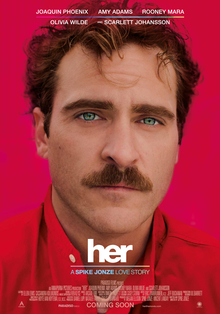
Her

Sad-sack writer Theodore Twombley (Joaquin Phoenix), emotionally devastated by his pending divorce, purchases an advanced artificial intelligence operating system (Scarlett Johansson) to help him manage his life. The OS, which dubs itself Samantha, is programmed with the ability to learn and grow. It isn’t long before she and Theodore form a deep attachment to one another, but can they make it work?

“Lonely man falls for iPhone” would be one way to synopsize this bizarre, intriguing, deeply flawed film. “Spike Jonze wears too many hats” would be another. Jonze, primarily a director, experienced his greatest success partnering with writer Charlie Kaufman on Being John Malkovich and Adaptation. But just as Kaufman’s directorial debut (Synecdoche, New York) collapsed under its own weight, Her (which Jonze wrote and produced as well as directed) goes off the rails.

Characterization is the biggest culprit here. It is fine to have a protagonist that isn’t especially likeable – see Walter White – but he has to at least be interesting. While Twombley’s creepy mustache and terrible fashion sense leave a distinct visual impression, the character himself is rather one-dimensional. We get that he is longing for an emotional connection in the wake of his break-up, but he’s chasing fulfillment the way that a teenager in a bad sex comedy chases a chance to score. We don’t really get to see what else makes him tick – or what drew anyone to him in the first place. Meanwhile, his ex (Rooney Mara) is positioned as something of an antagonist, despite raising perfectly valid criticisms of Twombley and his life choices. The film also manages to waste Amy Adams, who does a deglamorized turn as Twombley’s supportive friend/confidant. From the moment she makes an appearance, her role in the story is preordained. Ironically, the best performance here belongs to Johansson, who has more limitations (both in terms of acting chops and her character being voice-only) than anyone else in the cast. While Samantha begins as little more than a digitized male fantasy, by the film’s end, she’s easily the film’s best-developed character: self-aware, conflicted, and, ultimately, driven to make a difficult choice.

Pacing is another problem. At 126 minutes, Her is hardly an epic, but it drags. Supposedly, Steven Soderbergh had the film edited down to 90 minutes, but Jonze opted for a longer cut. This is a pity: with less time to wallow and bloviate, Her could have better sustained the intrigue of its premise.

And despite its other shortcomings, Her does offer quite an intriguing premise. With a near-future setting and a conceivable plot device (advanced AI), Jonze is able to probe the nature of relationships and what it means to be human in a way that is fresh. Certain elements of the plot may not be novel, but the way in which the film plays with those elements – and audience expectations – certainly is. Add in a distinctive look (a bright, color-saturated world) and an idiosyncratic sound (courtesy of Arcade Fire), and Her is far from a total loss.

With its creative approach and talented pedigree, Her created high expectations that its wasteful characterization and bloated runtime ultimately betray. Disappointment or not, however, it is still worth a look. You’ll want to put your phone down when watching though.


7.5/10

Thursday, October 10, 2013

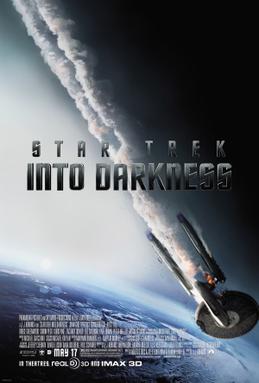
Star Trek Into Darkness


After disobeying the Starfleet Prime Directive in order to save Spock (Zachary Quinto), James T. Kirk (Chris Pine) is stripped of his captaincy of the USS Enterprise. However, the demotion proves to be short-lived. When rogue Starfleet operative John Harrison (Benedict Cumberbatch) launches a terrorist attack against Starfleet, Admiral Alexander Marcus (Peter Weller) sends Kirk and the Enterprise crew on a covert mission to take Harrison out.

Set aside what you believe about sequels: J.J. Abrams’ follow-up to his 2009 Star Trek reboot is a superior film in nearly every way. Into Darkness brings back much of the previous entry’s cast, but instead of struggling to find their bearings, they seem more comfortable in their roles. This allows for some back-and-forth banter that fans of the original series will likely appreciate. For the non-fans, Simon Pegg’s Scotty has a larger role, and he steals nearly every scene he’s in.

In addition to the returning stars, Alice Eve shows up as a science officer, and Cumberbatch makes for a chilling, utterly ruthless, yet somehow still sympathetic antagonist. Both characters initially hide behind false identities, and their respective reveals tap into years of Star Trek lore.

While retaining its predecessor’s quick pace and exhilarating action sequences (an Abrams specialty), Into Darkness also adds some degree of gravity to the proceedings. Whereas the plot felt almost perfunctory in the last film, this one tells a more personal story. The stakes are higher, blood is shed, and given the characters’ added depth, there is more reason to care.

Despite these myriad improvements, Into Darkness still falls short of greatness. Whether killing off a character in overly dramatic fashion or bloviating on the value of friendship, the film is often saccharine and ham-handed. It’s also aesthetically vexing: several sequences are obscured by shadows (which suits the title but does little else) or bathed in gratuitous blue light.

For better or for worse, Into Darkness leaves the door wide open for future installments. But while this film did demonstrate considerable improvement, it may very well be the resurrected franchise’s plateau.


7.75/10

Sunday, September 8, 2013

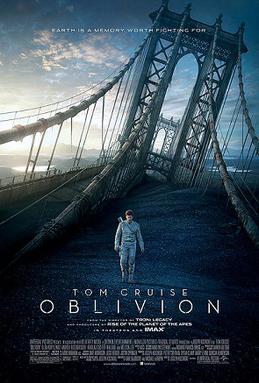
Oblivion

In 2017, a group of alien invaders called Scavengers attack Earth. Humanity prevails, but the resulting war makes the planet’s surface uninhabitable. The majority of the survivors have migrated to the space station Tet while a few remain stationed in sky towers to service energy harvesting drones. Jack Harper (Tom Cruise) is one such drone technician. Though he has taken his coworker Vika (Andrea Riseborough) as a lover, he is haunted by trace memories of a woman (Olga Kurylenko) from his past. When Jack witnesses the drones behaving erratically, he begins to realize that there is more to his world than he knows.

Oblivion is the brainchild of Tron: Legacy director Joseph Kosinski, and it owes more than a passing debt to his previous film. The nifty “bubble ship” helicopter that Jack pilots is more than a little reminiscent of a light cycle, especially during the film’s chase and combat scenes. Were that the extent of the homage, there would be no qualms raised. Unfortunately, Oblivion has nary an original idea to offer, borrowing shamelessly from everything from Portal to The Matrix to Independence Day. The resulting patchwork plot is as contrived as it is unoriginal.

Though the cast features some big names, they do not exactly elevate the material. Action veteran Cruise does the requisite running and jumping and bleeding and yelling, yet as a protagonist, Jack is merely adequate and not particularly memorable. An enigmatic, poetry-reciting, gun-toting Morgan Freeman is in good form; unfortunately, his screen time is minimal. Kurylenko and Riseborough at least try to give their characters emotional depth, but the roles are thinly drawn and often illogical. Melissa Leo, sporting an unnerving Texas twang, fares the best as Jack and Vika’s mission control.

Disappointing as it may be, Oblivion is rescued from abject failure by quality aesthetics. At times, it’s a breathtakingly beautiful film, and it offers great visual contrasts: the placid sky, the ruined Earth, the white-clad survivors, and the black-armored Scavengers. French electronic band M83, like compatriots Daft Punk before them, delivers an appropriately epic soundtrack.

On a visual level, Oblivion offers enough to sights and sounds to justify its two-hour existence, but its cliché-ridden story will inevitably remind you that you can spend those two hours watching better films.


6.75/10