Showing posts with label Nonfiction Books. Show all posts

Sunday, July 28, 2024

Knife: Meditations After an Attempted Murder


In 2022, Salman Rushdie was about to give a public talk when an attacker rushed the stage and stabbed him nearly to death. Though he lost an eye in the process, Rushdie recovered. Knife is the culmination of that recovery. In it, Rushdie offers an unnervingly frank and measured account of the attack and the debilitating effect that it had on his life. The book is more than that, however. Rushdie, who has faced death threats for more than three decades, explores the perils – from censorship to violence – that writers increasingly face. He confronts the controversy and caricature (be it that of a hedonist or an egoist) long attached to his name. And yet, his message is fundamentally an optimistic one. He seeks to understand what happened to him, he expresses gratitude to all who stood by and supported him (especially his wife, Eliza), and he maintains a sharp sense of humor throughout. Despite the book’s power, Knife is nearly undone by one sizeable creative blunder: a self-indulgent series of imagined conversations between Rushdie and his would-be assassin goes on entirely too long. There are other irksome bits here (humble Rushdie is not), but overall, Knife’s vitality and humanity make it a worthwhile read.

Saturday, May 15, 2021

The Premonition: A Pandemic Story


Months after the beginning of the COVID outbreak, Michael Lewis looks at those medical professionals who foresaw the threat the pandemic posed and tried to manage an effective response only to be thwarted by stubborn bureaucracy. The visionaries include Charity Dean, a beleaguered California public health director who won’t settle for “no,” Carter Mesher, who formulated a federal pandemic response in the Bush years only to later be sidelined, and Joe DeRisi, a quirky lab director who once created a computer chip that contained data on every known human virus. Despite their ingenuity, a seemingly endless series of roadblocks – indifferent or incompetent state and federal agencies, slow-moving private labs, a lack of supplies, etc. – stood in their way.


From Moneyball to the Big Short, Lewis is a master of distilling complex subject matter into engrossing narratives, often by using a few colorful characters to bring readers closer to the action. This approach has raised questions about his accuracy and his allegiances, and as The Premonition follows the same formula, expect similar complaints to follow. Some readers may also question Lewis’s focus and wonder just how much remains untold.


That said, it is still an intriguing and insightful book. Lewis deftly connects George W. Bush reading an account of the 1918 influenza pandemic to the formation of a federal pandemic response, tragically undone in 2018 when John Bolton gutted biodefense. This and other aspects of the Trump administration’s malfeasance and ineptitude (i.e. Mike Pence’s insistence on tight messaging to the detriment of keeping the public informed) have been well-documented elsewhere. The Premonition, however, pulls back the veil on the Centers for Disease Control, revealing long-seated problems – a reluctance to act, a preoccupation with its own image, attempts to hamper state officials – that plagued the CDC long before Trump. Moreover, the book shows Dean effectively doing the job her boss (the since-deposed Sonia Angell) should have been doing without being allowed to take credit for it for the sake of giving Gavin Newsom political cover. Infuriating as this is to read about, it is also inspiring to see Dean stick it to everyone who underestimated her, to see Mecher labor doggedly behind the scenes to get people to take COVID seriously, to see several voices rise in opposition to the once-prevalent ideas that COVID was either insignificant or, later, untraceable and uncontainable.


Thursday, August 20, 2020

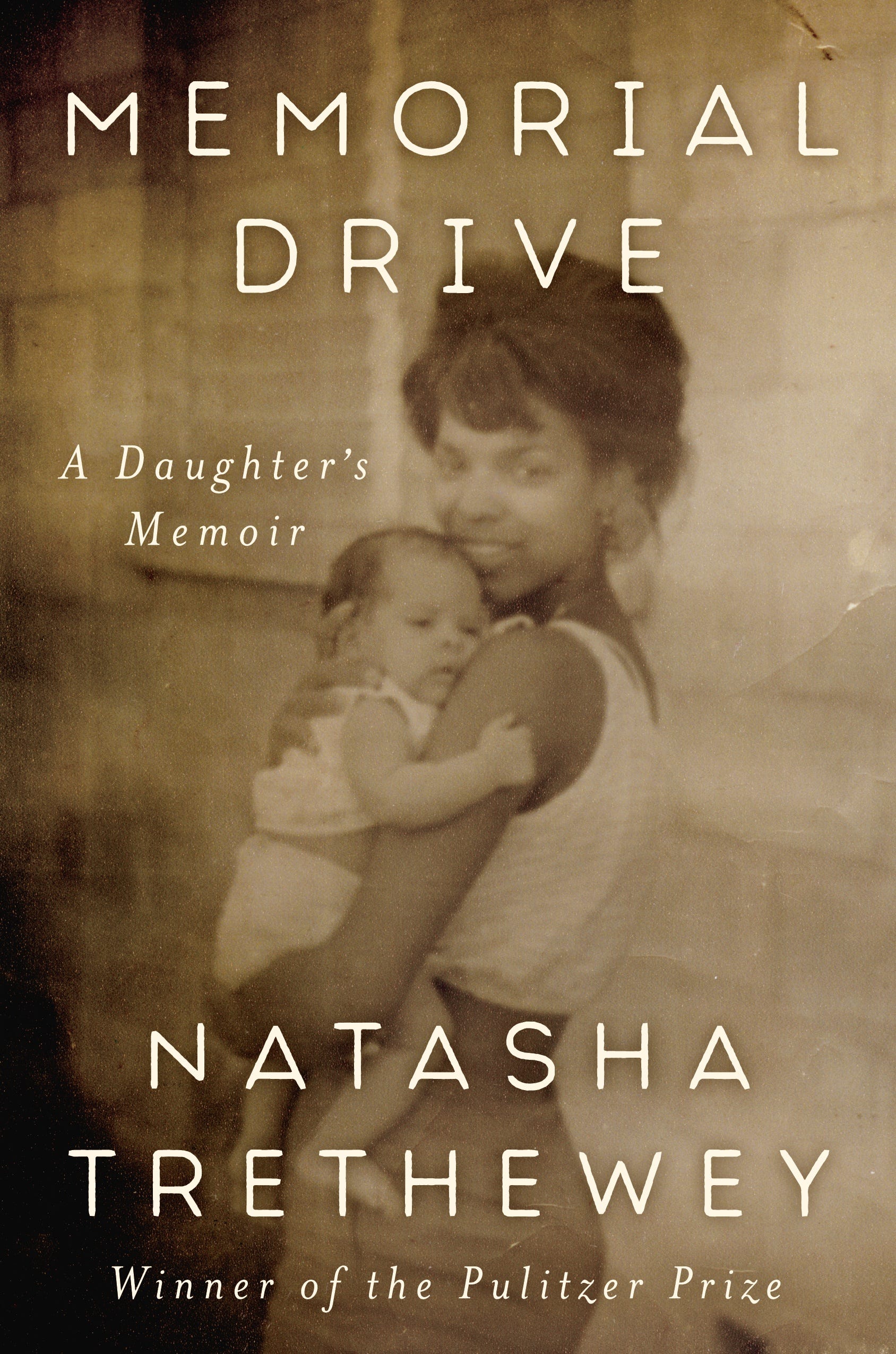
Memorial Drive: A Daughter's Memoir


When Natasha Trethewey was nineteen, her mother was murdered by her abusive, unstable former stepfather. Years later, Trethewey has crafted a memoir that looks at her childhood, her relationships with the woman who raised her and the man who took everything, and the circumstances surrounding the fateful event.


A former U.S. Poet Laureate, Trethewey writes with the precision and care one would expect, but her prose amounts to far more than well-crafted turns of phrase. Though reflective and digressive, Memorial Drive is marked by undercurrents of sadness and tension that enchant audiences and bind the narrative. Trethewey shifts fluidly from personal ruminations to documentary evidence such as police reports and phone transcripts. The latter’s inclusion may seem jarring, but it helps to create an indelible (and horrifying) impression of the terror that Joel Grimette subjected his (former) family to and Gwen’s rational yet futile attempts to resist.


There are strong parallels here between Tretheway’s tale and the one shared by Trevor Noah in Born a Crime. Like Noah, Trethewey is biracial, and as in Born a Crime, Memorial Drive explores the complexities of racial identity. But whereas Noah (a comedian) tempered his accounting of his life’s calamities with humor, Trethewey leaves us only the anguish of avoidable tragedy.


Tuesday, August 27, 2019

Furious Hours


Casey Cep’s first book is a true crime account with seemingly limitless amounts of intrigue. Divided into three sections, it focuses alternately on the Rev. Willie Maxwell, attorney Tom Radney, and Harper Lee and a series of crimes in 1970s Alabama that serves as a point of convergence. Maxwell, a rural black minister, acquires a sinister reputation after a succession of wives and other relatives die in mysterious “accidents” and he cashes in on multiple insurance policies. Never convicted, Maxwell is nonetheless the subject of ceaseless gossip up until he his gunned down at the funeral of one of his suspected victims. Radney, a politically connected liberal lawyer, represents Maxwell and helps him sue reluctant insurers. But after years of defending the sinister minister, he then becomes counsel for the reverend’s killer, Robert Burns. Lee, fame-averse and ambivalent about the smash success of To Kill a Mockingbird, travels from New York back to Alabama to get the story but finds tight-lipped locals and a disheartening amount of innuendo.

Blessed with lively prose, Furious Hours succeeds in mining its characters’ contradictions and complexities albeit sometimes at the expense of sustaining tension. Biographical detours into the pasts of Radney and Lee help frame them as tragic figures (Maxwell not so much), but in doing so, the book loses the central thread of the Burns trial. In Radney’s case, this fleshing-out shows the dichotomy between courtroom bully and a gracious gent run out of politics by Klan-aligned forces. In Lee’s case, it reveals a witty writer and skillful researcher embittered by taxes and a loss of privacy. The latter’s tale isn’t anything new to Lee devotees, but it still does her justice.

While Furious Hours will disappoint some by straying from Maxwell-related malfeasance and others by including Lee almost tangentially, the hybrid true crime/character sketch approach is, if nothing else, refreshing.

Thursday, March 28, 2019

The Birth of Loud

Music journalist Ian Port traces the development and evolution of the electric guitar primarily through the stories of two of its pioneering figures. Leo Fender was a self-taught radio repairman with a love of tinkering. Les Paul was an innovative musician looking for a way to make himself known. As contemporaries, uneasy friends, and occasional rivals, they kicked off a competition that revolutionized the mid-20th-century music industry.

Contrary to what the title suggests, this book is not really about a rivalry. Yes, Fender and Paul were opposites: the former was a reserved perfectionist, the latter a gregarious showman. And yes, the products for which they are best known – the Fender Stratocaster (and Telecaster before it) and Gibson Les Paul took turns jockeying for popularity. But those expecting juicy tales of vendettas and sabotage might be disappointed to learn that Fender and Paul shared quite a bit in common. Both were initially mocked by instrument makers when they suggested solid body electric guitars, and both were also renowned inventors. Fender may fit the mold more closely, but Paul practically invented multitracking (which he called “sound on sound”).

While The Birth of Loud offers some insights into what propelled both men toward their achievements, it also tracks the lineage of artists that their inventions made possible. Muddy Waters’ electric blues found a following in England after his popularity faded in the U.S., and the blues-revering English youth of the early 1960s grew into some of rock’s biggest names by the end of the decade. Perhaps no moment showcases the transient nature of acclaim more than an unknown Jimi Hendrix being given a chance to jam with Cream and upstaging Eric Clapton (then in his “Clapton is God” heyday).


These historical narratives are fascinating, and the book’s even pace can help sustain interest even among non-guitar players. However, Port’s descriptions of musicianship are often given to hyperbole, which cheapens them. Some may also take issue with Port’s chosen emphases: Fender and Paul and Clapton but only sparing mentions of Doc Kaufman, Paul Bigsby, and Jimmy Page. Still, distilling years worth of material into a coherent story is a challenge, and on the whole, Port acquits himself soundly (pun somewhat intended).

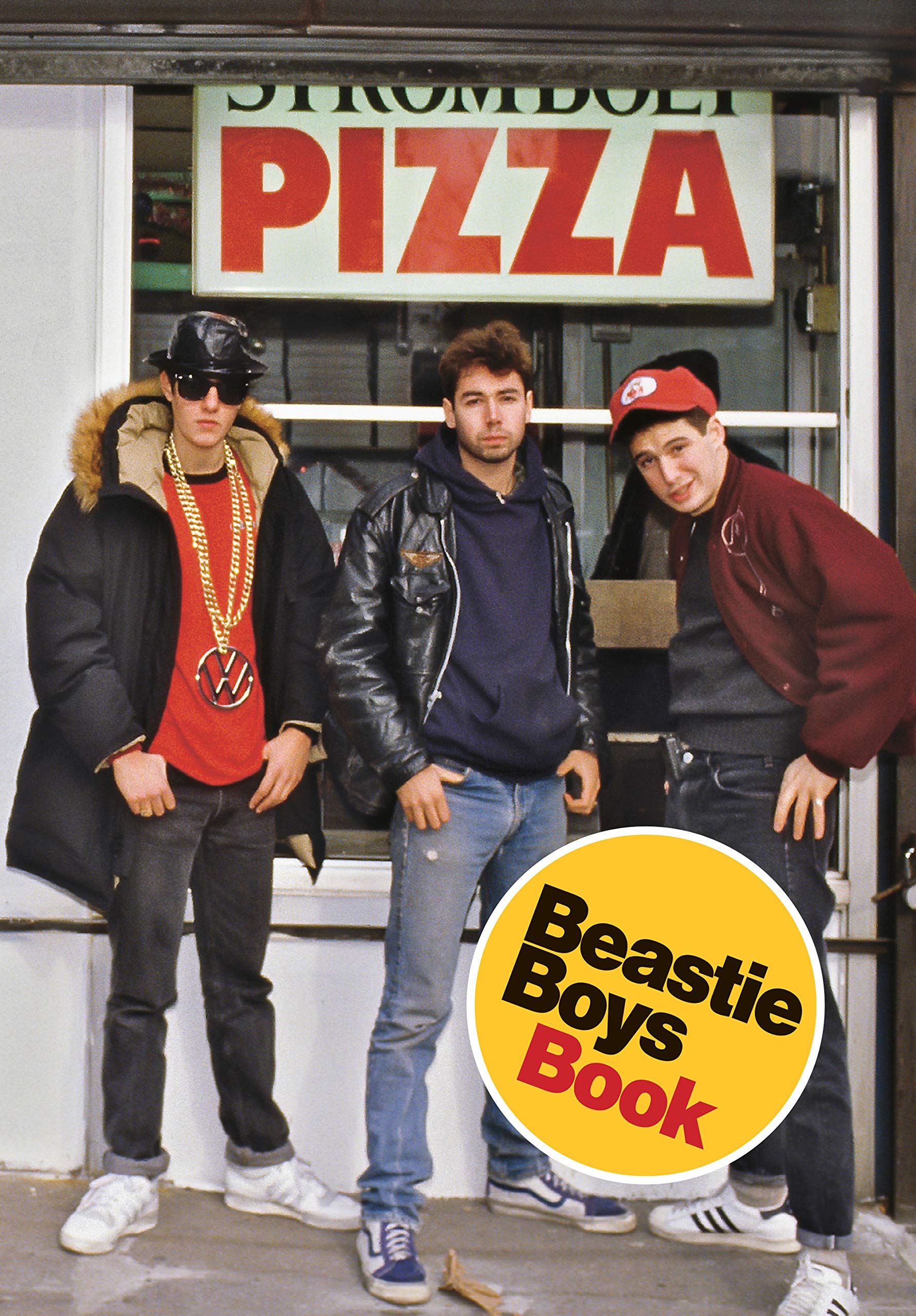
Beastie Boys Book

Written by surviving band members Adam “Ad-Rock” Horowitz and Michael “Mike D” Diamond with contributions from key collaborators, Beastie Boys Book charts the group’s evolution over its three-decade history. Three teenage middle-class Jewish outcasts meet in New York City’s club scene in the late 70s/early 80s and form a hardcore punk band before shifting their focus to rap. Under the auspices of Russell Simmons and Rick Rubin, they become the first commercially successful white rappers until falling out with their benefactors. This break, coupled with a move to the west coast, proves to be a blessing in disguise as the Beasties branch out musically, becoming innovative samplers and cementing an enduring legacy. They mature both artistically and personally, renouncing their prior misogyny and addressing more sophisticated lyrical themes, before disbanding when Adam “MCA” Yauch dies of cancer in 2012.

Once derided as a novelty act (white Jewish rappers!) or shallow party fiends, the Beastie Boys always had a lot more going on than their image suggests, and this book confirms that. For instance, their breakout hit, “(You Gotta) Fight for Your Right (to Party),” celebrated as a frat bro anthem, was actually a parody whose satirical intent was lost on many of its admirers. And while the Beasties rose on the strength of their sampling prowess, they could actually play instruments competently (or, in Yauch’s case, well). However, this book is less a vindication and more an exploration not only of the good, but the bad and the weird as well. Crazed managers, sketchy venues, and bizarre encounters all dot the landscape, and Horovitz doesn’t shy away from copping to despicable past behavior (such as kicking founding drummer Kate Schellenbach out of the band because a female member didn’t fit their image). Beyond that, the book is also a touching tribute to Yauch: a visionary iconoclast with an engineer’s mind.

Some of Beastie Boys Book’s best moments, however, come not from Horowitz or Diamond but from others who set scenes and fill in context around their escapades. Luc Sante nails the atmosphere of late 1970s New York nightlife with clarity and verve while celebrated chef Roy Choi draws parallels between passion for music and passion for food. Of course, much like the Beastie Boys’ music, nonsense filler pops up every now and then, as if the audience is being excluded from a prolonged inside joke. But just as those tracks can be skipped, so too can those pages.

While prior Beastie Boys fandom is a likely prerequisite to get through the book’s 500-plus pages, those with any interest in the group’s music will not be disappointed.


TIP: Get the audiobook version. It is read by Horovitz, Diamond, and an insane amount of celebrity guests: LL Cool J, Chuck D, Jarvis Cocker, Elvis Costello, Will Ferrell, Wanda Sykes, Maya Rudolph, and more.

Thursday, February 28, 2019

Jewish Comedy: A Serious History

In this 2017 text, Jeremy Dauber, a professor of Yiddish literature, investigates the history of Jewish comedy, the contexts that created it, its most influential figures, and the changes it has undergone.

Conventional comedy wisdom counsels us to never explain the joke. Not only does this book’s premise fly in the face of that, but Dauber often cranks that defiance up to eleven, granting several jokes enough in-depth analysis to suck any pretense of humor from them. As a result, this is likely the least funny book about comedy you will ever read. It is also not a “history” in the conventionally understood sense. It does not follow a chronology and jumps frequently in time (from contemporary Jewish American comedy to subtle biblical humor to Borscht Belt icons) as Dauber moves from topic to topic. Instead, it is best understood as a sociology of Jewish comedy: a look at the relationship between jokes/jokers and the societies they often lampooned.

Read through that lens, Dauber’s account is learned and frequently insightful. He shows how Jewish comedy has changed from a quasi-defense mechanism (Jews making fun of the gentiles who ostracized them) to a reaction to assimilation (Jews making fun of other Jews who seem to have shed their Jewishness) to a force that helped define American comedy for years to come (think the success and influence of Mort Sahl, Woody Allen, and the creators of Seinfeld). He also unearths often-overlooked humor in biblical narratives, such as the irony-laden comedy of errors that befalls Haman, the jealous, scheming antagonist of the Purim story.


Though at times a dense and ponderous read, Jewish Comedy does a respectable job of unpacking the genre’s tropes, trends, and tendencies.

Thursday, February 7, 2019

Bad Blood: Secrets and Lies in a Silicon Valley Startup

In the early 2000s, charismatic Stanford dropout Elizabeth Holmes starts the medical technology company Theranos. She raises millions of dollars on a promise to be able to conduct numerous medical tests from a single drop of blood. Theranos’s reputation grows as Holmes attracts more investors, befriends the political elite, and forges a partnership with Walgreens. Amid all the hype, however, the company’s proprietary technology proves unreliable, a fact that Holmes and her COO (and secret boyfriend) Ramesh “Sunni” Balwani conceal by maintaining a cloud of secrecy and either firing employees who raise ethical concerns or intimidating them to remain silent. As Theranos ramps up its promises, veteran lab director Alan Beam and junior employees Tyler Schultz and Erika Chueng can’t abide by the idea of gambling with patients’ health and decide to blow the whistle, only to find themselves under surveillance and facing litigation.

Wall Street Journal reporter John Carreyrou’s book-length examination of Theranos’s rise and fall is an engrossing look at the extent to which smart people will delude themselves rather than admit that they were wrong. This is true not only of Holmes, a black turtleneck-clad figure with an artificially deep voice who models herself after Steve Jobs, but also of those who believed in her and took up Theranos’s cause despite the seemingly obvious need for skepticism. Said dupes include the esteemed likes of former secretary of state George Schultz (Tyler’s grandfather, awkwardly) and future secretary of defense James Mattis.

Bad Blood reveals not only truths that its principal actors were loath to confront but also those that a segment of its audience may shy away from as well. Those expecting to encounter older white conservative men behind acts of corporate malfeasance will have to reckon with a cast of villains that includes a manipulative young woman (Holmes), a Pakistani bully (Balwani), and an aggressive Democratic lawyer (David Boies), all of whom were complicit in years of fraud, deceit, and intimidation. Meanwhile, the heroes include a young white man from a privileged family (Tyler Schultz, who risked both litigation and estrangement from his powerful grandfather), a Rupert Murdoch-owned newspaper that refused to back down, and even Murdoch himself in a way (for refusing to kill the Journal’s story despite his own investment in Theranos and a personal appeal by Holmes). Yes, Carreyrou comes across as annoyingly self-congratulatory at times, and his summation of Holmes’s character is nothing if not vindictive, but then again, maintaining objectivity would prove a chore after being denounced, surveilled, and threatened with frivolous lawsuits.

To his credit, Carreyrou balances intrigue – Balwani’s outbursts, cloak-and-dagger secrecy, legal chicanery, and his own quest to get ahold of a regulatory report that Theranos tried to bury – with workmanlike explanations of blood draws and testing procedures. Bad Blood is quite accessible to readers who lack a background or even an interest in medicine or biotechnology though some of the examples given (surprise, the Edison machine failed again!) may come across as repetitive.


A fascinating read that fits the “truth is stranger than fiction” maxim, Bad Blood is a sobering exposé that reminds us that the appropriate response to “We can do it” should not be a pat on the back but a “Can you really?”

Friday, January 4, 2019

Dead Girls

In her debut essay collection, Alice Bolin examines both America’s cultural preoccupation with dead girls as well as its ongoing mistreatment of living women. In addition to dissecting dead girls as a longstanding literary trope, she casts a critical eye on the narratives surrounding several cultural phenomena. An admirer of Joan Didion, she also traces her own journey from the remote Idaho to bustling Los Angeles and reflects on the path she’s taken.

The relationship between author and subject is sometimes complex and sometimes messy. Some authors eschew the personal while others confront it head-on. Handled artfully, autobiographical digressions can enrich and contextualize a work of nonfiction: Michell McNamara’s excellent I’ll Be Gone in the Dark is a good example thereof. But rather than use personal anecdotes to advance her central point, Bolin seems torn between unpacking the implications “dead girls” and telling her story, and the thematic connections that she attempts to draw between the two seem strained. Part memoir and part cultural criticism, Dead Girls suffers from an identity crisis.

Then again, while hewing more closely to a premise may have resulted in a more coherent book, it would not necessarily have been a more insightful one. That premise is that dead girls in noir fiction serve as male fantasies. Stripped of agency, identity, and life itself, they become little more than a means of ennobling avenging male protagonists. Bolin, who is both well-read and culturally well-versed, finds plenty of supporting examples for this idea in everything from the classic noir of Raymond Chandler (whose femme fatales, like his dead girls, were exaggerated forms of male wish fulfillment) to the contemporary drama of True Detective. She also sees right through the performative faux-feminism of Stieg Larsson (who originally titled The Girl with the Dragon Tattoo “Men who Hate Women”) and calls out the Millennium Trilogy for its cringeworthy sexualization of its heroine and reliance on dated tropes.

Problems arise, however, when Bolin attempts to extend this connection to examples that don’t support it. For instance, she miscasts Gone Girl’s Nick Dunne as a “classic male victim” and thus a successor to the misogynistic male leads of yore even though the novel depicts him as culpable and compromised in ways that his forebears were not. Even when discussing the potential for toxicity in close relationships between women, Bolin can’t help but dip into the same well, framing the hurt that women inflict upon one another as a product of a sexist society. Given that Bolin discusses her own such mistreatment of a former close friend, this comes across as all too conveniently exculpatory. And given how many straws Bolin is grasping it in some cases (puzzling, as there are many more relevant examples that would have fit), it is perhaps for the best that the book did not stay on-point the entire way through.

The book’s off-topic segments range from insightful to insufferable. Bolin successfully draws attention to the gaps between perception in reality in everything from Britney Spears’ artistry and breakdown to the Bling Ring case. She also captures the desolation of her home state and the violence (in this case, the Ruby Ridge standoff). And while she lays on her Didion-worship a bit too thick, she does a reasonably imitation, presenting a young life in flux in L.A.. On the other hand, Bolin sometimes comes across as unbearably selfish, whether it is her condescending speculation about where her father fits on the autistic spectrum or her decision to steal a date’s hat and cut off contact because she enjoyed the feeling of finality. Annoyingly, Bolin writes of the privileged place afforded to white women yet never gets around to realizing her own (relative to the larger issues the rest of the book addresses) lack of importance.


As cultural criticism, Dead Girls offers both hits and misses, pointing to a troubling trend while also painting with too wide a brush. As a memoir, it is occasionally evocative though often vapid and alienating. Bolin shows flashes of intelligent, perceptive writing, but that ability begs to be liberated from her self-aggrandizing focus.

Wednesday, July 25, 2018

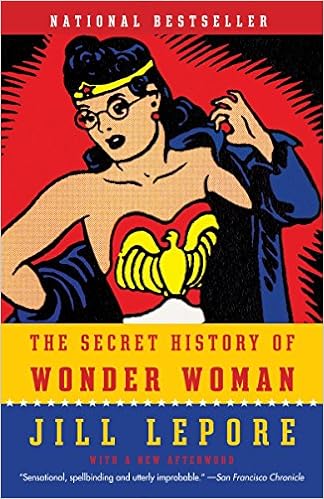
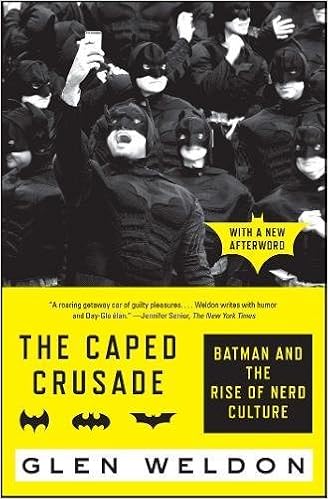
Superhero Chronicles: The Secret History of Wonder Woman and The Caped Crusade

Though they may have reached the point of oversaturation, the cultural prominence of comic book superheroes makes it difficult to dismiss them as mindless juvenilia. They are often, rightly, recognized as symbolically representing the best and worst of the world as its creators see it, from Jerry Siegel and Joe Shuster’s original immigrant success story Superman to Frank Miller’s quasi-fascist take on Batman to Deadpool’s self-referential postmodern absurdity. For characters who have been around for decades, there are years of influences – both on and of – to unpack. The Secret History of Wonder Woman by Jill Lepore and The Caped Crusade: Batman and the Rise of Nerd Culture by Glen Weldon give this treatment to two of D.C.’s most iconic long-runners, with very different results.


Lepore’s detailed and meticulously researched text is less a history of Wonder Woman and more a history of her creators: Professor William Moulton Marston, his wife Elizabeth “Sadie” Holloway Marston, and his former student-turned-lover Olive Byrne. Marston, a Harvard-educated psychology professor who created a version of the lie detector, emerges as a fascinatingly complex and contradictory figure: a committed and outspoken feminist (he fully intended for Wonder Woman to serve as feminist propaganda, Lepore notes) who overshadowed his female collaborators, a literal truth-seeker who perpetrated fraud, and a highly credentialed man of letters who dove headfirst into some questionable ventures. Said collaborators Holloway (a lawyer and psychologist in her own right) and Byrne are implied to have been hugely influential in Wonder Woman’s creation (Byrne, for instance, wore bracelets that WW fans would find familiar), but Lepore shies away from giving them the lion’s share of the credit. And while Lepore does explore the cultural context that birthed Wonder Woman (namely, first-wave feminism), Diana Prince herself is treated almost like a minor character in her own supposed history. Only the last third of the book directly discusses Wonder Woman in comics, and her post-Marston years are treated briefly and disdainfully (somewhat understandable given Gardner Fox’s and Robert Kanigher’s treatment of the character). While The Secret History of Wonder Woman offers a detailed look at a mad genius, it does not fully do its supposed subject justice.


Weldon’s take on Batman’s history is a leaner, snarkier, less scholarly (though still credibly researched) affair that hews more closely to its proclaimed purpose. Weldon traces The Caped Crusader’s origins (confirming the open secret that credit-hogging artist Bob Kane stole recognition from co-creator/writer Bill Finger) and various iterations over the years, from noirish gun-wielding (!) vigilante to science fiction superhero to camp icon to grim, hypercompetent foe of criminals everywhere. Along the way, he notes how reactions to these differing takes resulted in a rabid and impossible to please fanbase split along tribal lines. To some, a dark and brooding Batman is the only true Batman and Adam West/Joel Schumacher silliness is an abomination; but to others (such as Weldon himself), the camp version is the more interesting take. Just as Lepore played up Wonder Woman’s feminist bonafides, Weldon places a lot of emphasis on Batman’s status as a gay icon (ironic, given his denunciation of comic book critic Frederick Wertham’s homophobic fearmongering). However, Weldon also reminds readers that Batman is an inkblot: fans see in The Dark Knight what they want to see. This view is affirmed by showing how different filmmakers, writers, and artists have all approached the character over the years. Overall, the book is a balanced blend of history, behind-the-scenes trivia, and cultural criticism.

The Secret History of Wonder Woman: 7.5/10

The Caped Crusade: 8/10